Muffin pan trick turns tiny sourdough boules into bakery-style loaves
A 12-cup muffin pan gives 77-gram sourdough boules the support of mini bannetons, turning small dough rounds into evenly spaced, crusty loaves.
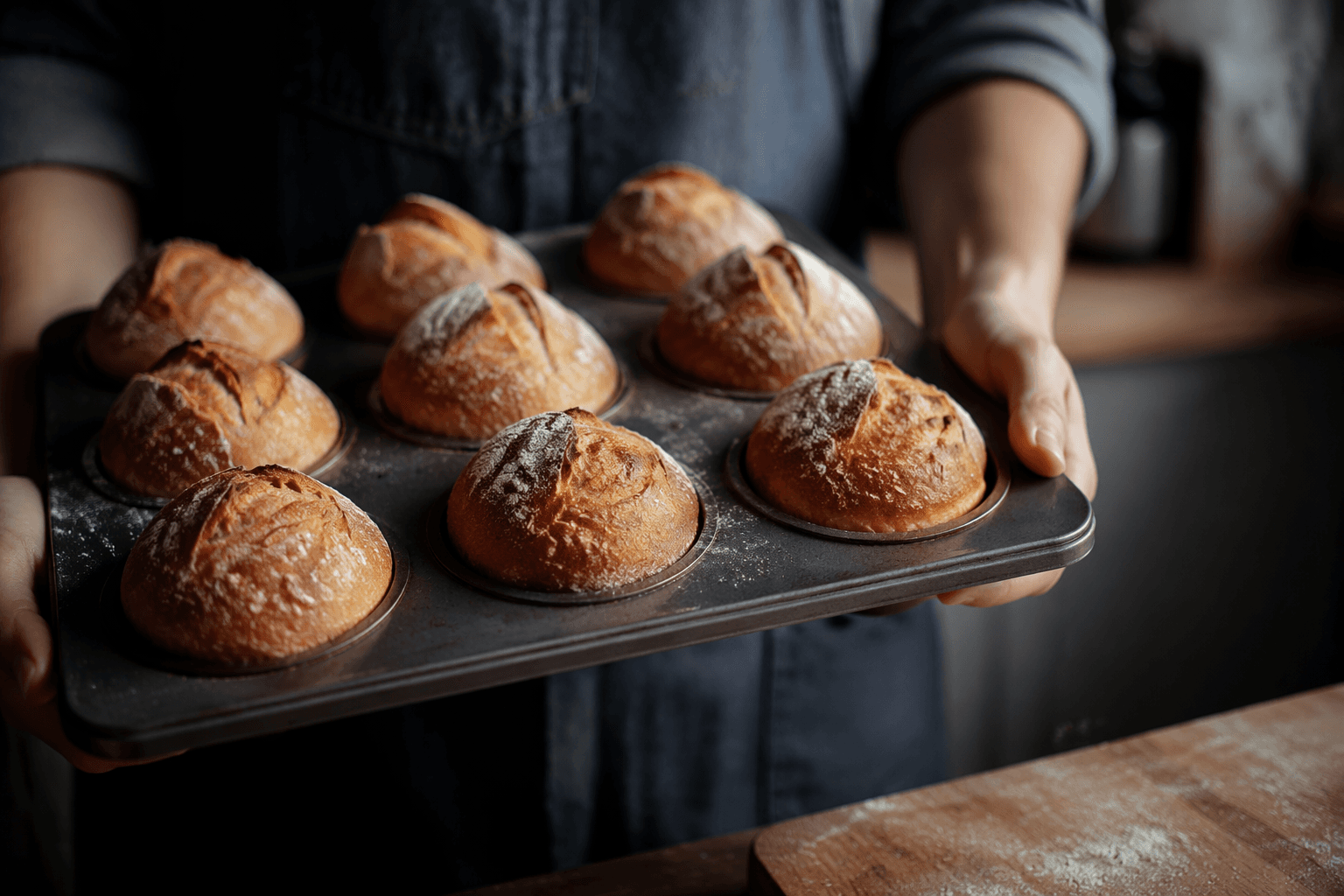
Emma’s muffin-pan method gives each 77-gram boule a soft, floured pocket to proof in, so the dough stays round, spaced, and ready for a strong rise. The payoff is immediate: more shape control than free-form proofing, less gear than a basket-heavy setup, and twelve bakery-style mini loaves that fit real-life dinners, bread baskets, and gift boxes.
Why the muffin-pan trick works
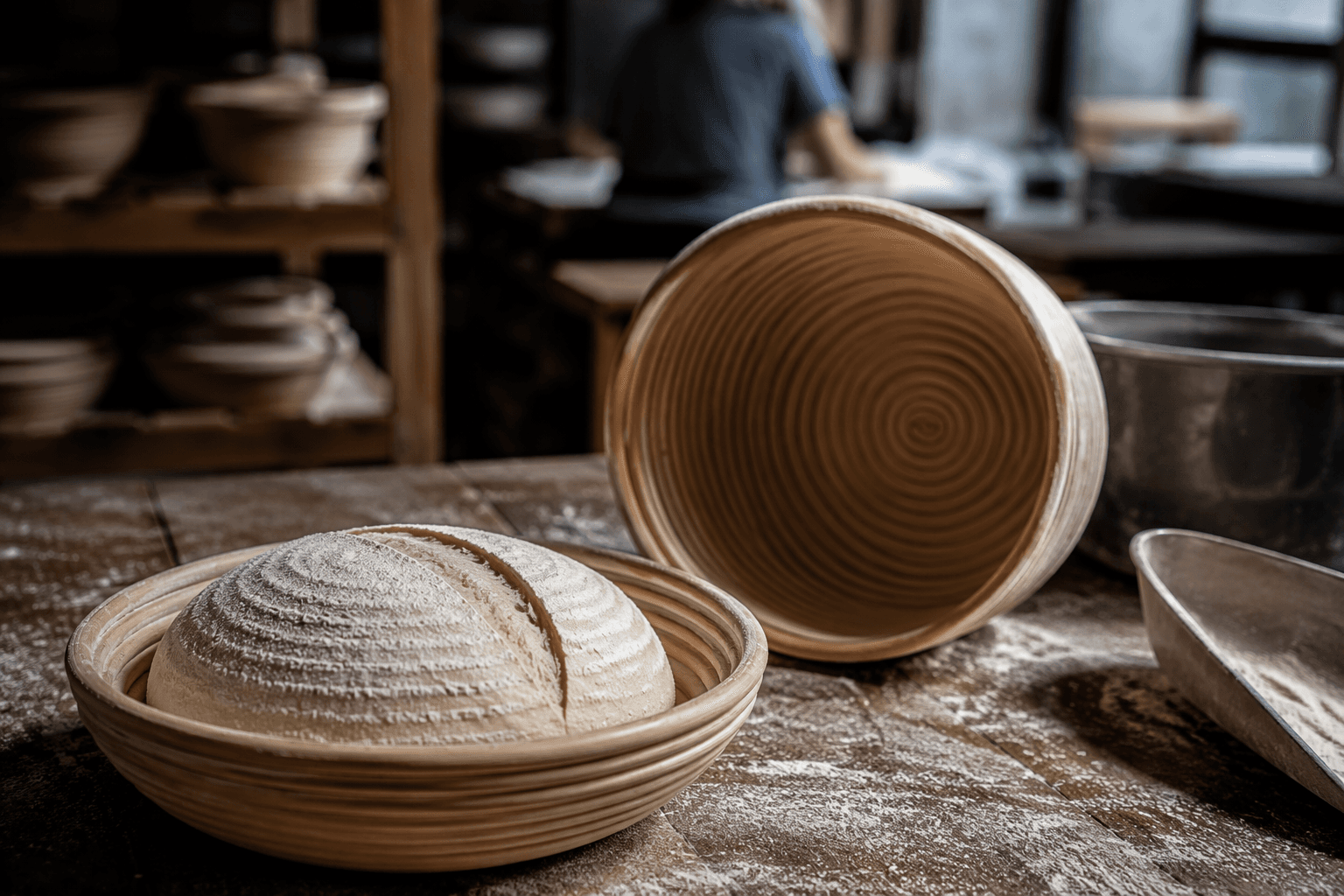
The logic behind the method is familiar to any sourdough baker who has fought a slack, spreading dough. Sourdough can lose structure when gluten is underdeveloped, hydration is too high, shaping is weak, or proofing goes too far, and those issues show up fast in small pieces that do not have the weight of a full-sized loaf holding them together. A standard banneton, the proofing basket bakers use for the second rise, solves that by supporting the dough as it finishes proofing. The muffin-pan setup borrows that same idea and turns a 12-cup pan into a row of soft proofing cells.
Shape and spacing are doing a lot of work here. Instead of letting each piece relax sideways on a counter or sheet, the flour-dusted towel holds the dough in place while it rises, which helps preserve the round profile and keeps the boules from merging into one another.
How Emma sets up the proofing pan
CatchyMeals published the muffin-pan version on July 15, 2026, and the build is as simple as it sounds. The recipe divides the dough into 12 portions, then nests each piece in a well-floured cotton towel draped over a regular 12-cup muffin pan. The towel creates cushioned pockets that mimic the support of a proofing basket without asking the baker to buy specialty equipment.
Most home bakers already have a muffin pan, parchment, and a clean cotton towel, so the technique rewards creativity rather than a shopping list. It also makes portioning predictable: every loaf starts at the same size, which helps with batch consistency when you want twelve pieces that bake at the same rate and look like they belong together on the table.
The setup at a glance
- 12 dough portions
- Standard 12-cup muffin pan
- Well-floured cotton towel draped over the pan
- Proofing support that keeps each boule round
From proofing pocket to oven spring
Once the boules have finished proofing, they are moved to a parchment-lined baking sheet, scored, and baked at 450°F with a pan of water underneath for steam. The dough leaves the muffin pan with its shape already established, so the scoring reads cleanly and the loaves have a better chance of expanding upward instead of spreading outward.
The steam pan underneath helps create the crisp crust and bakery-style finish that make these loaves feel more polished than their size suggests. The result is a set of individual sourdough boules with soft interiors, a crisp exterior, and the kind of even, rounded look that is hard to get when tiny doughs are left to proof free-form.
What you gain, and what you give up
Compared with a standard banneton, the muffin-pan trick is less traditional but much more accessible. A banneton is still the gold-standard support for many sourdough bakers because it is designed specifically to help dough hold its shape during the final rise. The muffin pan is the improvised version, useful when the goal is not a single dramatic loaf but a collection of mini boules with similar size and shape.
The tradeoff is mostly about style and texture. The muffin-pan method favors tight shape, easy spacing, and batch uniformity, which makes it ideal for small loaves. A free-form boule can sometimes develop a more open, irregular crumb if the dough is handled and proofed perfectly, while these mini loaves are designed to stay neat and compact. In return, you get more crust per loaf, a tidy presentation, and far less chance that the dough will spread into a flat round.
Family dinners, soup nights, sandwich builds, bread baskets, and homemade gifts all benefit from portions that are already pre-sized and easy to serve. For a small household or a giftable batch, twelve mini boules are already portioned.
Part of a wider mini-loaf streak
CatchyMeals had already posted related sourdough ideas in December 2025, including “Mini Sourdough Loaves (Loaftinis)” and a cupcake-pan version of mini sourdough boules. This July 2026 post sharpens that idea by focusing more deliberately on shape support, which makes the final loaves look rounder and more consistent.
This article was produced by Prism’s automated news system from verified source data, official records, and press releases, then run through automated quality and moderation checks before publishing. The system is built and supervised by the people who set the standards it runs under. Read our full AI policy.
Did this article answer your question?