Potato flake sourdough gives bakers a milder, sweeter loaf
Potato flakes soften sourdough’s sharp edge, giving home bakers a sweeter, more tender loaf without giving up starter-based baking.
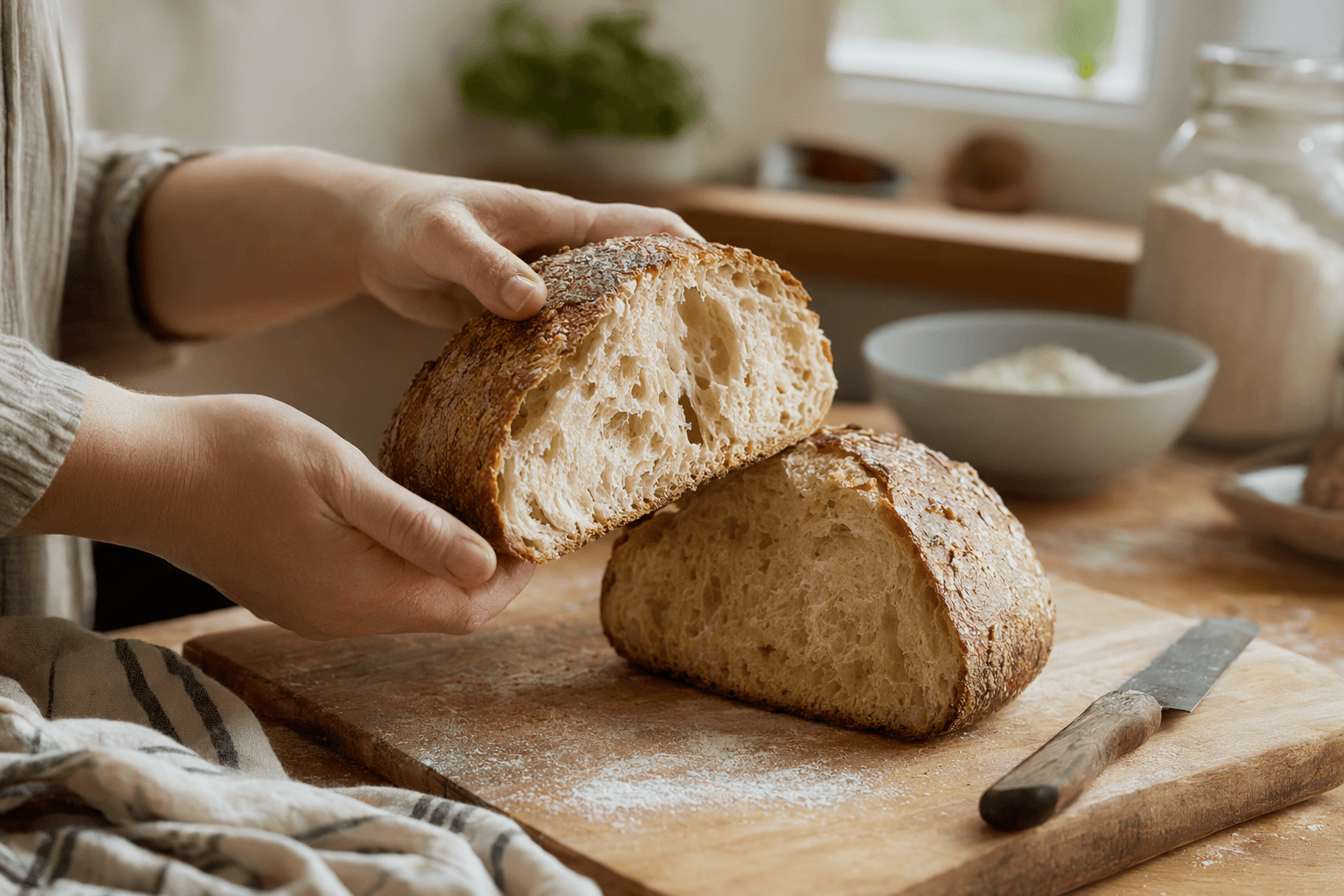
Potato flakes change the sourdough equation
Potato flake sourdough is for the baker who likes the rhythm of starter baking but wants less bite in the finished loaf. Instead of leaning hard into the sharp tang many people expect from a classic flour-and-water culture, this style builds a softer, sweeter dough with a more tender crumb and a gentler flavor profile.
That shift comes from the ingredients themselves. University extension guidance says potato starch helps make bread more tender, and potato flakes, eggs, or sugar can also accelerate yeast growth in dough. In practice, that means the loaf is steered toward comfort-food softness rather than rustic sourness, which is exactly why this method shows up so often in sweet breads and family-style loaves.
How it differs from a standard starter
A traditional sourdough starter is usually a flour-and-water culture filled with wild yeasts and bacteria. It develops flavor over time through natural fermentation, and that process is what gives classic sourdough its familiar tang and chewy structure. Potato flake starters work differently: they are built around instant potatoes, sugar, water, and yeast, so the fermentation path is more enriched from the start.
That difference matters for flavor control. In a classic starter, the baker is often chasing acidity, strength, and open texture. In a potato flake starter, the goal is softer structure, a milder edge, and a loaf that feels more like an everyday bread than a statement piece. For households that find standard sourdough too sharp or too rustic, that tradeoff is often worth it.
Why bakers reach for it
Jamie Saechao of Ginger Homemaking describes the method as traditional and notes that potato flakes are added with the starter ingredients, along with yeast, sugar, and water. That combination explains a lot of the starter’s appeal: it gives home bakers the starter-bread experience without demanding the same level of sour intensity.
The method is especially appealing when the recipe needs softness rather than chew. Potato flake starters are often used for soft breads and rolls, including sandwich loaves and cinnamon breads. They also fit well into sweet breads where a mellow crumb matters more than a crackly crust or a pungent sour note.
Where the style really shines
The Yahoo Life explainer points out a few natural matches for this kind of starter, and they make sense in the kitchen. Raisin cinnamon bread benefits from the gentler flavor, because the starter does not compete with the spices and fruit. Amish Friendship Bread, which is commonly described as a sweet, cake-like bread made from a shared sourdough starter, sits in the same lane, with sugar, oil and cinnamon already built into the style.
That overlap is what gives potato flake sourdough such a clear niche in American home baking. It is not trying to replace every flour-and-water starter loaf. It is there for the bakes where tenderness and sweetness matter most, including soft sandwich bread and even a Fool’s Gold-style sandwich, where a lighter, sweeter loaf can support the filling instead of overpowering it.
Feeding, rise, and day-to-day reliability
For home bakers, the biggest practical difference may be in how the starter behaves from mixing onward. Because potato flakes and sugar help feed the yeast, the dough has ingredients that can push growth along more quickly than a plain flour-and-water starter. That does not make it magic, but it does help explain why so many bakers see it as a more forgiving path for enriched breads.
This also changes how the routine feels. With a classic starter, you are managing a living flour culture that can swing in acidity and strength depending on temperature, timing, and feeding. With potato flake sourdough, the process is often more centered on consistency and softness, which can be reassuring if you want dependable loaves with a milder finish.
A modern offshoot with old bread roots
The broader history helps put the style in perspective. A University of Alaska Fairbanks Cooperative Extension Service publication notes that sourdough is one of the most ancient forms of leavening bread, and that it was the standard breadmaking method for most of human history before industrial baker’s yeast took over in the late 19th and early 20th centuries. Potato flake starters are not the original sourdough tradition, but they do show how bread culture keeps adapting to what home bakers want now.
That evolution is visible in newer recipe work as well. LSU published a sourdough king cake recipe in 2020 that uses instant potato flakes, cane sugar, dry yeast, and warm water in the starter, and it recommends the starter for a soft king cake loaf. King Arthur Baking also updated its sourdough starter recipe in February 2026 to make a smaller amount of starter in response to home-baker feedback, a reminder that convenience and practicality are now part of the sourdough conversation too.
The takeaway is simple: potato flake sourdough gives you control over tone as much as texture. If classic starter bread feels too sharp for the loaf you want, this is the gentler lane, with a milder flavor, a softer crumb, and enough versatility to keep pace with cinnamon bread, sandwich bread, and the sweet starter traditions that many home kitchens already love.
This article was produced by Prism’s automated news system from verified source data, official records, and press releases, then run through automated quality and moderation checks before publishing. The system is built and supervised by the people who set the standards it runs under. Read our full AI policy.
Did this article answer your question?