Professional bakers say better flour and starter care improve sourdough
Better sourdough often comes down to two changes: choose flour with real flavor and keep your starter consistently fed. Those small moves can mean less acidity, more rise, and a lighter crumb.
The biggest sourdough upgrade is not a fancier shape or a sharper score
Professional bakers keep circling back to the same lesson for home loaf after home loaf: better bread starts with better ingredients and better starter care. That advice cuts through a lot of sourdough noise because it points to the two places where the dough is either being set up to succeed or quietly held back. If a loaf tastes flat, runs overly acidic, or bakes up dense, the fix is often simpler than people expect.
The reason this matters is that sourdough does not hide weak ingredients very well. In naturally leavened bread, flour is not just a neutral base for water and salt. It carries flavor, nutrition, and structure into the final loaf, so when the flour is bland or stripped down, the bread can taste one-dimensional and read as more sour than balanced. At the same time, a starter that is off its rhythm can make even well-mixed dough behave unpredictably.
Start with better flour, because it shapes the flavor of the whole loaf
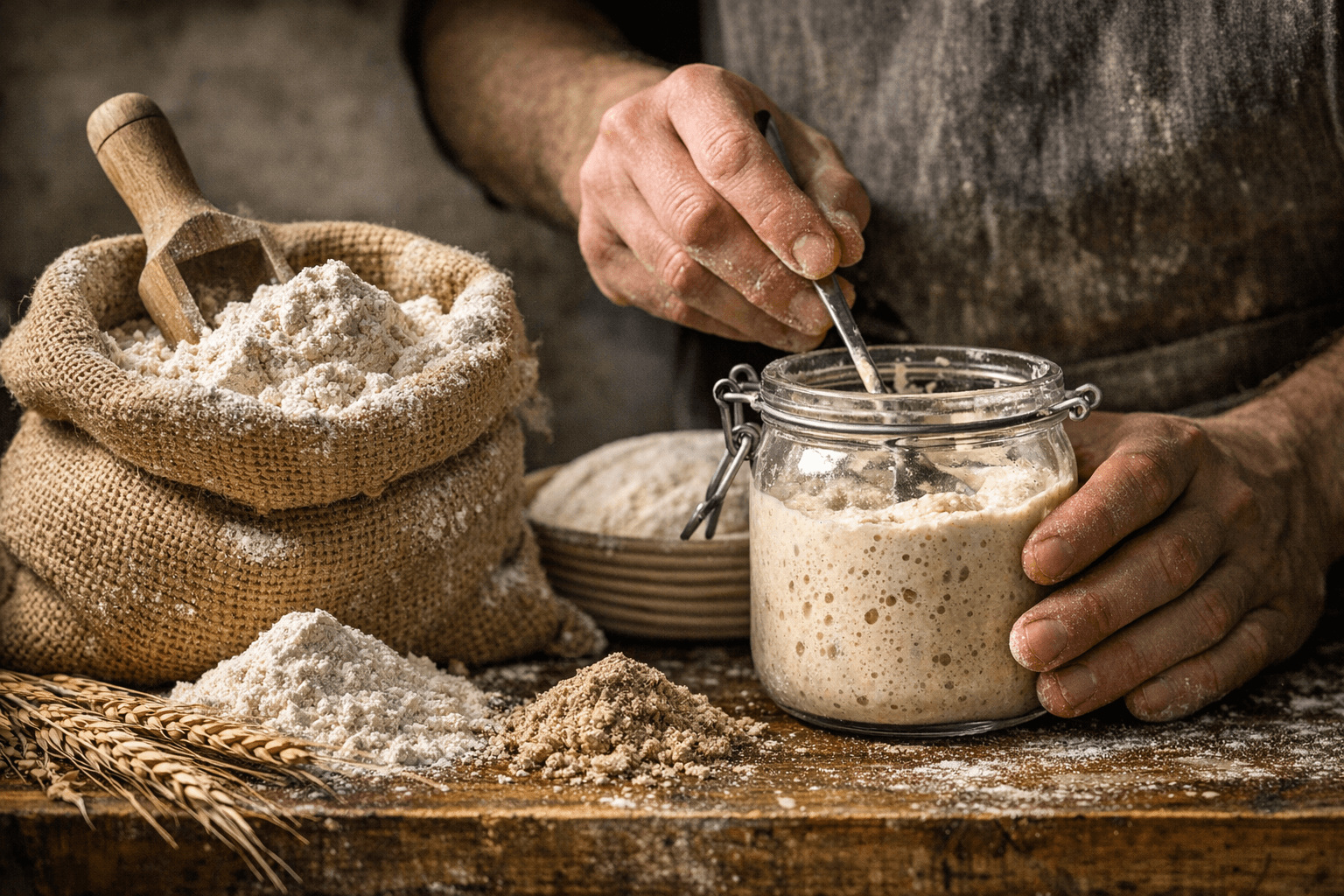
One of the clearest takeaways from pro bakers is that flour quality shows up in the finished bread faster than many home bakers realize. Shelf-stable flour can be bland and stripped of nutrition, and that matters even more in sourdough because the fermentation process leaves fewer places for weak flour to hide. When the flour itself lacks depth, the loaf can taste thin, and the acidity from fermentation can push the bread into harsh territory instead of a rounded, wheaty balance.
That is why the most visible result of a better flour choice is not just a “better ingredient” story. It is a loaf that tastes fuller and less flat from the first slice. Instead of sourness dominating the profile, the bread has more of the grain’s own character coming through, which gives the acidity somewhere to land. For home bakers chasing a more bakery-style result, that flavor gain is often the easiest improvement to notice without changing the entire method.
What to look for in the dough
Better flour usually means the dough feels like it has something more alive in it before fermentation even starts. It can produce a loaf with a more nuanced flavor, a more satisfying aroma, and a less hollow overall taste. The payoff is practical, too: if your sourdough has seemed overly sharp or plain despite good technique, flour quality may be the missing piece.
A useful way to think about it is this:
- Flat flour can leave the loaf tasting flat
- More flavorful flour can make the sourdough taste more balanced
- Better flour can reduce the sense that acidity is doing all the work
That is a big result from a small change, which is exactly why professional bakers keep coming back to it.
Feed the starter well, because the culture is the engine of the loaf
The second high-impact fix is starter care. The starter is not a side character in sourdough; it is the foundation of the bread, and its condition directly affects how the dough behaves. Regular feeding keeps the starter active and predictable, which matters far more than many home bakers realize when they are focused on shaping, scoring, or oven tricks.
A healthy starter helps the dough rise more reliably and ferment in a steadier way. When the starter is neglected or inconsistent, the problems often show up in the finished loaf as weak rise, poor oven spring, a dense crumb, or flavor that swings too sour. Those are not separate mysteries so much as different signs that the culture was not strong enough, balanced enough, or active enough to carry the dough cleanly through the bake.
What a healthy starter changes in the oven
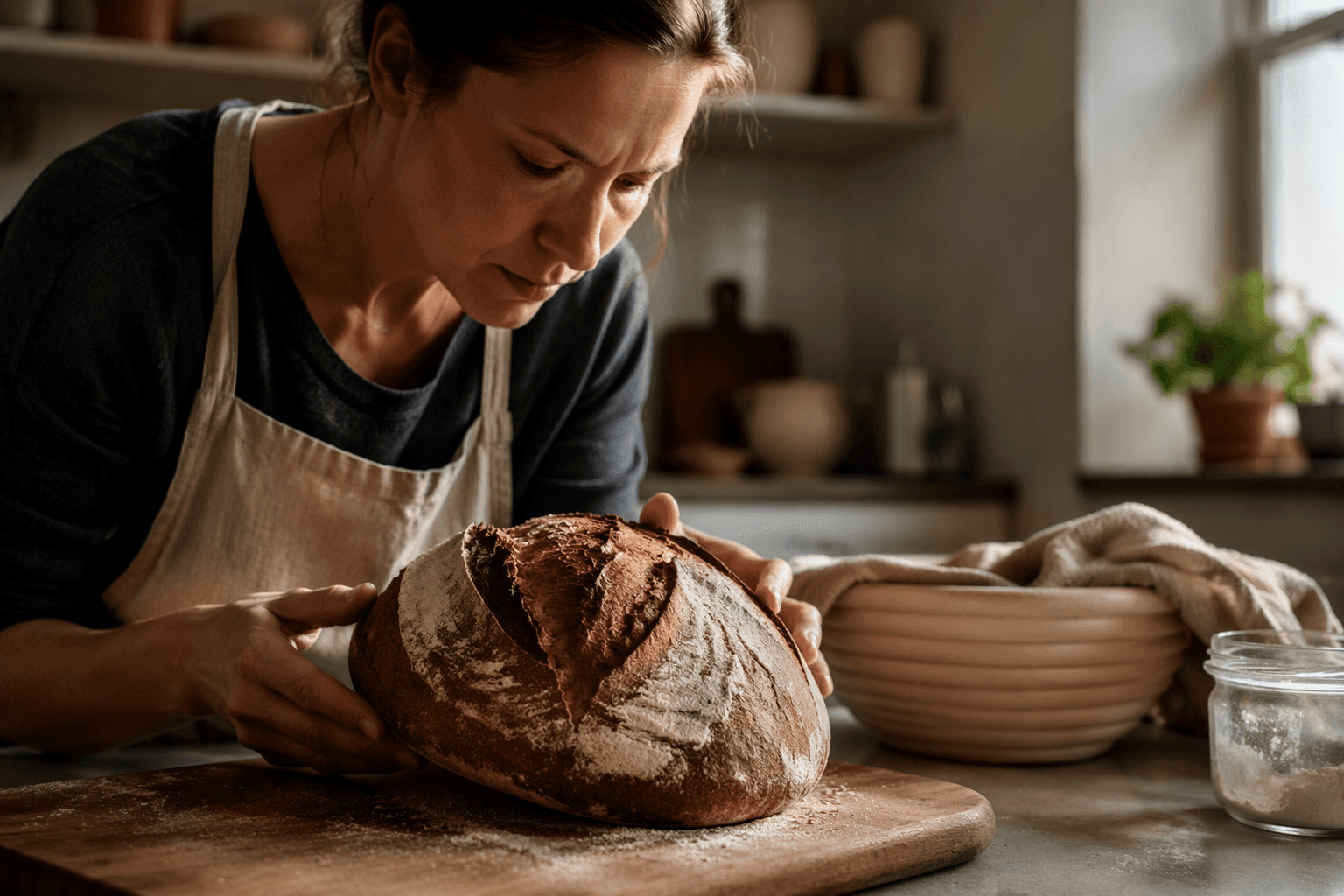
The visible result of better starter care is bread that looks and feels more alive. You want the loaf to rise with more confidence, open more evenly in the crumb, and hold its shape instead of baking up heavy. You also want the flavor to stay in a better range, since an underfed or sluggish starter can push the bread toward excessive sourness instead of a fuller, more rounded taste.
That is why regular feeding is such a powerful habit. It does not require special equipment or expensive ingredients, but it changes the behavior of the dough in ways you can see. A starter in good shape is more predictable, and predictability is one of the biggest gifts you can give yourself in sourdough baking.
The real payoff is balance, not just bigger bubbles
The strongest message here is that sourdough quality usually depends less on dramatic tricks than on two quiet fundamentals: consistent ingredients and a starter that is cared for on a steady schedule. When those two pieces line up, the bread tends to taste more nuanced and balanced, and the bake becomes more reliable from loaf to loaf. That is the kind of improvement home bakers notice immediately, because it changes both flavor and structure.
This is also why the advice lands so well with bakers who have already spent time on technique. Shaping can improve a loaf, and so can scoring, but neither of those can fully compensate for flour that brings little flavor or a starter that is not firing consistently. Better flour gives the bread a deeper base note. Better starter care gives the dough the lift and fermentation rhythm it needs to turn that flour into a proper loaf.
If you only change one thing on your next bake, make it the thing that controls the outcome
For a lot of home bakers, the fastest path to better sourdough is not adding more steps. It is choosing flour with more character and treating the starter like the engine it is. Those are the highest-leverage changes because they affect flavor, rise, crumb, and balance all at once.
The practical result is simple: less blandness, less runaway acidity, more dependable rise, and a loaf that feels closer to what people expect when they slice into good sourdough. In a craft full of variables, that is the kind of improvement that pays off immediately at the table.
This article was produced by Prism’s automated news system from verified source data, official records, and press releases, then run through automated quality and moderation checks before publishing. The system is built and supervised by the people who set the standards it runs under. Read our full AI policy.
Did this article answer your question?