Rize Up Bakery founder teaches Bay Area youth sourdough skills
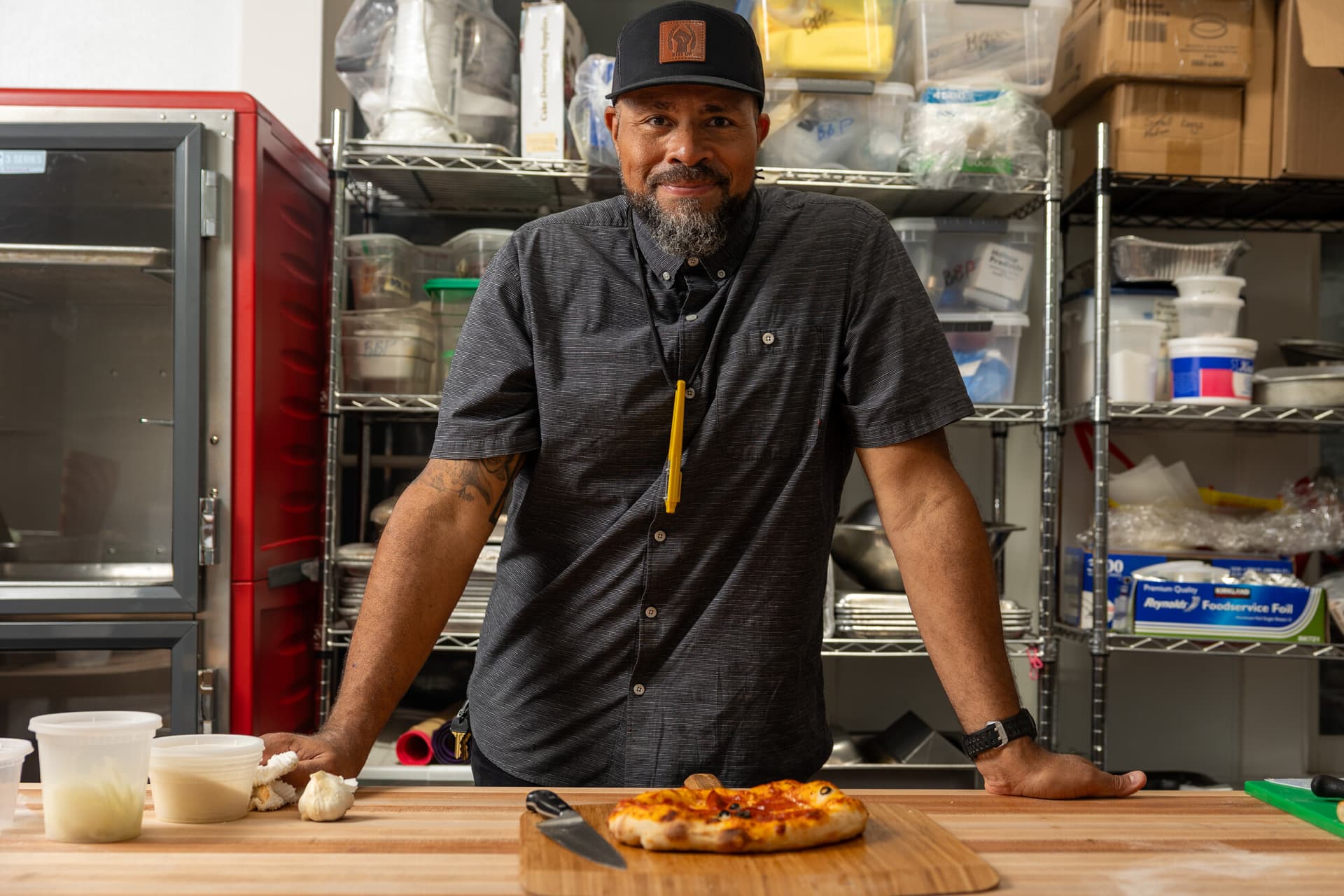
Azikiwee Anderson is teaching Bayview youth the part of baking most people skip: how dough actually works, then how to repeat it at home.
The lesson starts with dough, not inspiration
Azikiwee Anderson is turning his rise from pandemic pop-up favorite to Bay Area staple into a teaching model, and the point of the class is practical from the first stir. At Bayview Makers Kitchen in San Francisco’s Bayview neighborhood, a small group of teens and young adults learns to make pizza dough from scratch while Anderson walks them through the mechanics that make bread and crust behave the way they do.
What he insists on is the part home bakers often miss: understanding gluten development, watching elasticity change as dough comes together, and knowing why those properties matter in the finished loaf or pizza crust. That is the difference between a one-time bake and a skill you can actually keep using.
Why Anderson’s method matters
Anderson is not teaching recipe-following as a passive exercise. Students work with poolish, flour, salt, yeast, and water, then shape and bake their own dough before taking a portion home so they can repeat the process later. That last step matters because repetition is where confidence starts, and confidence is what turns a workshop into apprenticeship.
For early-career bakers, that repeatability is often the missing piece. It is easy to chase flavor or a dramatic rise, but Anderson is showing a tighter standard: know how the dough should feel, know how it changes, and know how to reproduce the result the next time. In sourdough culture, that habit is as valuable as any signature loaf.
A free pipeline for young bakers in Bayview
The class is part of Rize + Make, a community program hosted by Bayview Makers Kitchen. The sessions are free, aimed mostly at youth ages 16 to 20, and organizers allow flexibility for younger and older participants when needed. KQED says the classes meet on the fourth Sunday of each month, began in February, and the first year is planned through at least October.
The next session is listed for April 26, from noon to 2 p.m., at 4618 3rd St. in San Francisco, with pre-registration required. Space is described as extremely limited, which says something important about the demand for hands-on baking instruction when the access point is low-cost and the teacher has real name recognition in the Bay Area food scene.
The kitchen behind the program was built for access
Bayview Makers Kitchen was created in 2020 as a low-barrier-to-entry, certified catering and food processing kitchen. It was founded through a partnership between Economic Development on Third, known as EDoT, and San Francisco’s Office of Economic and Workforce Development. That matters because the class is not happening in a one-off demo space; it is happening in an incubator designed to give food makers affordable kitchen space, business support, and a path into the industry.
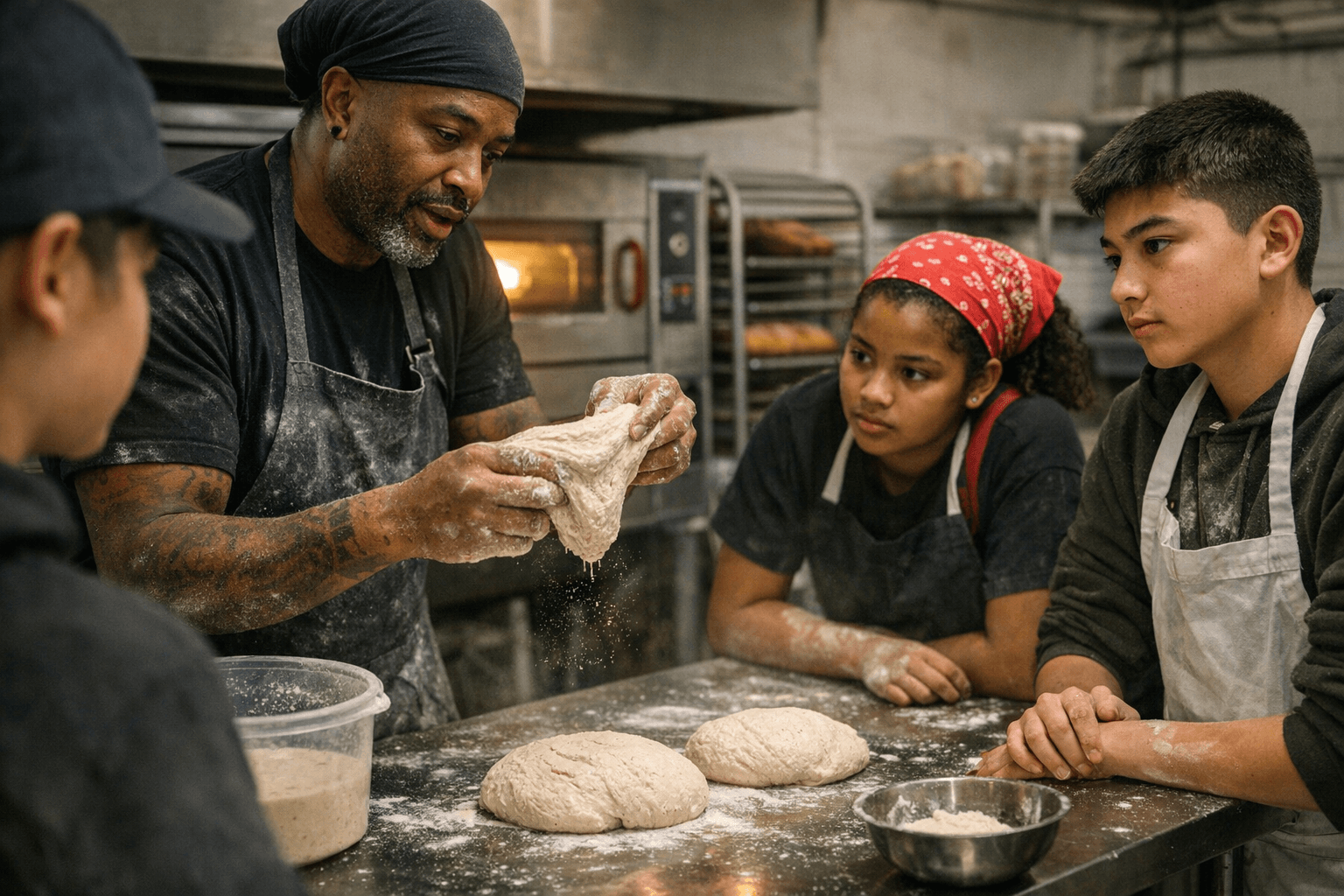
The setting reinforces the lesson. This is not baking as an Instagram moment. It is baking as infrastructure, with a public-purpose kitchen giving young people a chance to touch equipment, scale ingredients, and learn how a professional baking environment works before they are responsible for it on their own.
Anderson’s story gives the teaching weight
Anderson’s credibility with students comes from the path he took to get here. Earlier KQED coverage said he began Rize Up Bakery as a pandemic home-baking project and eventually scaled up to making as many as 150 loaves a day from his house. That arc from home experiment to serious operation mirrors the exact kind of growth the class is meant to encourage: start where you are, then build skill until the process holds up under pressure.
Rize Up also became known for flavors that pushed beyond the standard sourdough lane. KQED has reported signature loaves flavored with gochujang, paella, and ube, a lineup that helped make the bakery one of the most sought-after in the Bay Area. Those combinations matter here because they show Anderson is not teaching bread as something frozen in tradition; he is teaching technique that can carry new flavors without losing structure.
The deeper message: representation and opportunity
Anderson has linked his work to the social unrest after George Floyd’s killing and to the need for representation and opportunity for Black bakers. That gives the workshop a larger purpose than skills transfer alone. In a bread world where Black bakers have been historically underrepresented, teaching young people the mechanics of dough is also a way of widening who gets to belong in the craft and who gets to define its future.
That context is easy to miss if you only look at the bakery as a hot label or a trendy loaf. But in the classroom, the message is sturdier: bread knowledge should be accessible, visible, and passed on with enough clarity that students can use it without a mentor hovering over their shoulder.
Rize Up is moving from wholesale success to a public storefront
The bakery’s next chapter is also taking shape in SoMa. Recent local reporting says Rize Up’s first café is planned for 1160 Howard St., at the company’s production facility, and Anderson is aiming to open by July 7, his birthday. The planned café would convert the wholesale production kitchen into a public-facing retail space, marking a shift from behind-the-scenes baking to direct customer contact and community visibility.
That move fits the same pattern as the youth class. Whether he is teaching a teenager how gluten develops or turning a wholesale kitchen into a café, Anderson is building a more open version of the bakery world he entered during the pandemic. The takeaway for sourdough bakers is clear: the real craft is not just in the flavor profile or the rise, but in the discipline, the repetition, and the ability to pass the method on intact.
This article was produced by Prism’s automated news system from verified source data, official records, and press releases, then run through automated quality and moderation checks before publishing. The system is built and supervised by the people who set the standards it runs under. Read our full AI policy.
Did this article answer your question?