Young Sourdough Entrepreneurs Build a Busy Dutch Oven Bakery Stall
Gloria, 12, and Israel, 10, are turning eight daily loaves into a real market stall, and their next move shows how small-batch sourdough can scale.
A tiny bakery with real throughput
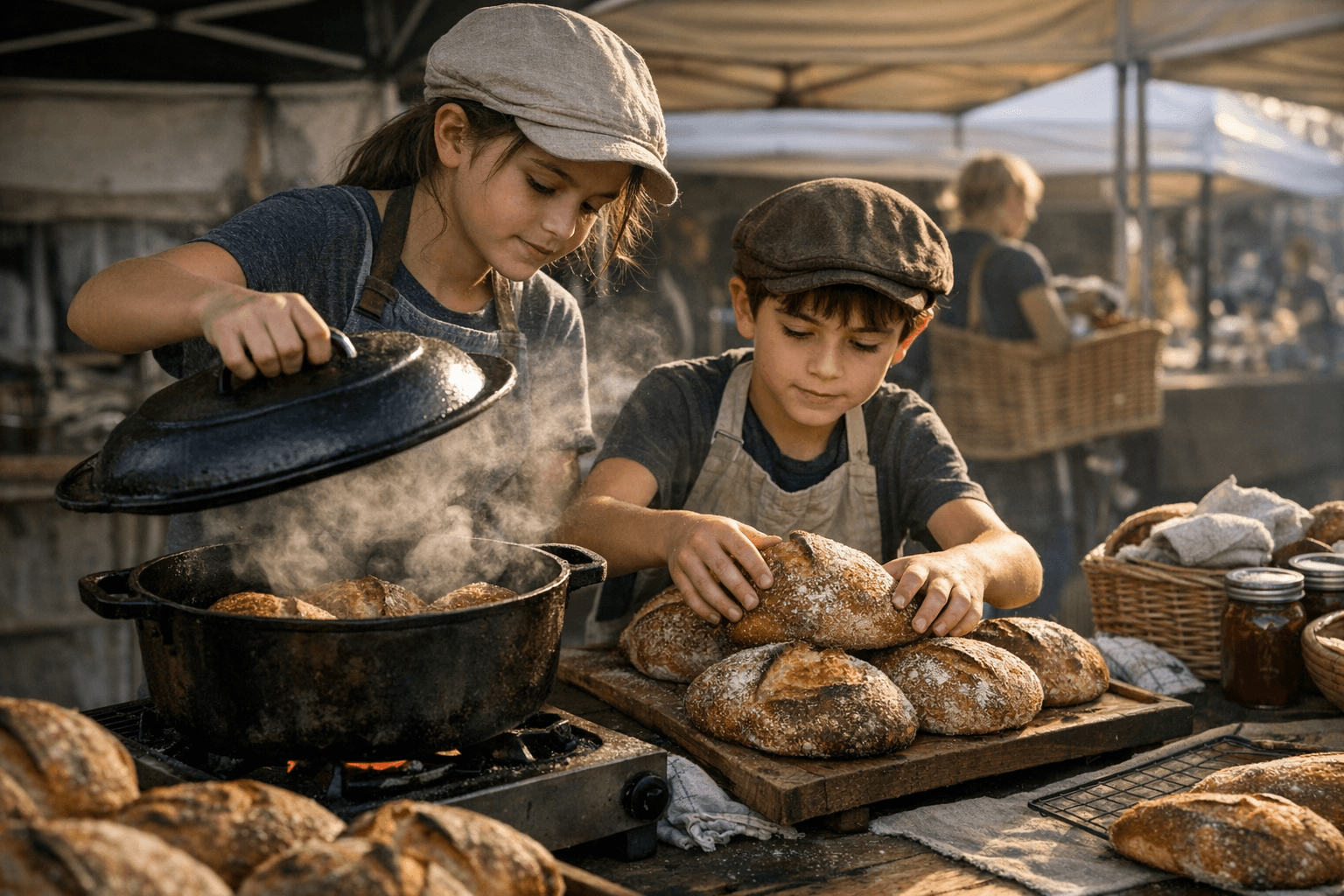
At The Dutch Oven Bakery, the eye-catching detail is not just that two children are running the stall. It is that Gloria, 12, and her brother Israel, 10, are working a production rhythm that looks a lot more like a serious market micro-business than a table-side hobby. They were selling sourdough and focaccia at the Youngstown Flea in downtown Youngstown, and by the time the stall was featured, they were nearly sold out for the day.
That matters because it shows the business has a pace, a product mix, and enough demand to justify disciplined baking. The siblings say they make about eight loaves a day, which is a clear signal that this is a repeatable operation, not a one-off batch for a special event. Their mother supervises, but the children are the ones doing the work themselves, learning the process while they handle the selling.
Why the setup works at market
The Youngstown Flea gives this bakery the kind of setting that small sourdough sellers often need before they can grow. The market describes itself as a once-per-month “Market For Makers,” with a permanent home at 365 E. Boardman Street in downtown Youngstown after moving there in 2021. Its model is built around direct-to-consumer sales, which means makers can test product demand, talk to buyers face-to-face, and keep more control over what they bring back the next month.
The Spring Flea on April 11, 2026 ran from 9 a.m. to 3 p.m., and that timing helps explain the day’s pace at The Dutch Oven Bakery stall. A limited window creates urgency, and urgency is part of what moves bread at a market. When customers know a loaf is fresh, small-batch, and likely to disappear before closing time, sourdough stops being just another baked good and becomes a destination item.
The Flea’s broader growth also adds context. WKBN reported in 2025 that the Youngstown Flea was entering its 10th season, which shows the market has become a durable local platform rather than a novelty event. For a young family bakery, that kind of steady venue is valuable because it creates repeat foot traffic, predictable selling days, and a reliable place to build recognition.
What they bake, and why it sells
The Dutch Oven Bakery is built around two products that already make sense together: sourdough and focaccia. That pairing is smart for a market stall because it gives buyers both a classic artisan loaf and a softer, more immediate bread option. Sourdough brings the long-fermented appeal, while focaccia can pull in shoppers who want something savory, flexible, and easy to picture on the table that night.
The name of the business also tells you something important. By tying the brand to the Dutch oven, Gloria and Israel are not hiding the method behind the product. They are making the equipment part of the identity, which is exactly the kind of clarity that helps a small bread business stand out. At a busy maker market, that sort of simple, memorable branding can be as useful as a polished logo.
The fact that they were nearly sold out near the end of the reporting window is another clue that the mix is working. A stall that moves most of its product in a single market day tells you the loaves are priced, portioned, and positioned correctly for the crowd it serves. For home bakers thinking about market sales, that is the real lesson: the right product mix often matters more than a huge menu.
The scaling lesson hidden in the age detail
Gloria and Israel being 12 and 10 is the share hook, but the useful part is what that age tells you about process. They are not just baking at home and hoping it works. They are learning how to produce, transport, display, and sell bread in a live market setting, with their mother supervising and the stall giving them immediate feedback from customers.
That kind of hands-on structure is exactly what makes a micro-business resilient. Every market day teaches timing, quantities, and what sells first. If a loaf disappears faster than expected, the next bake gets adjusted. If customers ask for something different, the product plan changes. That loop is already visible in Gloria’s comment about the future: the siblings want to expand into gluten-free bread and flavored sourdough.
That forward-looking plan is significant because it shows product development, not just repetition. Gluten-free bread opens a different customer lane, while flavored sourdough gives the bakery a path toward variety without abandoning its core identity. For a small sourdough business, that is how you grow without losing the handmade feel that brought customers in the first place.
What hobby bakers can take from The Dutch Oven Bakery
The strongest lesson from this stall is that a market business can start with a tight, manageable system and still feel real. The Dutch Oven Bakery is not trying to be everything at once. It has a clear name, a focused product line, a fixed market venue, and a production target that the bakers can actually hit.
A practical model from this story looks like this:
- Bake around a known demand level, not an abstract dream volume. Eight loaves a day gives the business a workable rhythm.
- Pair one core loaf with one complementary bread. Sourdough and focaccia create variety without overcomplicating prep.
- Make the method part of the brand. The Dutch oven is not just equipment here, it is the identity.
- Use market day as product research. Nearly sold out is information, not just good luck.
- Plan the next version of the menu before the current one stalls. Gluten-free and flavored sourdough give the business a clear growth path.
The larger Youngstown Flea setting reinforces why this approach works. A once-per-month market with direct-to-consumer sales, a permanent downtown home, and a long-running schedule creates the kind of structure small vendors need to build momentum. In that environment, Gloria and Israel are doing more than selling bread. They are learning how a sourdough business becomes steady, how a stall becomes a brand, and how a young bakery can turn a few loaves into a real market-day operation.
This article was produced by Prism’s automated news system from verified source data, official records, and press releases, then run through automated quality and moderation checks before publishing. The system is built and supervised by the people who set the standards it runs under. Read our full AI policy.
Did this article answer your question?