Sweets & Sourdough turns roadside cart into neighborhood ritual
Heather Tuttle’s self-serve cart turns sourdough into a weekend habit, with preorder ease, walk-up sellouts, and standout bakes like butter bread and pimiento cheddar biscuits.
How Sweets & Sourdough works
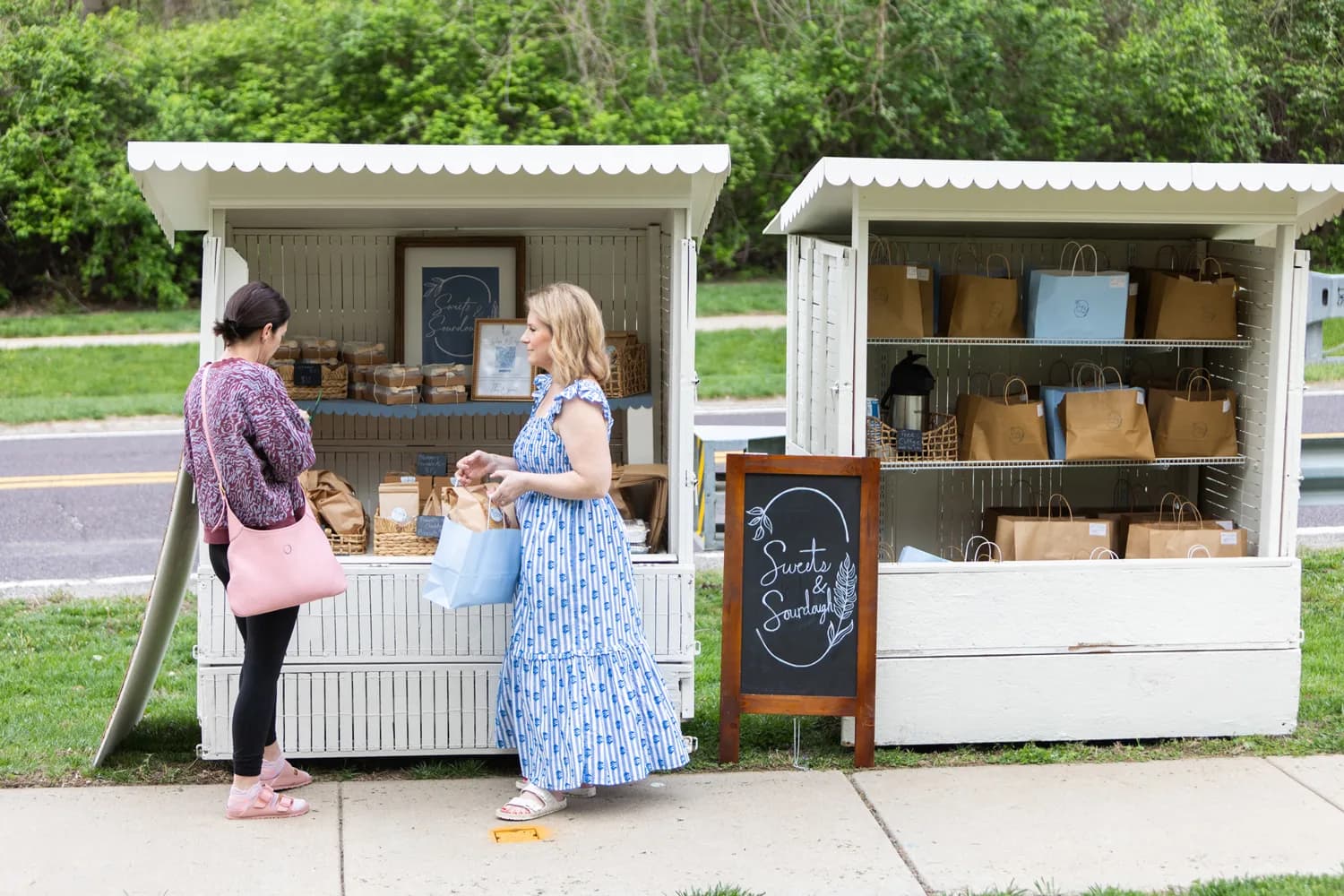
Heather Tuttle built Sweets & Sourdough around a setup that feels more like a neighborhood habit than a bakery stop. The cart sits at 1678 Creve Coeur Mill Road in West County and opens on Saturdays and Sundays as a self-serve roadside stand, with weekday preorder options through Hotplate. That mix matters: it gives regulars a way to plan ahead, then rewards the early risers who want to grab whatever is on the cart before it disappears.
The rhythm is simple and effective. During the week, customers place orders online. On the weekend, the cart rolls out and gets stocked for walk-up traffic, often already full when the morning begins. Tuttle says people have waited on the sidewalk as early as 8 a.m. in their pajamas, which tells you everything you need to know about the pull here. This is not a polished storefront trying to manufacture charm. It is a low-friction, hyperlocal bread stop that has become part of the weekend routine.
Why the setup works at street level
The location helps explain the business model. The cart sits on a busy road leading to a soccer park, so the customer flow is built into the neighborhood’s own schedule. Families passing through, regulars on their way out, and early arrivals looking for bread before the day fills up all create the kind of traffic a cottage bakery needs to thrive without a traditional shop.
That roadside presence also changes the relationship between baker and customer. There is no counter barrier, no formal dining room, no lingering retail theater. Instead, the cart feels immediate and practical: you come for bread, pastries, or a seasonal special, and you leave with something still warm enough to make the car smell like a bakehouse. Add the self-serve format, and the experience becomes part transaction, part ritual.
The sourdough is the point, even in the sweet stuff
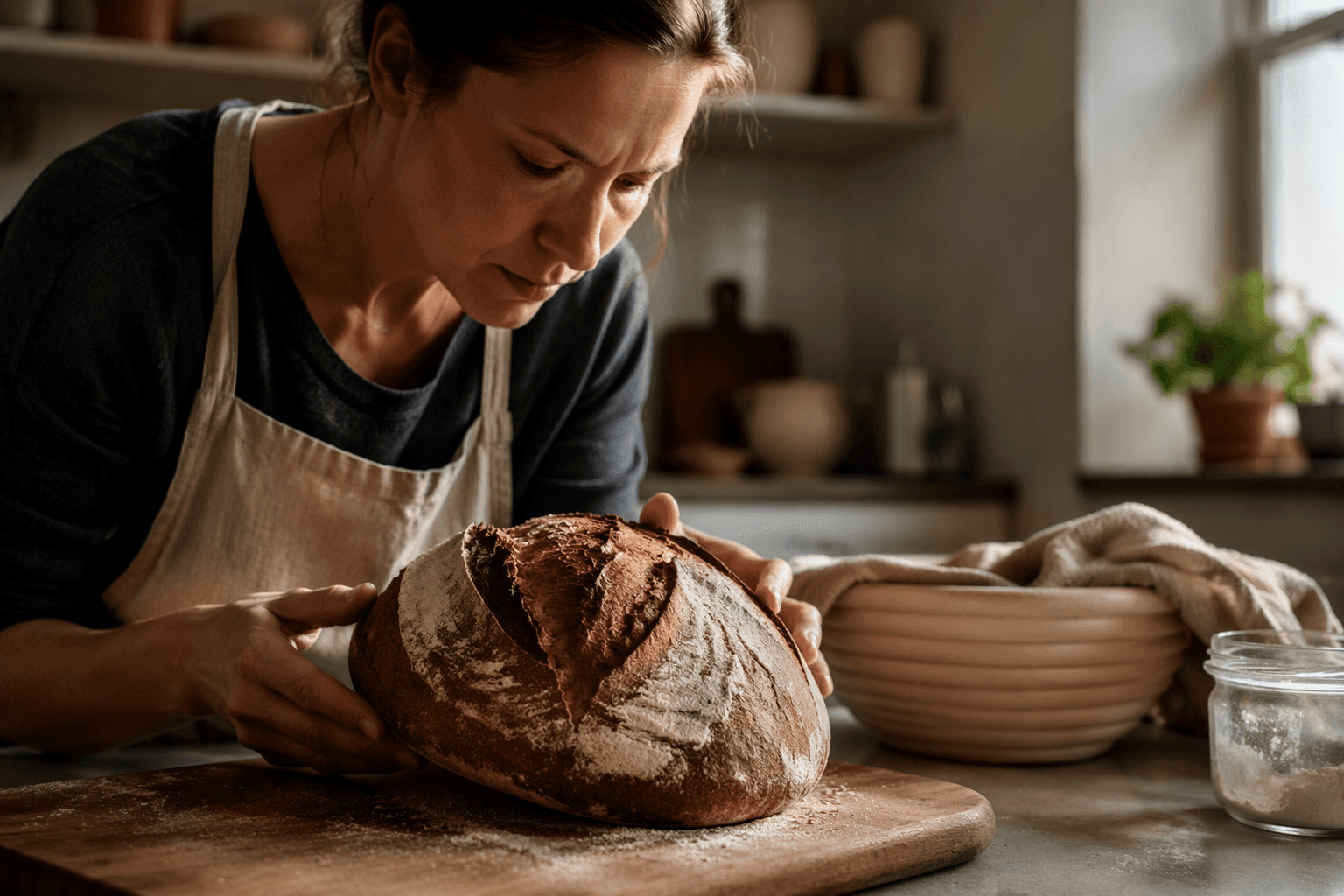
Sweets & Sourdough is not one of those operations that uses sourdough as a loose marketing buzzword. Tuttle folds sourdough into every sweet and savory item she makes, from rustic loaves and biscuits to cinnamon rolls and more playful seasonal bakes. That is the kind of detail sourdough people notice immediately, because it changes both flavor and structure. The result is a bakery with a clear point of view: tang, depth, and a distinct bread character running through the whole menu.
If you are deciding what to buy first, start with the items that show how Tuttle uses that base. Her butter bread loaf is the headline grabber, made with an entire stick of butter shredded into the dough. That is the sort of formula that makes sense only when the baker knows exactly what texture she wants. The pimiento cheddar biscuits bring the savory side into focus, while lemon-blueberry crumb muffins and rotating cinnamon roll flavors give the cart a sweeter, more seasonal edge.
The menu feels like a rotating home bake, not a fixed bakery board
Part of the appeal is that the cart does not feel locked into a rigid, standardized list. Tuttle changes the offerings seasonally and uses many organic ingredients, aiming for good food with clean, simple ingredients. That means the cart can shift with the calendar without losing its identity. One weekend might lean into fruit and bright flavors, another into richer doughs and cozy rolls, but the through line stays the same: approachable, scratch-made bakes with a sourdough backbone.
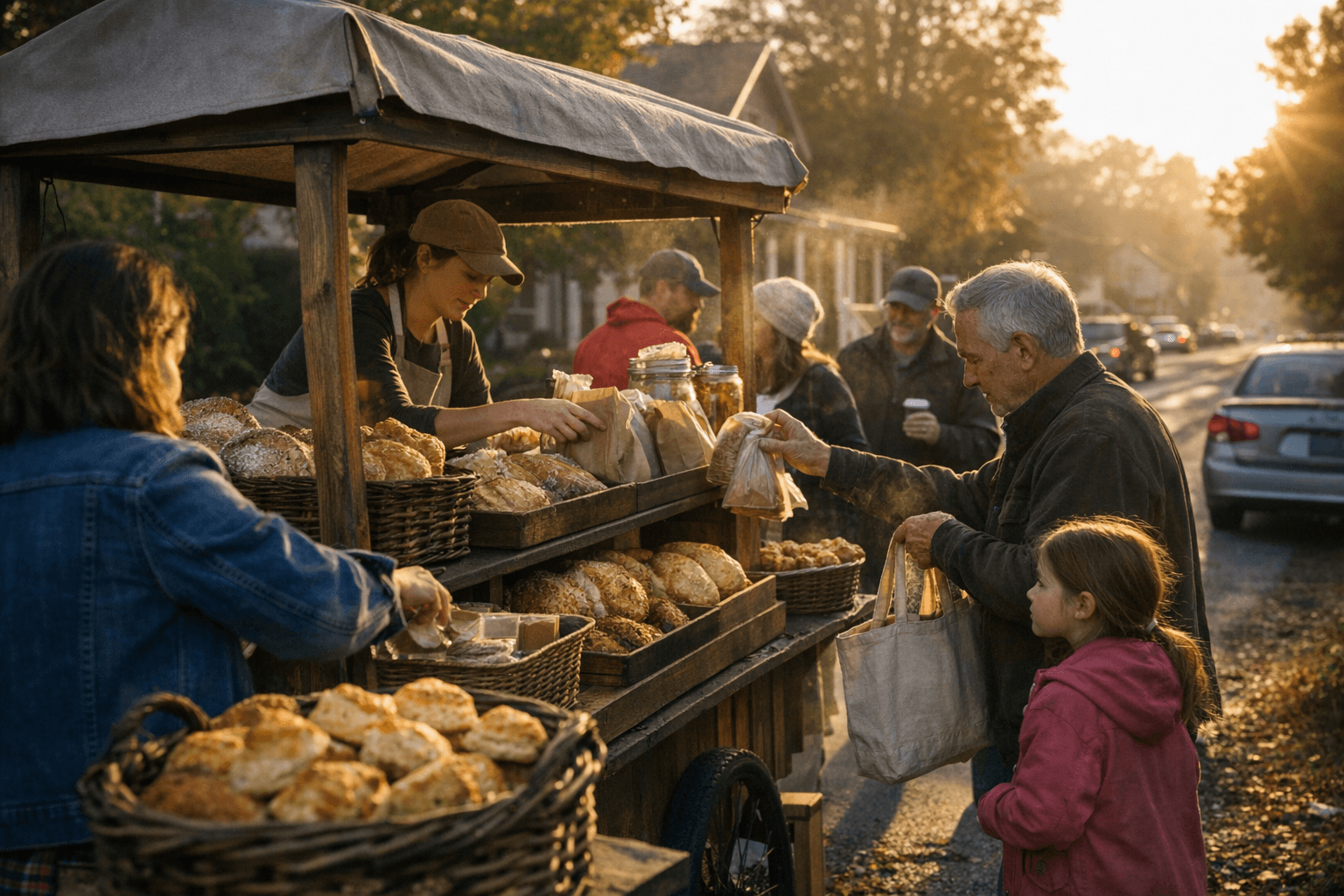
The extras reinforce that feeling. The cart may also include homemade jams and fresh-cut flowers, which push the whole setup further into neighborhood-stop territory. It is a smart touch. Bread gets people there, but little additions like jam and flowers turn a quick pickup into something that feels curated without becoming precious.
A family operation built into the routine
The cart is not a one-person performance, even if Heather Tuttle is the face of it. Her husband, Andrew, helps with dishes and pushes the cart out to the road, which is exactly the kind of unglamorous support work that keeps a small bakery viable. Her 5-year-old son adds to the weekend energy by making free coffee for visitors to earn his allowance. That detail matters because it makes the business feel lived-in. This is not a staged brand story. It is a family system built around flour, dishes, and Saturday mornings.
That kind of participation also helps explain why the cart feels like a ritual for the neighborhood. People are not just showing up for pastry. They are showing up to a scene that repeats every weekend in roughly the same way, with the same road, the same cart, and the same family labor behind it. The routine becomes part of the draw.
The starter carries the bakery’s history
Every sourdough baker has a story about a starter, and Tuttle’s is especially personal. Her starter was a gift from a family friend and is now older than her youngest child. That gives the bakery a sense of continuity that fits the rest of the operation. The bread is not only fresh, it is tied to a living culture that has been carried through time, family, and repeated feedings.
For sourdough fans, that matters as much as any menu item. A starter that has been kept alive long enough to outlast a child is not just an ingredient. It is a record of habit, care, and trust, the same qualities that define the cart itself. The bakery’s appeal comes from that exact overlap: old dough culture, weekend routine, and a setup that makes direct contact with customers feel normal instead of special.
Why this cart has turned into a neighborhood ritual
Sweets & Sourdough works because it keeps the promise small and specific. On weekends, there is bread, pastry, and coffee on a roadside cart. During the week, there is preorder convenience through Hotplate. The cart is often full when it opens, and the early crowd proves that the formula is working. Tuttle has built a cottage bakery that feels grounded in place, family, and repetition rather than in retail polish.
For anyone who cares about sourdough as more than a trend, that is the useful lesson here. Hyperlocal scale can still be durable when the product is distinct, the pickup is easy, and the routine becomes part of the community’s week. At 1678 Creve Coeur Mill Road, the cart is not just selling bread. It is teaching a neighborhood how to make a ritual out of good dough.
This article was produced by Prism’s automated news system from verified source data, official records, and press releases, then run through automated quality and moderation checks before publishing. The system is built and supervised by the people who set the standards it runs under. Read our full AI policy.
Did this article answer your question?