Sourdough biscuits kept cowboys fed on long cattle drives
A trail drive could last six months, so cowboys treated sourdough starter like survival gear. That same grit still makes it one of the smartest low-tech systems in a home kitchen.
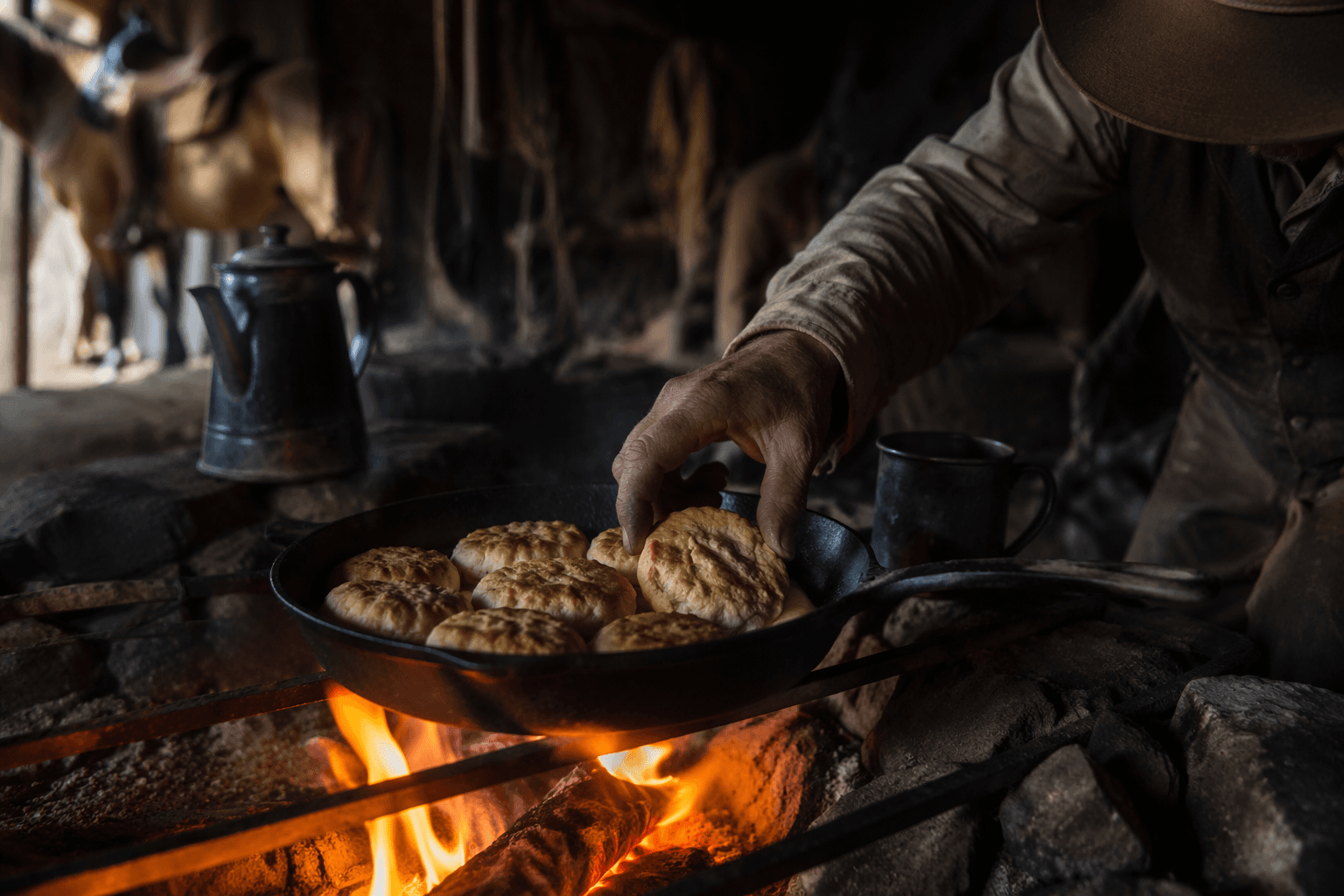
A jar of sourdough starter had to survive the same country as the men hauling cattle: dust, cold nights, bad weather, and months on the move. On the trail, that starter was not a foodie accessory, it was a working ingredient that turned flour into breakfast and dinner into something that stuck to a rider’s ribs.
Why starter mattered on the trail
Cattle drives were long enough to make shelf life a real problem. National Park Service timelines for cattle drives run two to three months from Texas to Kansas and as long as six months to Montana. That is exactly why portable food had to carry its own weight.
Those numbers sit inside a bigger migration story. After the Civil War, Texas had cattle but little cash, and the push northward helped move upwards of 10 million cattle along routes that later became part of the proposed Chisholm and Great Western National Historic Trail. Trail crews were usually only 12 to 15 hands, so every meal had to do real work, not just fill space.
That is where sourdough earned its place. Cowboys did not need fancy bread; they needed something that could be kept alive, carried, and baked whenever there was fuel and time. Sourdough starter fit that brief better than almost anything else on the trail.
The chuck wagon was the real kitchen
The chuck wagon was the center of the operation. The cook was one of the most important people on a drive because morale and performance depended on feeding the crew well. Those cooks were often older men or former cowboys, and they were well paid because the whole outfit ran on their timing.
They also worked in the dark, rising in the predawn hours to get meals going. At Grant-Kohrs Ranch National Historic Site, a historic chuck wagon exhibit lists sourdough starter as a standard item stored in the chuck box alongside flour and utensils. The starter was not an abstraction; it lived in the gear box with the rest of the daily tools.
The wagon itself carried the stove and food for the crew, turning one vehicle into a moving kitchen. That is the same logic home bakers use when they keep a starter in a jar on the counter or in the refrigerator. It is a compact, repeatable food system that works because it is simple enough to keep alive.
What cowboys actually ate
Trail food was sturdy, repetitive, and built around whatever could travel. The Texas Almanac sums up the spread with the kind of blunt honesty that makes sense on horseback: “sourdough bullets” for biscuits, beans, bacon, cowboy coffee, and sometimes beef and bison steaks. Beans and sourdough bread were iconic chuck wagon fare washed down with strong cowboy coffee.
The trail biscuit was not supposed to be airy and elegant. It was denser than the modern version, and it had a job to do: soak up stew and make beans more filling. Alongside bacon, salt pork, coffee, and the occasional dried fruit or canned treat, sourdough biscuits helped turn a rough pantry into a dependable system.
Starter, flour, a Dutch oven, and hot coals gave the crew a hot breakfast in conditions that offered very little else.
This article was produced by Prism’s automated news system from verified source data, official records, and press releases, then run through automated quality and moderation checks before publishing. The system is built and supervised by the people who set the standards it runs under. Read our full AI policy.
Know something we missed? Have a correction or additional information?
Submit a Tip