Grand Canyon keeps Stage 2 fire restrictions in place this summer
Grand Canyon’s summer fire rules are still locked at Stage 2, and on the North Rim that means no campfires, no charcoal, and a much tighter checklist for camping and roadside stops.
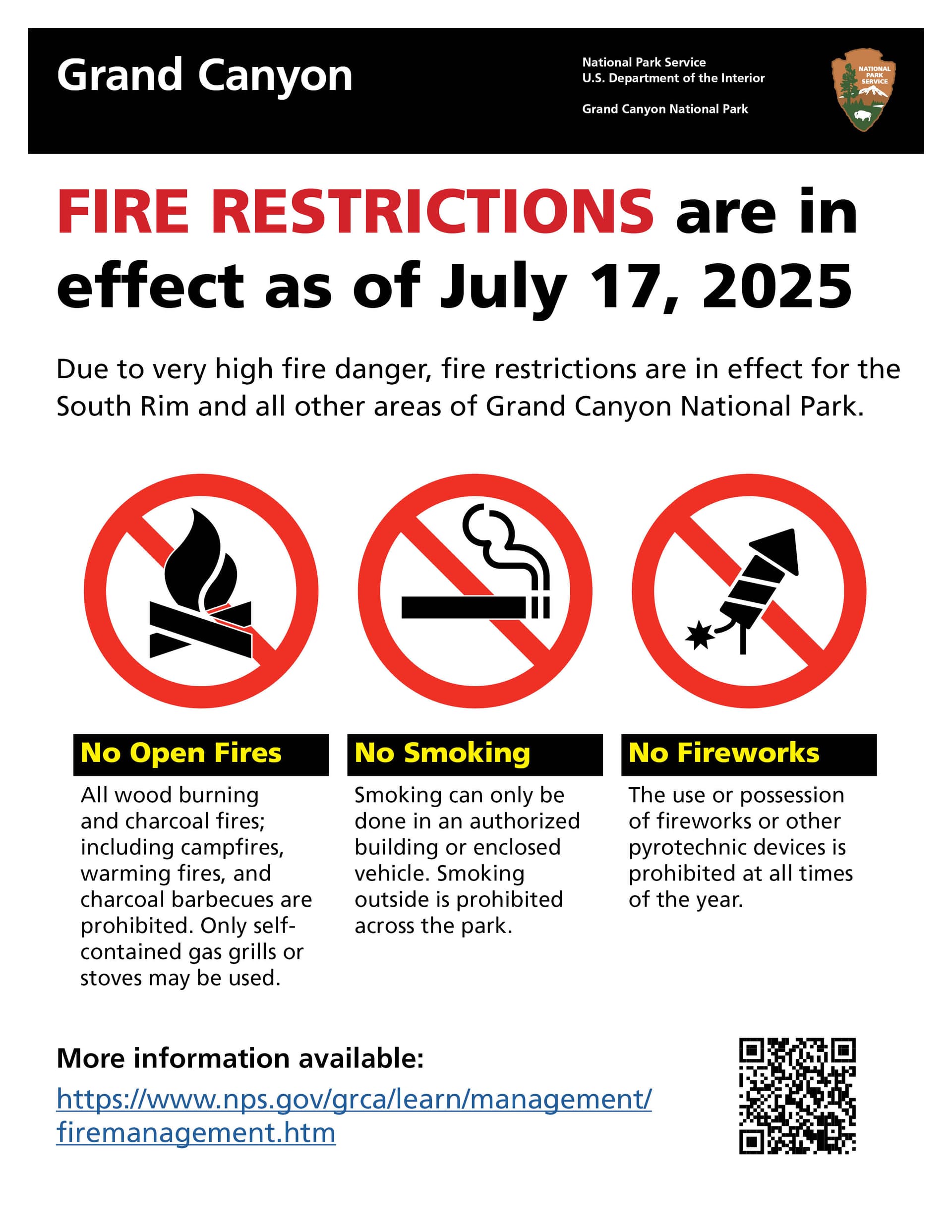
Grand Canyon National Park kept Stage 2 fire restrictions in place across the South Rim, North Rim and Inner Canyon. South Rim fire danger is very high and North Rim fire danger is extreme.
For campers, the rules are blunt: no wood-burning fires, no campfires, no warming fires and no charcoal barbecues. Liquid petroleum or LPG stoves, lanterns and heating devices are allowed only when they are set on cleared ground with no flammable material within 3 feet. Smoking is limited to enclosed vehicles or a barren area at least 3 feet across, fireworks are always prohibited on public lands, and spark-producing equipment such as chainsaws, weed trimmers, welders, wood splitters and generators is restricted unless the park authorizes it through a hot work permit. Even off-road parking is narrowed to barren or cleared spots with no flammable vegetation within 3 feet of a vehicle.
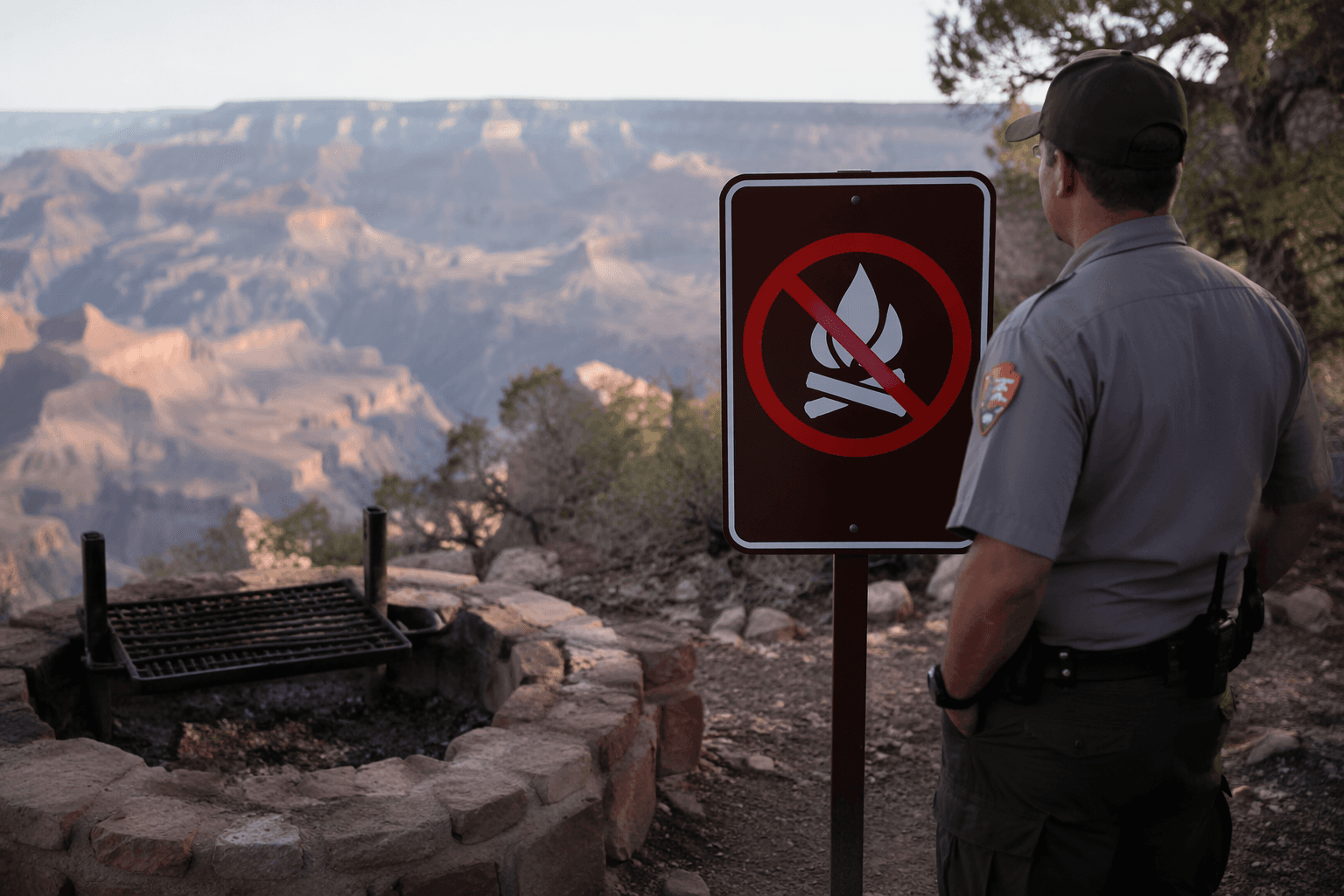
A June 26 restriction notice put the South Rim and Inner Canyon under Stage 2 at 12:00 p.m. because of forecast critical fire weather. The National Weather Service was calling for strong winds, critically low relative humidity and exceptionally dry vegetation across northern Arizona, while Arizona Public Service warned conditions could lead to a Public Safety Power Shutoff to reduce the risk of electrical infrastructure igniting a wildfire. Grand Canyon National Park will keep the restrictions in place until significant precipitation lowers fire danger.
The North Rim reopened for the 2026 summer season on May 15 after the 2025 Dragon Bravo Fire burned 149,399 acres across the Kaibab Plateau, including 71,129 acres on park-managed land, and destroyed 114 buildings, including 98 historic structures. The North Kaibab Trail also reopened May 15 for foot traffic only, with stock use suspended for the season, and visitors should bring enough drinking water, food, fuel and other supplies because services remain limited.
This article was produced by Prism’s automated news system from verified source data, official records, and press releases, then run through automated quality and moderation checks before publishing. The system is built and supervised by the people who set the standards it runs under. Read our full AI policy.
Did this article answer your question?