Grand Canyon planning guide helps travelers choose the right rim, season, trip
Pick the rim that fits your trip style: South Rim for all-around access, North Rim for solitude, West Rim for Vegas-friendly views and Skywalk drama.
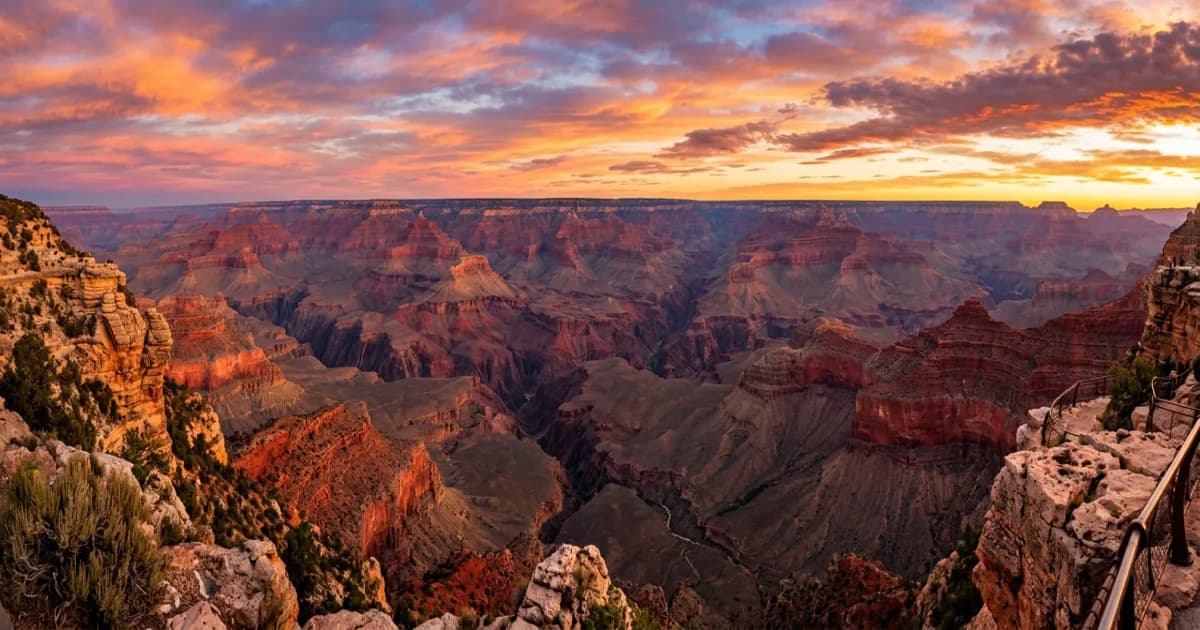
Choose the rim before you choose the hike
The Grand Canyon is too big to treat like a single destination. It stretches 277 miles long, reaches up to 18 miles wide, drops more than a mile deep, and still pulls in more than 5 million visitors a year, so the first planning decision matters more than almost anything else: which rim matches the trip you actually want to take? The best answer depends on how long you have, how much driving you can tolerate, what season you are traveling, and how much you care about crowds, fees, and services.
That is especially true now, because the canyon’s visitor experience is not just about views. It is also about access, shuttle routes, seasonal openings, remote roads, and a new nonresident fee that changes the math for some travelers before they even reach Arizona. Grand Canyon National Park was established on February 26, 1919, and it sits on the ancestral homelands of 11 present-day Tribal communities, a reminder that every rim is part of a much older landscape than the park boundary suggests.
South Rim: the safest bet for a first Grand Canyon trip
If this is your first Grand Canyon visit, start at the South Rim. It is open 24 hours a day, 365 days a year, and most services are available year-round, which makes it the most forgiving choice for a bucket-list trip, a family road-trip, or anyone who wants the classic canyon experience without worrying about seasonal closures. Lodging, restaurants, viewpoints, trails, and shuttles are all part of the South Rim package, so you can spend less time solving logistics and more time taking in the scale of the place.
The South Rim is also the easiest rim to navigate without a complicated plan. The park’s free shuttle system has operated for more than 40 years, and in spring 2026 it includes the Village, Kaibab, Hikers’ Express, and Hermits Rest routes. That means you can leave the car behind once you are inside the core visitor area, which is a major relief during busy periods. The tradeoff is that the South Rim is the most popular option, so it is where you are most likely to feel the canyon’s crowd pressure.
There is one more practical wrinkle right now: the South Rim is under water conservation measures in April 2026 because of pipeline breaks in the inner canyon. If you want the broadest range of services and the most dependable access, the South Rim still wins, but it is worth building in a little flexibility and arriving ready for a busy, highly managed visit.
North Rim: for cooler air, fewer people, and a more remote feel
The North Rim is the rim for travelers who want the Grand Canyon to feel quieter, cooler, and harder-won. It is remote, limited in services, and far more seasonal than the South Rim, which is exactly why it appeals to returning visitors, serious hikers, and anyone who would rather trade convenience for solitude. The park normally opens select North Rim areas only from October 1 to November 14, and in 2026 it will reopen for the summer season at 6 a.m. on Friday, May 15.
That seasonal window matters because the North Rim is not a casual drive-by stop. The North Rim entrance station sits 30 miles south of Jacob Lake, and the actual rim is another 14 miles beyond that, so even getting there feels like part of the adventure. Weather and post-fire recovery also shape access, with closures and trail restrictions tied to both conditions. For travelers who are already planning a long Southwest loop and do not mind the extra miles, that remoteness is the appeal.
Choose the North Rim if you want a slower, less crowded canyon trip and you are comfortable planning around limited services and narrow access windows. It is not the easiest rim, but it may be the most rewarding for travelers who value space, quiet, and cooler conditions over convenience.
West Rim: the best fit for a fast, amenities-heavy, Vegas-adjacent outing
Grand Canyon West is not inside Grand Canyon National Park at all. It is managed by the Hualapai Tribe on the Hualapai Reservation, which gives it a different feel and a different set of trip decisions. If you are coming from Las Vegas, want a shorter day trip, or care more about a signature attraction than a deep park itinerary, this is the rim that makes the most sense.
The headline draw is the Skywalk, a 10-foot-wide glass bridge that extends 70 feet over the canyon edge and sits about 4,000 feet above the canyon floor. That is the kind of number that turns into an instant share hook, because it is easy to picture and hard to forget. The West Rim is built for travelers who want a dramatic, packaged canyon experience with strong visual payoff and less of the national-park planning overhead.
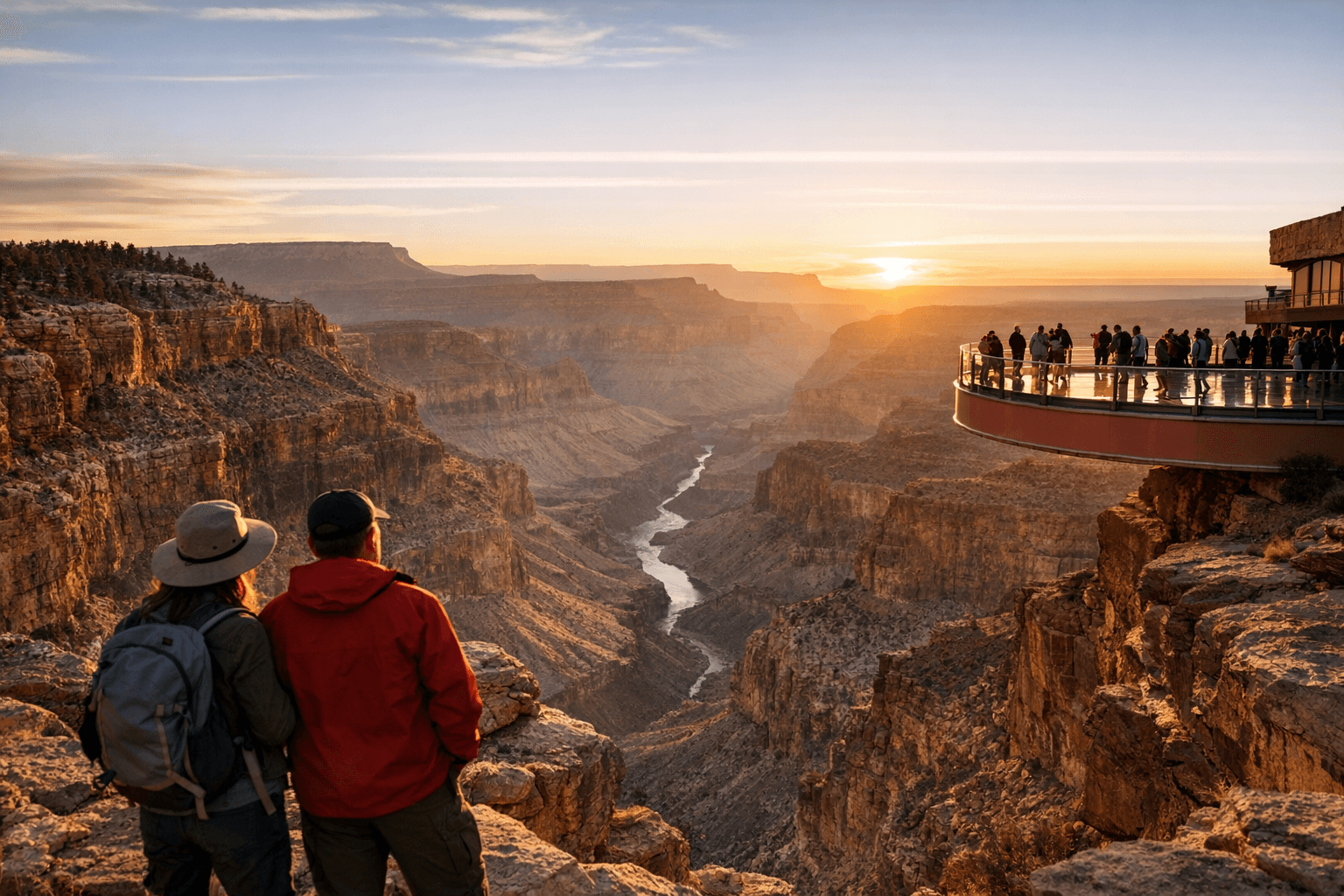
It is also the best match if your priorities are convenience and a shorter drive rather than classic park infrastructure. You will not get the same national park framework as the South Rim, but you may get a more efficient fit for a one-day outing or a stop on a broader Las Vegas-based road trip.
Match the rim to the trip length you actually have
If you only have one day and you want the most complete Grand Canyon experience, the South Rim is the easiest recommendation because the access, shuttles, and services reduce friction. If you have a little more time and want a trip that feels less managed and more remote, the North Rim is better, but only if the season works and you are prepared for fewer services.
If your route is built around Las Vegas or you want the canyon to be one part of a bigger amenity-rich trip, Grand Canyon West is the more efficient choice. The decision is less about which rim is “better” and more about whether you are after a classic first visit, a quieter return, or a fast-hit canyon stop with a signature attraction.
Match the rim to your travel style
- First-time bucket-list visitor: South Rim. You get year-round access, the widest range of services, and the easiest logistics.
- Returning hiker or solitude seeker: North Rim. It is cooler, quieter, and more seasonal, with a stronger sense of remoteness.
- Family road-tripper: South Rim. The shuttle system, lodging, and year-round operations make it easier to manage with kids or mixed-age groups.
- Helicopter or amenities seeker: West Rim. It is outside the national park, tied to Grand Canyon West, and centered on the Skywalk and other packaged experiences.
Budget, fees, and timing can change the whole trip
The new nonresident fee is one of the most important planning details for international travelers. Non-U.S. residents age 16 and older visiting Grand Canyon and 10 other high-traffic parks pay $100 per person in addition to the standard entrance fee. That can materially change the cost of a family visit or a multi-park itinerary, especially if you are comparing a South Rim stay to a shorter West Rim stop or a more selective North Rim detour.
Timing still matters just as much as price. March through May and September through November remain the smartest shoulder-season windows for travelers trying to dodge the worst heat and the heaviest crowds. The South Rim is the most reliable anchor for those months, while the North Rim requires a tighter seasonal read and the West Rim works best when you want to keep the trip compact.
The simplest way to plan the Grand Canyon is to decide what kind of memory you want to bring home. If you want the iconic, all-access version, choose the South Rim. If you want quiet and cooler air, choose the North Rim. If you want a fast, dramatic, Vegas-friendly canyon stop, Grand Canyon West is the one that fits.
This article was produced by Prism’s automated news system from verified source data, official records, and press releases, then run through automated quality and moderation checks before publishing. The system is built and supervised by the people who set the standards it runs under. Read our full AI policy.
Did this article answer your question?