Knifepoint Attack on Trail Shatters the Myth of Wilderness Safety
A solo hiker was attacked at knifepoint on Signal Hill inside Table Mountain National Park, exposing the false comfort that trails are somehow immune to urban violence.
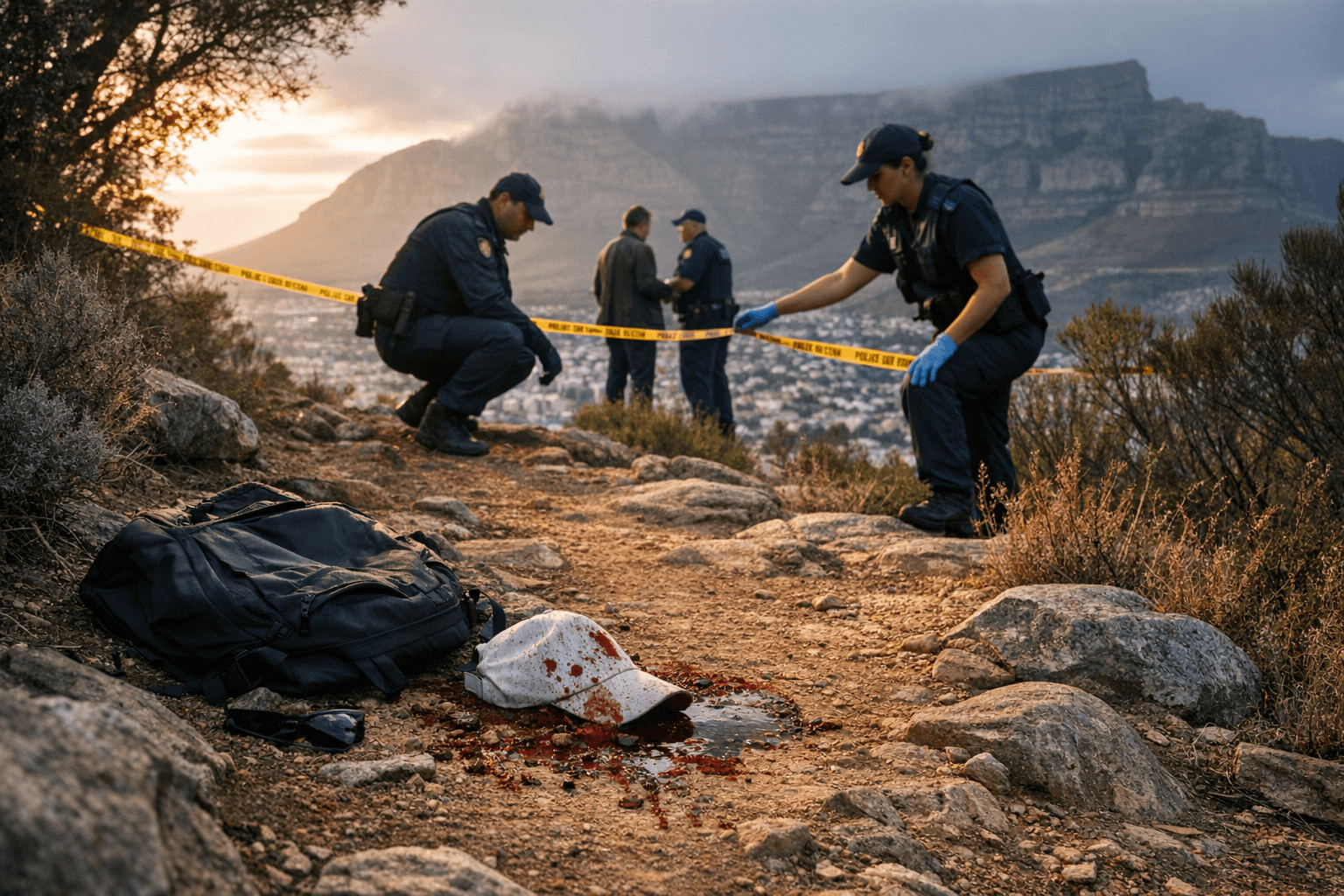
The knife was at her throat before she had time to process what was happening. On Signal Hill, a trail inside Table Mountain National Park overlooking Cape Town, a well-groomed assailant pinned the hiker to the rocky ground and made his demand plain: "Give me your passcode or I'll slit your throat." The attack, which happened in 2023 and was detailed at length in Outside Magazine, cracked open a conversation the outdoor community has been quietly avoiding: the wilderness is not a sanctuary from human violence.
Experts say the very sense of security that draws people to wild places is precisely what makes them vulnerable once they're out there. Reid Meloy, a forensic psychologist and author of the International Handbook of Threat Assessment, put it plainly: "The wilderness actually presents a very open and inviting field to target individuals from a criminal perspective."
The Signal Hill attack is not an isolated incident. In January 2026, four hikers were attacked in a single day inside Table Mountain National Park, prompting renewed safety warnings for Cape Town hikers and tourists. The park's 850 kilometers of trails make comprehensive patrol essentially impossible, and rangers are rarely seen on anything but the most-trafficked routes.
The Outside Magazine piece also surfaced a broader pattern across the United States. In Montana, the 2024 murder of Dustin Kjersem, beaten and axed to death by a stranger while camping, still haunts that outdoor community. The Appalachian Trail has seen ten hikers murdered over 45 years, including a 2019 stabbing in southwest Virginia that killed one hiker and left a second fighting for her life in the dark.
One year after her attack, the author returned to Signal Hill alongside Senior Inspector Ishmael Bagley, a tourism safety officer with the City of Cape Town. Bagley walked the trail and pointed out the network of offshoots branching off the main path, each one an escape route used by attackers. That infrastructure of ambush exists on heavily visited trails precisely because hikers, heads down and headphones in, expect peace and quiet rather than threat assessment.
The psychological mechanism is well documented. Gut instinct fires, and hikers override it because the setting feels wrong for danger. In the minutes before the Signal Hill attack, the hiker later recalled sensing something was off about the man approaching her on the path but choosing to dismiss it.
For anyone planning solo time in backcountry or national park corridors this season, the lesson is not to stay home. It's to bring the same situational awareness you'd carry walking through an unfamiliar neighborhood at night: scan your surroundings, tell someone your route and return time, and trust the instinct that tells you to cross the street.
Know something we missed? Have a correction or additional information?
Submit a Tip