Mojave Road 4WD route demands self-sufficient desert planning
The 140-mile Mojave Road is only a fit if your 4WD, fuel, water and navigation plan are desert-ready. If not, wait for winter or spring.
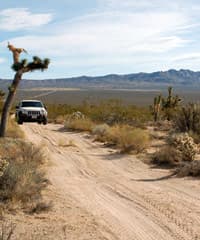
The Mojave Road runs roughly 140 miles from the Colorado River near Needles to the Mojave River in Victor Valley through Mojave National Preserve’s 1.6 million acres. If your next trip cannot handle distance, isolation, and changing desert conditions, wait.
The vehicle bar is higher than most desert drives
A high-clearance 4WD vehicle is the starting point, not the finish line. The route also calls for a spare tire in good condition and the basic recovery and navigation tools that desert travelers often leave behind until they need them. Soft sand, washboard sections, and detours around damaged stretches can turn a simple plan into a long day fast.
This route works best when you treat it as a self-contained backcountry trip rather than a drive you can improvise as you go. If your setup cannot absorb a delay, a wrong turn, or a tire issue without outside help, you are not ready for the route yet.
Do not trust one map, one app, or one phone signal
Written directions, guidebooks, maps, and GPS files should not be relied on as the sole basis for navigation. Road data can be outdated because of road damage, construction, closures, private property, or boundary changes.
Paper maps still matter because cell coverage can be unreliable in remote sections, and GPS routes can fail when roads shift after storms. Check road conditions before going off-pavement. If you are leaning entirely on a phone app, you should not be committing to this route.
Fuel and water are the real gatekeepers
There are no gas stations in the preserve, so range planning comes first. The route is better approached as an itinerary than a quick loop, with fuel calculated conservatively and time built in for slow travel, sand, and unplanned reroutes. Carry more water and food than you expect to use, not because it sounds prudent, but because this route is remote enough that your margin matters.
That same self-reliance applies to communications. If your recovery plan assumes easy cell service, you are underestimating the terrain. The safest mindset is simple: enter only when your vehicle, fuel, water, and route plan can carry you all the way through without depending on a last-minute resupply.
Camping works, but only if you camp like the desert expects
Mojave National Preserve includes both developed and backcountry camping, yet this route is best handled as a primitive or dispersed camping trip. Camping is allowed only in designated areas, and you should read the preserve’s camping rules before you go because the desert does not provide much in the way of water, shade, or amenities once you stop for the night.
Expect cold nights as well as hot days. In November 2024, the National Park Service announced that Hole-in-the-Wall Campground fees would rise from $12 to $25 and reservations would begin Jan. 1. If you want this route to feel like a clean trip instead of a scramble, campsite planning has to happen before you leave pavement.
Season matters more here than on most Southwest drives
Winter is a strong window for the Mojave Road because of cooler temperatures. Spring is also excellent, especially after winter rains, when wildflower blooms can turn the preserve into something far more colorful than the stereotype of a barren desert crossing.
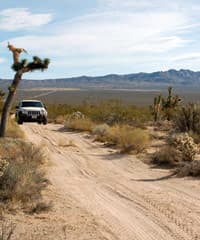
Summer is a different story. The route can still be done by highly prepared travelers, but that is not the season for casual first-timers or vehicles that are only lightly outfitted. If you are trying to decide whether to go now or wait, winter and spring are the seasons that give you the most margin.
The history is real, but it should inform your planning, not distract from it
The Mojave Road is tied to the Old Spanish Trail and to longer Indigenous, Spanish, and military travel history across the desert.
The Mojave Desert Heritage and Cultural Association holds the annual Mojave Road Rendezvous in Goffs, and the California Four Wheel Drive Association has promoted an East Mojave Trek centered on education, experience, and exploration.
Should you attempt it now?
If you have a capable high-clearance 4WD, a sound spare, enough fuel and water to treat the preserve as remote, and navigation that does not depend on one device, the Mojave Road is a strong Southwest backcountry trip. If you still need to build that margin, the smartest answer is to wait for winter or spring, or choose a route that does not ask so much of your setup.
This article was produced by Prism’s automated news system from verified source data, official records, and press releases, then run through automated quality and moderation checks before publishing. The system is built and supervised by the people who set the standards it runs under. Read our full AI policy.
Did this article answer your question?