Monsoon season turns Southwest canyon trips into flash flood risks
Morning is the only safe window for many slot-canyon trips: monsoon storms can flood a canyon miles from the rain, so a bad forecast means a hard no.

In the Southwest, the National Weather Service defines monsoon season as June 15 through September 30, and the storms that come with it can turn a dry wash into a flood channel miles away from the rain. The safest slot-canyon day usually ends before lunch.
Book the day around the morning
If you are setting up a canyon trip in the Colorado Plateau, build your schedule around the fact that afternoon is when risk starts climbing. At Capitol Reef National Park, monsoon season runs from mid-June to mid-October, and storms often increase in severity shortly after noon. Early starts give you the best chance of finishing your canyon objective before storms begin building.
That same timing logic applies across Zion National Park, Glen Canyon National Recreation Area, and the broader Southwest. Finish slot-canyon movement, rappels, and exits in the morning when the air is still stable enough to give you a clean window. Avoid camping overnight in or near washes, and do not park where a sudden rise in water could trap the vehicle or cut off the exit.
Read the sky like a flood map
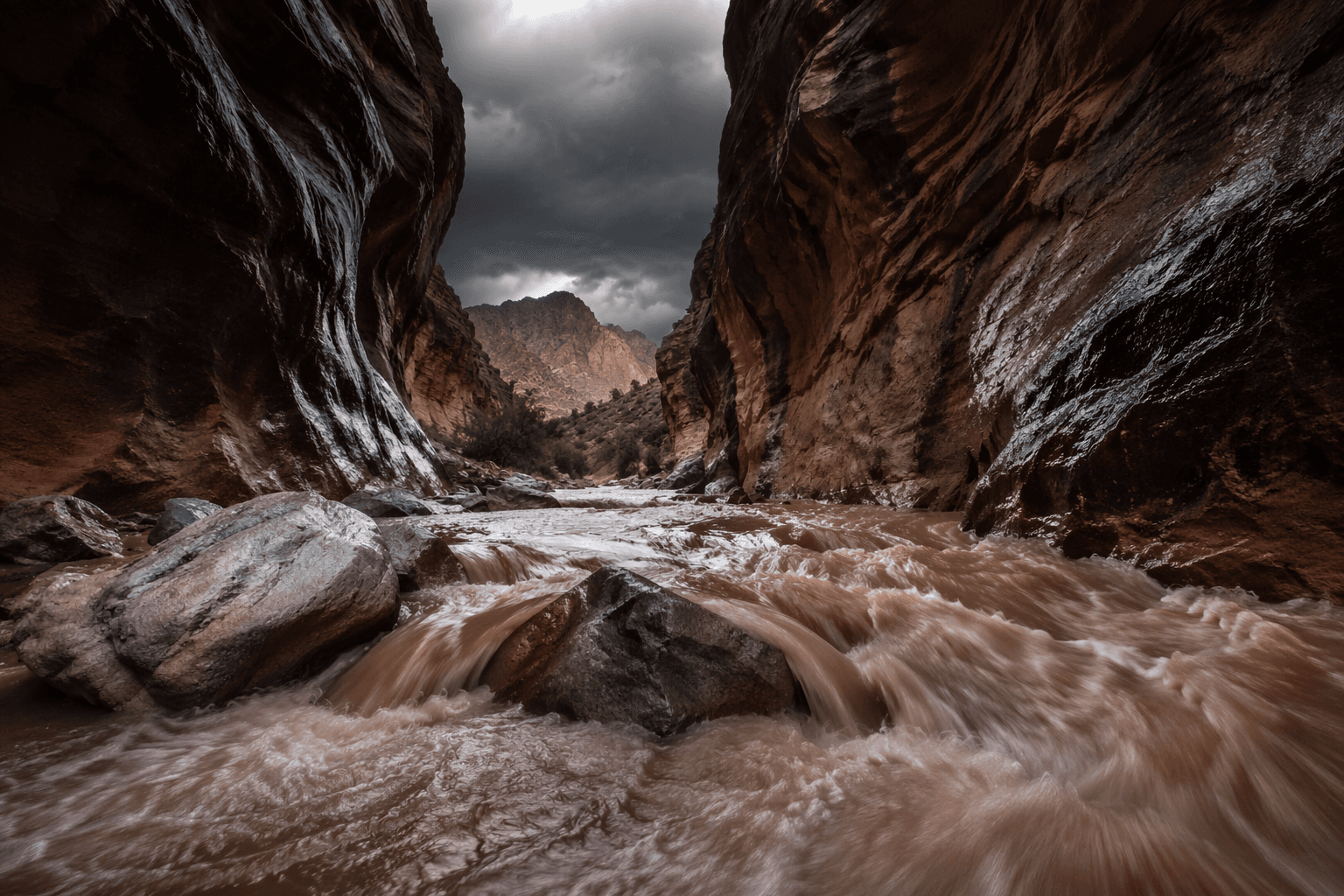
Monsoon season is not just about rain. It also brings extreme heat, lightning, flash floods, downburst winds, and dust storms. In canyon country, the danger is often not the storm overhead but the storm upstream, where heavy rain can send water racing through a drainage long before you hear thunder.
Water can rise quickly downstream even when the thunderstorm is miles away, and the National Park Service warns that six inches of fast-moving flood water can knock you off your feet. In a slot canyon, that is the difference between a manageable margin and a life-threatening trap, because the walls leave you with very few places to move once the water starts pushing through.
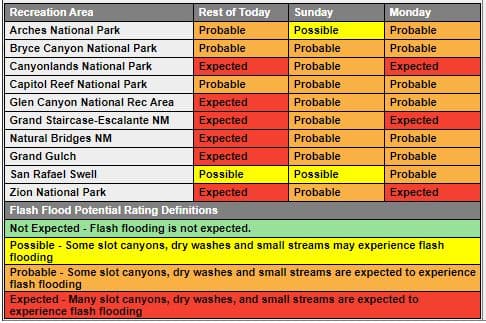
- a possible or probable flash-flood rating
- any sign that bad weather is threatening the canyon
- thunderstorm build-up anywhere in the drainage, not just overhead
- lightning, dust, or downburst winds building around the route
The clearest red flags are simple:
If those pieces line up, do not enter a narrow canyon.
Treat the route like a commitment
Slot canyons and canyoneering routes are not maintained trails. The correct path is not always obvious, and once you pull rope after the first rappel, you are committed to that canyon. That means the packing list is part of the safety system that keeps a route from becoming an overnight problem.
Before you start, talk with rangers about current conditions, weather forecasts, and flash-flood potential ratings. Carry a map, route description, headlamp, first-aid kit, extra clothing, and extra food. Zion National Park tells groups to be ready to spend additional time in the canyon, travel after dark, or survive on their own if necessary. A headlamp can be the difference between finding your way out and spending the night where you dropped in.
In this terrain, rescue is not guaranteed, and every week canyoneers spend unintended nights camped in the wilderness.
Keep heat planning on the same level as flood planning
Monsoon season brings flood risk, but it also brings the kind of heat that can quietly wear people down before any thunderstorm arrives. The Centers for Disease Control and Prevention advises drinking plenty of non-alcoholic fluids, using sunscreen with SPF 15 or higher and reapplying every two hours, and leaning on shade, hats, sunglasses, loose lightweight clothing, and the cooler parts of the day for strenuous activity.
Do not assume heat illness is only a problem for someone who is out of shape or underprepared. Even healthy young people can develop heat-related illness. The CDC lists warning signs that need immediate attention as excessive thirst, dizziness, confusion, nausea, lack of sweating, and a body temperature of 106°F or higher. People with chronic conditions such as heart disease or asthma, along with pregnant travelers, can be especially vulnerable when the temperature climbs and the effort starts to stack up.
For a slot-canyon day, the heat plan and the flood plan work together. Early starts help with both. They cut exposure to afternoon heat and keep you moving while the monsoon is least likely to turn the drainage against you.
Have a same-day escape hatch
The best backup is the one you decide on before you leave the trailhead. If the forecast starts looking unstable, switch out of the canyon instead of trying to outrun it.
That might mean shifting to a scenic drive, a rim-side stop, or a dry-weather day around Lake Powell and Glen Canyon National Recreation Area instead of forcing a narrow slot.
This article was produced by Prism’s automated news system from verified source data, official records, and press releases, then run through automated quality and moderation checks before publishing. The system is built and supervised by the people who set the standards it runs under. Read our full AI policy.
Did this article answer your question?