Should you cancel a national park trip because of wildfire smoke?
Smoke does not always mean cancel, but in the Southwest the real test is alerts, road access, and who is breathing the air.
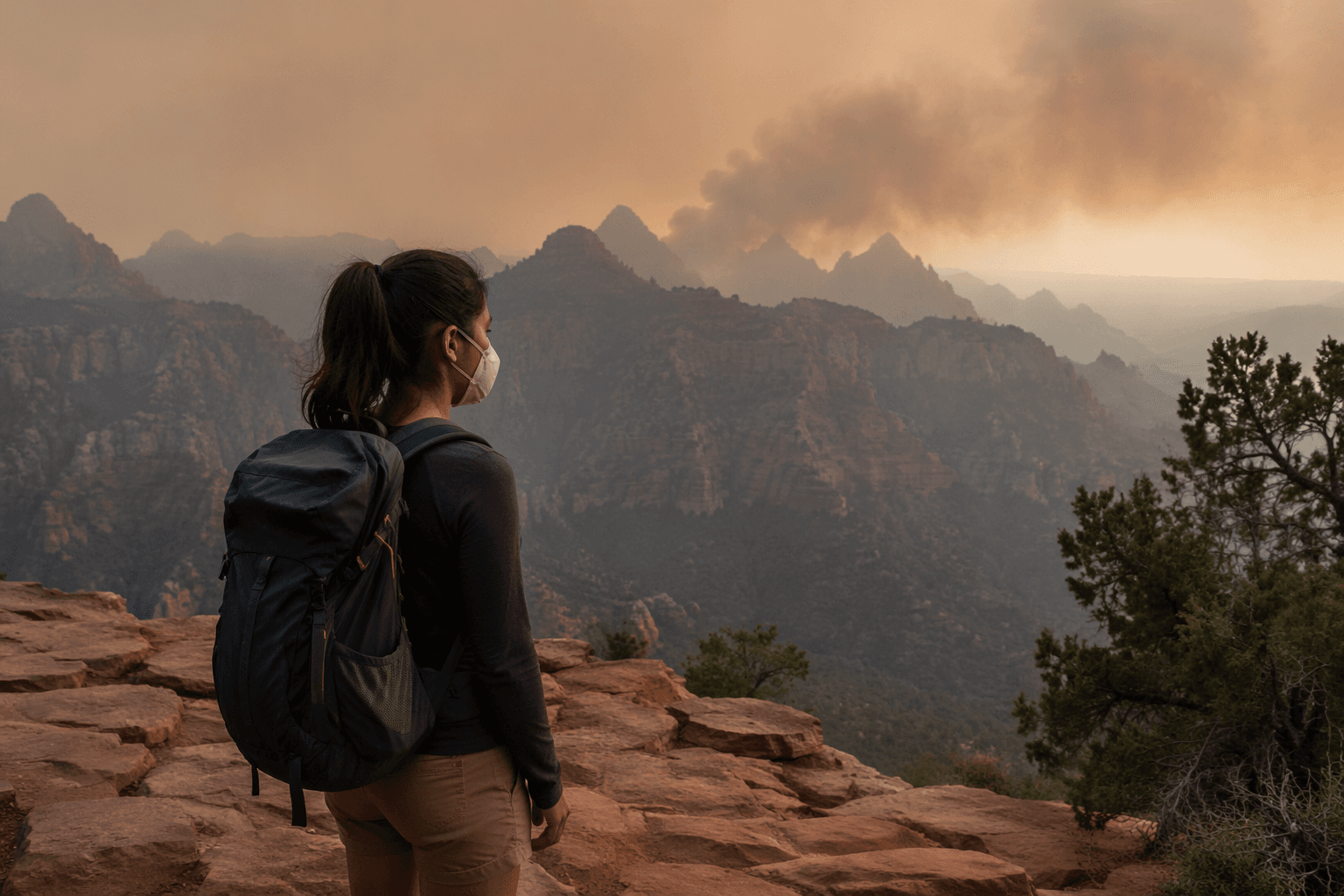
In Arizona, Utah, Colorado, and New Mexico, a smoky horizon can turn a good weekend park trip into a bad one fast. The question is not just whether a fire is nearby. It is whether the park, the road in, the campground, and the people in your car can still handle the day safely.
Start with access, not optimism
The first thing to check is whether the park is actually open the way you planned to use it. Check current alerts and follow closures and emergency directions before and during a trip, even when the fire itself is outside park boundaries. In the Southwest, where smoke can drift far from the flame front, a trip can feel ruined long before it becomes unsafe.
That distinction matters this week because the Mountain West is heading into one of the driest years in much of the region, and the National Interagency Fire Center recorded increased fire activity across the Great Basin, Rocky Mountain region, and Southwest in the latter half of June 2026. The U.S. Forest Service also moved San Juan National Forest to Stage 2 fire restrictions forest-wide at 12:01 a.m. on Wednesday, July 1, 2026.
When to keep the trip
Keep the trip if the smoke forecast stays light, the park alerts page is quiet, and your route is open. If you are headed to a park with a timed-entry reservation or a narrow lodging window, and you can still reach the trailhead, campground, or visitor center without rerouting around closures, the trip may still be worth taking.
A degraded trip usually means you trade summit views for shorter walks, lower exertion, and more time in the car or visitor center. It is still a workable park visit if the air stays acceptable, the road network holds, and you are not relying on campfires, long backcountry routes, or exposed ridgelines that make smoke and heat feel worse.
The real green light is simple: no active closures, no emergency directions, no travel choke points, and no health reason to stay home. If that is the picture, the smartest move may be to go, but keep the itinerary flexible.
When to modify instead of cancel
Modify the trip if smoke is building but access is still intact. The most useful tools here are the EPA and U.S. Forest Service AirNow Fire and Smoke Map, which shows PM2.5 from wildfires and other sources, and the National Park Service’s live air-quality data page, which uses the NowCast AQI method to respond to rapidly changing air conditions such as wildfire smoke. That combination gives you a better read than a single screenshot or a forecast from the night before.
If the air quality is bouncing around, shorten hikes, move strenuous plans to the coolest part of the day, and avoid deep-canyon or high-exposure routes that trap smoke. Rising temperatures, declining snowpack, and frequent drought are helping drive more severe Western wildfire seasons, and those same conditions can make a smoky day feel much harsher when you are already dealing with summer temperatures.
This is also the point where lodging cancellation windows come into play. If your hotel, cabin, or campground booking is still refundable, you can wait on a later forecast and preserve the option to bail. If the window is closing, the safer play may be to pivot now to a different park, a shorter stay, or a route that stays farther from active fire management areas.
When to cancel without waiting
Cancel if the trip depends on roads or access points that have already closed, or if the park has issued emergency directions that affect the areas you need to reach. If the road to your campground, trailhead, or scenic corridor is shut, the vacation has already changed shape enough that forcing it may not be worth the drive.
Smoke level is the other hard stop. Wildfire smoke can irritate the eyes, nose, throat, and lungs, and can cause coughing, wheezing, and more serious breathing problems. It can make anyone sick, but the risk is higher for children, pregnant people, and anyone with asthma, COPD, heart disease, diabetes, or chronic kidney disease. If your party includes anyone in those groups, a smoky park day should tip faster toward cancellation, especially if the forecast is not improving.
A degraded trip means you lose the big views, the campfire, or the all-day hike. An unsafe trip means someone is breathing bad air, burning through a closed road, or trying to salvage a reservation that no longer matches the conditions on the ground.
A Southwest decision checklist for right now
Use this as the decision tree for Arizona, Utah, Colorado, and New Mexico:
- Keep the trip if the park alerts page is clear, roads are open, smoke is light, and everyone traveling is low-risk.
- Modify the trip if smoke is drifting in, AQI is changing fast, or Stage 2-style restrictions mean the campfire and backcountry version of your itinerary is gone.
- Cancel if closures, emergency directions, or poor air quality make the main access route or the main experience unsafe.
- Treat children, pregnant travelers, and anyone with asthma, COPD, heart disease, diabetes, or chronic kidney disease as a higher-priority reason to walk away sooner.
- Check the AirNow Fire and Smoke Map and the National Park Service’s live air-quality data before you get in the car, then check them again during the trip.
This article was produced by Prism’s automated news system from verified source data, official records, and press releases, then run through automated quality and moderation checks before publishing. The system is built and supervised by the people who set the standards it runs under. Read our full AI policy.
Did this article answer your question?