Why Southwest desert travelers should protect fragile soil crusts
That dark desert crust underfoot can take decades to centuries to recover, so one careless step off-trail can undo the ground that holds the Southwest together.
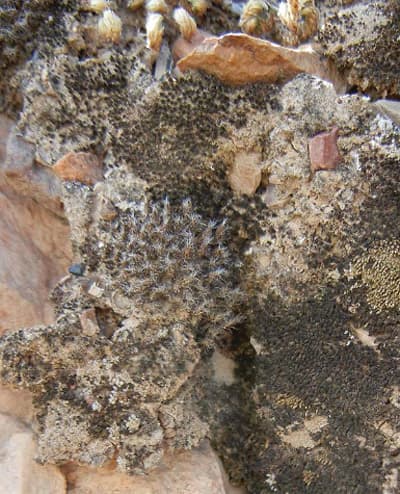
In the Sonoran and Chihuahuan deserts, the dark, bumpy skin that looks like ordinary dirt is a living crust that helps keep soil in place, holds moisture, and supports plant life. A few feet off the trail is enough to change it for decades. Once it is crushed, wind and water can carry away the ground beneath your boots, and the damage is often invisible to anyone who did not make it.
What that “soil” really is
Biological soil crusts, often called cryptobiotic crusts, are not a single organism or a layer of dead dirt. They are communities of cyanobacteria, lichens, mosses, fungi, and other organisms living on the soil surface. The U.S. Geological Survey calls them a “veneer of life”; in many places, they make up more than 70% of the living ground cover.
The crust is part of the desert’s infrastructure. These communities reduce erosion and increase water retention, while U.S. Forest Service research ties them to desert hydrology and geomorphology. The result is simple enough for travelers to remember: what looks like bare ground is often the thin living layer that keeps the rest of the landscape from unraveling.
Why Southwest travelers keep running into it
You do not need to be deep in the backcountry to see biocrust. It shows up across the American Southwest in places people visit for hikes, trailheads, photo stops, dispersed campsites, and roadside pullouts, especially in southern Utah, northern Arizona, and desert parks across the region. The National Park Service has built visitor education around the crust in southeast Utah and in parks such as Capitol Reef National Park and Glen Canyon National Recreation Area, and Zion National Park has used social posts to warn visitors about how easily it breaks.
The broader footprint is not limited to the Colorado Plateau. Biological soil crusts are found worldwide, from hot deserts to polar regions, and a 2001 U.S. Department of the Interior technical reference on biological soil crusts was jointly funded by the Bureau of Land Management and USGS.
How to spot crust before you step on it
The crust often looks dark, lumpy, or bumpy, with a rough texture that is easy to miss if you are focused on the view ahead. In open desert, the temptation is to treat wide empty ground as harmless. In reality, those dark patches can be the very place where living soil is doing its work.
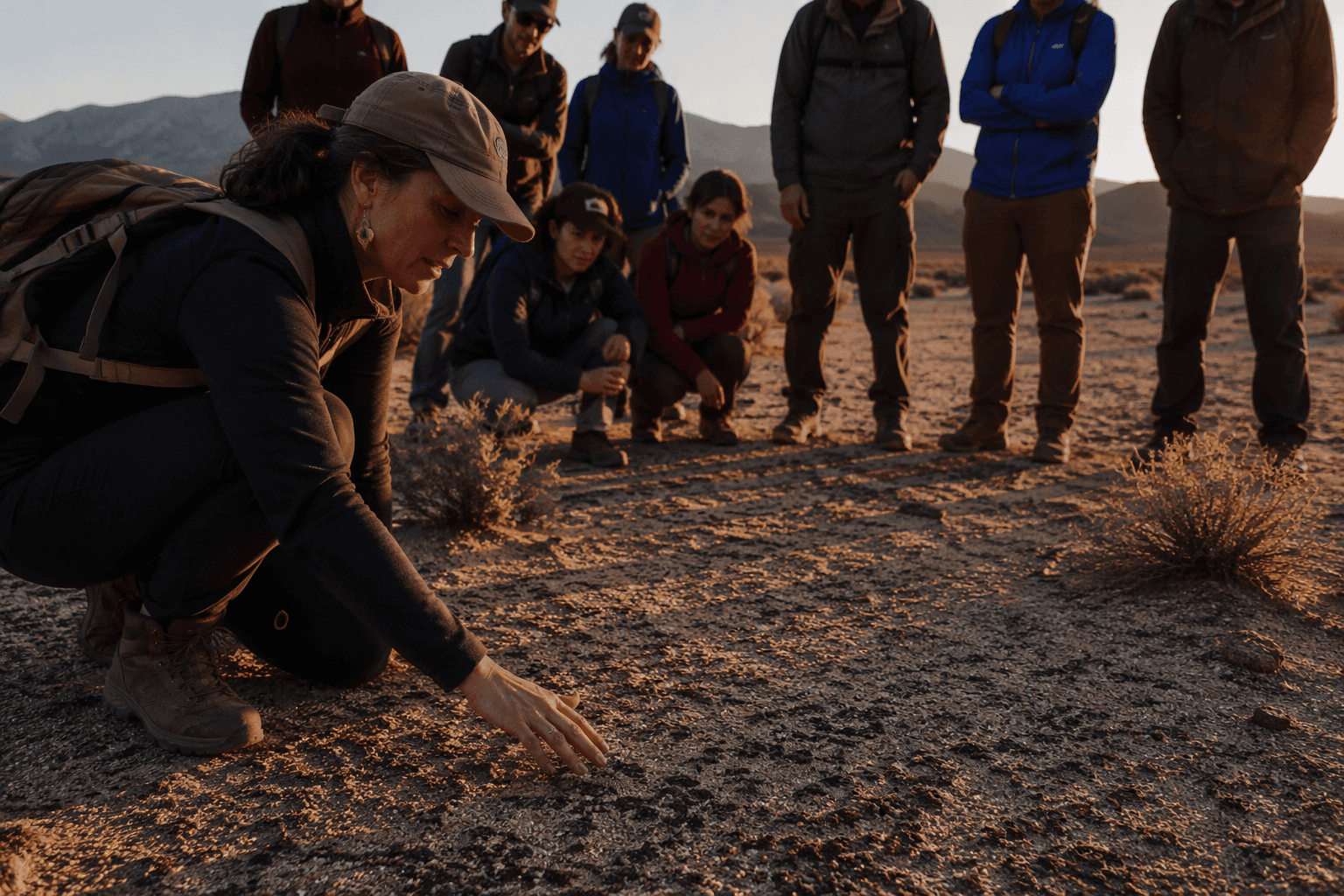
A useful rule is to assume that any undisturbed surface outside a designated trail, road, or campsite may be fragile. That includes the flats photographers love, the open spaces families use for exploring, and the edges of popular routes where people drift around mud, puddles, or narrow sections of trail. When the ground is crusted over, it can look tougher than it is, but the crust can be killed with one footprint and may take decades to recover.
Move, camp, and explore on durable ground
Leave No Trace’s Principle 2, “Travel & Camp on Durable Surfaces,” is the right lens for desert travel. Durable surfaces include established trails, rock, gravel, and, when you truly cannot avoid it, the most resistant sand or bare ground you can find. What you want to avoid is stepping across living crust just because the route looks shorter or the scene looks empty.
Practical habits make the biggest difference:
- Stay on marked trails, even when the path bends away from the feature you want to see.
- Avoid shortcutting switchbacks, faint social paths, and open flats that seem safe from a distance.
- Keep groups compact so the temptation to fan out across the desert floor does not turn into a wider footprint.
- If you are camping, choose already impacted spots rather than creating a new one on intact crust.
- Use rock, sand, or established surfaces for staging gear, gathering for lunch, or setting up a tripod.
Photograph the landscape without flattening it
On the Colorado Plateau, National Geographic has warned travelers that stepping off trail for a photo can be deadly for biocrust. The image you want is often just beyond the edge of the path, but the few extra steps to get there can crush the crust that holds the scene together.
If you want the shot without the damage, work from durable ground and adjust your composition from there. Use the trail edge, a rock outcrop, or a designated overlook as your shooting position, then change focal length or framing rather than stepping into intact crust. The same thinking helps at sunrise pullouts, scenic overlooks, and canyon rims where it is easy to wander a little farther for a cleaner angle.
The recovery clock is longer than most visitors expect
Leave No Trace says this living biological soil takes decades to form, and Zion National Park has said a single footprint can kill the soil crust and that recovery may take 50 to hundreds of years. A U.S. Forest Service research summary goes even further: full moss recovery at one site could take more than 250 years at the observed rate.
When the crust breaks, the soil is more likely to blow or wash away, native seedlings have a harder time getting established, and the damage can spread beyond the exact footprint.
This article was produced by Prism’s automated news system from verified source data, official records, and press releases, then run through automated quality and moderation checks before publishing. The system is built and supervised by the people who set the standards it runs under. Read our full AI policy.
Did this article answer your question?