Ruwix essay links cubing practice to academic writing focus
The essay argues that cubing trains the same focus, sequence, and recovery habits that make academic writing work.
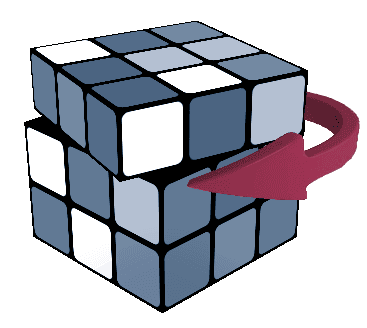
The fastest solves still get the spotlight, but this piece is about the part of cubing that travels with you after the timer stops. It makes the case that the cube is not just a hardware hobby or a competition grind, it is a small, repeatable exercise in attention, and that is exactly why it maps so well onto academic writing.
Why the essay lands
The opening move is personal and practical: the cube starts as a university assignment, not a flex. The writer describes being able to manage only one side at first, then learning a real method under a deadline, and that detail does the heavy lifting because it sounds like schoolwork, not mythology. Cubing becomes a lesson in how to approach a task you do not yet understand, which is also the first problem in writing, exam prep, or any project that punishes drifting.
That is the core of the argument. On the cube, you learn notation, follow steps, and recover when you make a mistake. On the page, you hold a structure in your head, revise as you go, and keep moving even when the first draft is a mess. The essay is strongest when it refuses to treat these as poetic similarities and instead treats them as the same mental workload in different forms.
The cube and the draft ask for the same habits
The overlap is not vague. Speedcubing rewards sequence, correction, and persistence, and academic writing does too. A solver has to remember a method, execute it in order, and stay calm when a turn goes wrong. A writer has to keep the argument intact, fix weak transitions, and resist the urge to abandon the draft the moment it stops feeling clean.
That is why the essay frames cubing as a training ground for attention management. You start with a small task, repeat it until it becomes automatic, then build toward more complex workflows. In practice, that logic is familiar to anyone who has gone from learning a beginner layer-by-layer method to handling harder cases without freezing, and it lines up neatly with drafting an essay, then revising it instead of trying to produce a polished first pass.
The daily-life payoff is what makes the piece shareable. A solver who learns to stay steady through an ugly scramble is also rehearsing the kind of focus that helps a student sit through a long reading assignment, a writer finish a difficult paragraph, or anyone preparing for an exam stay with a problem long enough to solve it properly. The cube becomes a pressure test for concentration, not just a puzzle.

What the broader evidence says
The essay’s claim feels plausible because the research around cubing points in the same direction. A 2022 Journal of Emerging Investigators study analyzed 69 solve videos and survey data from 1,385 speedcubers, and it found that faster solves correlated with lower pause time, lower regrip frequency, fewer rotations, fewer cross moves, and knowing more algorithms. That does not prove a writer will draft faster after practicing cubing, but it does show that deliberate, methodical repetition matters in cubing in the same way structured practice matters in writing.
A 2026 Sustainability study pushes the social side even further. Surveying 112 people in the speedcubing community, including active competitors, coaches, and parents, it found that respondents connected cubing with analytical thinking, problem-solving, perseverance, self-control, educational value, accessibility, fair play, and social integration. That is a useful reminder that the cube has already outgrown the idea of being only a timing sport.
The history backs that up too. Ernő Rubik invented the cube in 1974, and the first official World Rubik’s Cube Championship followed on June 5, 1982, in Budapest, Hungary. That event drew competitors from 19 countries, and Minh Thai won the 3×3 with a best time of 22.95 seconds. The scene has always mixed speed with method, and the essay plugs directly into that tradition.
How to use cubing as writing practice
If you want the practical version of the idea, the best bridge is to borrow the writing-center concept of cubing as a six-perspective brainstorming tool. University writing guidance from places like California State University, Northridge and the Kent State University Writing Commons describes cubing through six angles: describe, compare, associate, analyze, apply, and argue. That turns the cube into more than a puzzle, because it gives you a structured way to think before you write.
A simple routine looks like this:

1. Describe the problem first. Before solving or writing, define what is in front of you.
On the cube, that means identifying the state of the scramble or the method you are using. On the page, that means stating the prompt in plain language.
2. Compare and associate. Link the scramble to a known case, or link the prompt to a previous assignment.
This is where the brain stops seeing the task as mysterious and starts seeing it as pattern work.
3. Analyze the steps. Break the solve or the paragraph into smaller moves.
The cube rewards this because you cannot skip notation or sequence; writing rewards it because a strong claim usually comes from ordered thinking, not inspiration.
4. Apply and argue. Use the method, then make the case.
Harvard College Writing Center guidance is clear that academic assignments usually need an arguable claim, not a summary, and that is exactly the point where cubing and drafting meet: both ask you to move from recognition to execution.
That routine matters because it is manageable. You are not trying to turn every solve into a thesis session or every essay into a speed test. You are training the same discipline in two different environments, so the habits transfer when the pressure rises.
The essay’s smartest move is making cubing feel bigger without making it sentimental. It does not claim the cube replaces writing practice, and it does not pretend focus happens by magic. It argues that the same repeatable discipline that helps you turn a scramble into a clean solve can also help you turn a rough idea into a finished argument, and that is why the cube belongs in the conversation about school, work, and sustained attention.
This article was produced by Prism’s automated news system from verified source data, official records, and press releases, then run through automated quality and moderation checks before publishing. The system is built and supervised by the people who set the standards it runs under. Read our full AI policy.
Did this article answer your question?