Braga tiny house pairs a studio-like layout with practical simplicity
Braga strips tiny living to the essentials with a studio-like plan, a dual-axle trailer, and an outdoor shower that keeps the footprint clean.
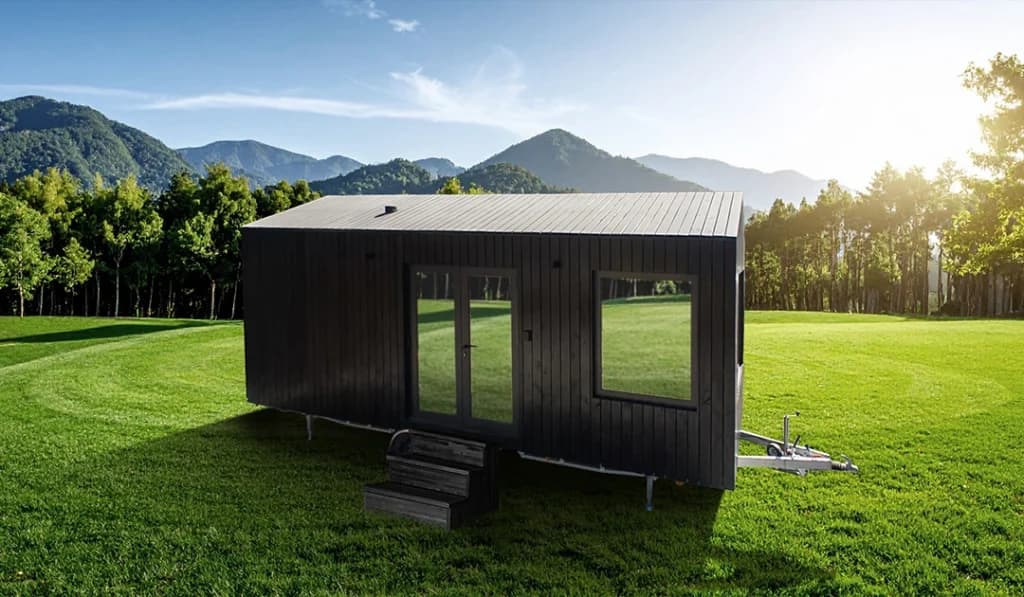
Braga looks almost defiantly simple for a tiny house, and that is the point. Built by Casagaea Tiny House in Braga, Portugal, it leans on a single-level, studio-like layout instead of packing the shell with lofts and awkward extras. The result is a compact home that treats simplicity as a feature, not a compromise.
A tiny house that stays easy to live in
The strongest thing about Braga is how little it asks of you. The home is set up as a straightforward studio, so circulation stays open and the living space reads as one continuous area rather than a maze of clipped corners and ladder access. That matters in tiny homes, where every added step, stair, or vertical transition can make daily use feel more complicated than the square footage suggests.
The single-level plan also makes Braga feel more accessible than a lot of tiny builds that rely on lofts for sleeping or storage. If you are looking for a weekend retreat, a downsized primary home, or a mobile residence that does not force you into climbing every day, this is the kind of layout that makes sense. It is the sort of design that quietly removes friction instead of showing off clever tricks.
Why the chassis choice matters
Braga is built on a dual-axle trailer, and that choice does more than keep the house mobile. A dual-axle foundation gives the builder more room to stretch the design than the tiniest trailer-house dimensions usually allow, which helps explain why the layout can stay open and single-level without feeling cramped. Mobility is still part of the deal, but the build is not trapped by the most extreme size limits that come with ultra-narrow tiny homes.
That balance is part of Braga’s appeal. It remains a towable home, yet it does not read like a compromise first and a house second. For a lot of tiny-house buyers, that is exactly the sweet spot: enough structure to live in comfortably, enough mobility to keep options open, and enough restraint to avoid overbuilding the shell.
The exterior keeps the design grounded
The outside of Braga is finished in black vertical wood siding, a material and color combination that gives the home a clean, understated look. It is visually restrained in a way that works in rural settings and in tiny-home communities, where a loud exterior can feel out of place fast. Instead of trying to grab attention, the finish lets the home blend in and do its job.
That exterior choice fits the larger design philosophy. A tiny house does not need a flashy skin to be useful, and Braga makes the case that a simple finish can actually improve the experience. Less visual clutter outside pairs well with less spatial clutter inside, which is how the home manages to feel calm before anyone even opens the door.
The outdoor shower is part of the point
The outdoor shower is one of the clearest signs that Braga is built around practical simplicity. It reduces interior complexity by pushing a utility outside, which helps keep the indoor footprint cleaner and less burdened by plumbing-heavy extras. In a tiny house, that kind of decision can matter as much as a fancy appliance package in a larger home.
It also changes how the house feels to use. Instead of cramming every convenience into the core floor plan, Braga accepts that some functions can live outside the shell, where they are easier to maintain and less invasive to the layout. For buyers who want a lower-stress tiny home, that tradeoff can be a smart one.
A small builder with real experience behind it
Casagaea Tiny House is based in Braga, Portugal, and the company started operations in 2023. Even though the business is relatively young, the team says it brings more than 15 years of professional woodworking and architectural experience. That combination helps explain why the home feels disciplined rather than improvised.
The builder’s background also gives Braga a different kind of credibility. This is not a tiny house that depends on novelty to stand out. It comes from a company that already works across compact housing ideas, including custom builds, turnkey tinies, build-your-own options, and solutions for businesses. That range suggests a builder interested in making small-scale living practical across more than one use case.
What Braga says about the tiny-house market
Braga lands in a part of the tiny-house market that often gets overshadowed by more elaborate builds. Some tiny homes chase novelty with lofts, expanded footprints, or luxury features, but Braga shows why a cleaner answer can be stronger. A simple studio layout, an outdoor shower, and a mobile dual-axle base can add up to a home that is easier to understand, easier to maintain, and easier to actually live in.
That kind of design also lines up with the broader arguments tiny-house advocates keep making. The American Planning Association notes that tiny-house supporters often emphasize affordability and environmental friendliness, while zoning ordinances still do not clearly spell out where or how tiny houses can be used for long-term or permanent occupancy. In other words, the appeal of a pared-back model like Braga is not just aesthetic. Simpler construction can also mean fewer moving parts when you are trying to fit small living into a complicated land-use system.
Braga works because it does not try to be everything. It takes the tiny-house idea back to basics, then makes those basics feel deliberate: a studio-like room, a single level, a mobile trailer foundation, a restrained exterior, and an outdoor shower that keeps the interior from getting crowded. That is the real test here, and Braga answers it well. The home asks you to give up some conventional convenience, but in return it offers something tiny houses often promise and do not always deliver: a stripped-down space that actually feels usable.
This article was produced by Prism’s automated news system from verified source data, official records, and press releases, then run through automated quality and moderation checks before publishing. The system is built and supervised by the people who set the standards it runs under. Read our full AI policy.
Did this article answer your question?