Casa Tiny’s Driftway tiny house feels spacious with smart single-level design
Casa Tiny’s Driftway packs daily life onto one level, turning a 19.6-foot tiny house into a setup that feels roomy, practical, and ladder-free.
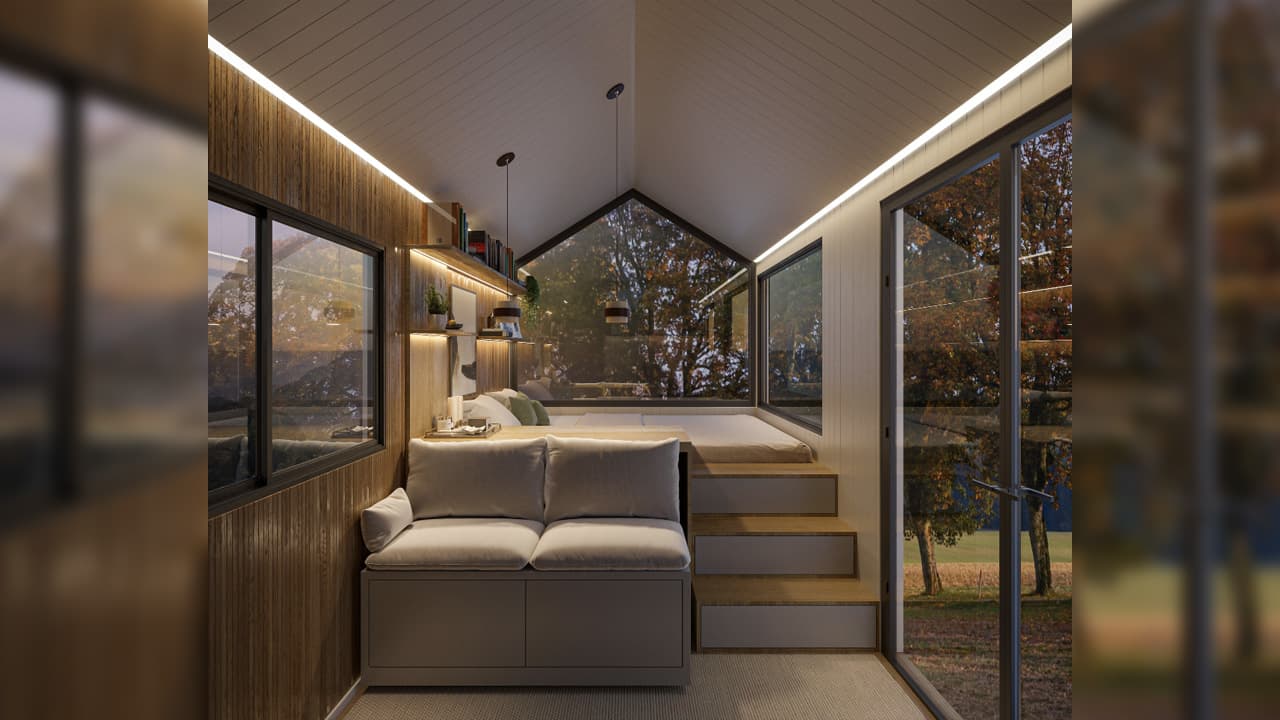
Casa Tiny’s Driftway makes a clean argument against tiny-house gimmicks: you do not need a loft to create usable space. At 19.6 feet long, 7.8 feet wide, and 11.4 feet high, this single-level home keeps the bedroom, kitchen, bathroom, dining zone, and living area on one plane, which instantly makes it more appealing for older owners, mobility-limited residents, and anyone done with ladder living.
Layout first, not loft first
The Driftway’s biggest strength is not a flashy finish or a clever trick, it is the way the floor plan works hard. Instead of stacking life vertically, Casa Tiny uses an open arrangement that makes the interior feel calmer and easier to move through, even though the footprint stays compact. That matters in real life because tiny homes can start to feel punishing when every daily task requires climbing, ducking, or squeezing past furniture.
Casa Tiny says it has been building tiny houses since 2020 and is based in the Sunshine Coast Hinterland in Queensland, Australia. That background shows up here in a design that is practical rather than precious, with the company describing Driftway as a lightweight, mobile tiny house ideal for travelers and hosts. The result is a model that reads less like a novelty and more like a small dwelling built for everyday use.
A lounge and dining zone that earns its footprint
One of the smartest moves in the Driftway is the integrated lounge-and-dining area. The table includes slide-out bench space that can be tucked away when it is not needed, which frees up floor area and keeps the room from being swallowed by oversized seating. That is a better tiny-house answer than forcing in a big sofa just because the plan needs to look like a conventional living room.
The built-in bed platform pushes that same idea further by adding storage and giving the home a more permanent residential feel. In tiny living, that kind of detail matters because it keeps the interior from feeling like a temporary setup or a trailer dressed up with decor. Here, the furniture is part of the architecture, and the whole room benefits from that restraint.
A kitchen and bath that stay genuinely usable
The kitchen is pared back, but it is not an afterthought. Driftway includes a two-burner cooktop, sink, mini fridge, and microwave, which is enough for real cooking without turning the galley into a crowded service corridor. That balance is exactly what makes compact living work, because the space stays small without becoming inconvenient.
The bathroom sits behind the kitchenette and includes a tiled shower under a skylight, a vanity sink, and a toilet. That placement helps preserve the open feel of the main living area while still giving the house a proper, fully functional wet room. For a tiny home this size, the fact that the bathroom does not feel wedged in is a major part of why the layout reads as livable instead of improvised.
A bedroom that keeps the tiny house from feeling boxed in
At the opposite end of the home, the bedroom uses a king-size bed flanked by picture windows. That is a surprisingly generous move in a compact build, and it does a lot to soften the feeling of living in a narrow shell. Light and outdoor views are doing some of the work that bulky décor usually tries, and they do it without stealing floor space.
A ceiling-mounted swiveling TV reinforces the same idea. It can be viewed from the bed, kitchen, or dining zone, which means the home supports different routines without forcing you to redesign the room every time you change position. That kind of flexibility is especially useful in a tiny house that needs to work for both full-time living and short-stay hospitality.
Why this matters beyond one model
Driftway lands at a moment when tiny homes are doing more than selling a lifestyle fantasy. Casa Tiny positions the model for both private living and hosting, and that dual-use logic is increasingly important as tiny houses pull duty as homes, rentals, and flexible accommodation. A less-is-more plan like this one can still deliver comfort, technology, and an indoor-outdoor connection without relying on lofts or visual stunts.
The broader Australian backdrop makes that point sharper. The Australian Tiny House Association says tiny houses remain in a regulatory grey area across states and councils, while Queensland’s planning department says tiny homes can offer a bespoke affordable housing solution and are becoming increasingly popular in the community. That tension sits alongside a housing market that keeps stretching buyers, with the Australian Institute of Health and Welfare saying Sydney’s median established-house price rose from about A$680,000 in early 2014 to about A$1.4 million by the end of 2024, while Brisbane’s median reached about A$925,000.
ATHA’s 2019 survey report adds another useful detail: only 19 percent of respondents had sought council approval for their tiny houses. Put all of that next to Driftway and the message is clear. The value is not just in making a small house look clever, but in making tiny living feel open to people who would otherwise write it off, and that is where this single-level design really earns its space.
This article was produced by Prism’s automated news system from verified source data, official records, and press releases, then run through automated quality and moderation checks before publishing. The system is built and supervised by the people who set the standards it runs under. Read our full AI policy.
Did this article answer your question?