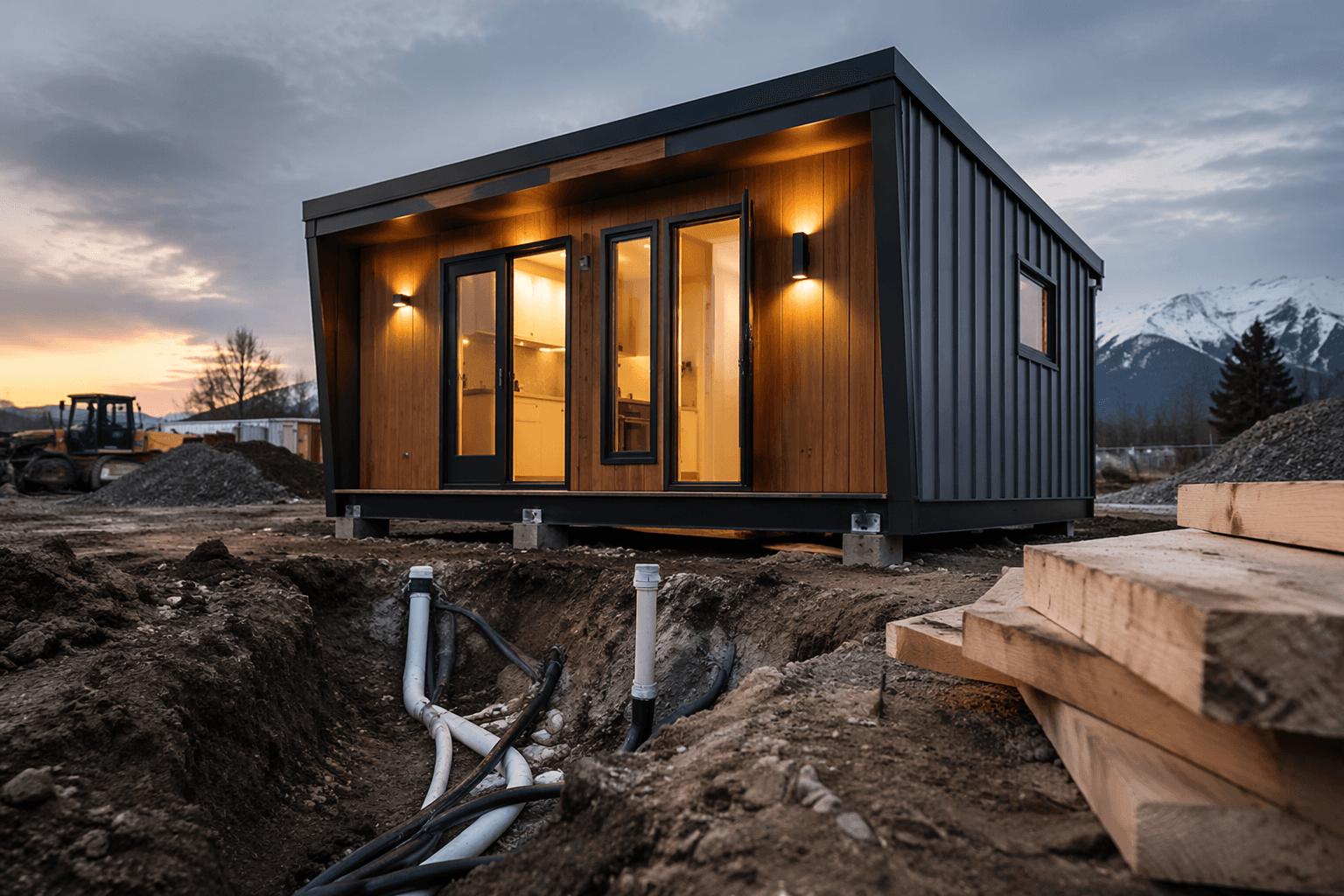
Craft House Samuel brings apartment-like livability to tiny house living
Samuel gives up towability to gain apartment-like space, a full kitchen, and a downstairs bedroom. Craft House’s 10-by-3.2-meter cottage is built for year-round living.

A tiny house that chooses space over towing
Craft House’s Samuel makes its case by refusing to behave like a road-trip trailer. It is non-towable and built to be delivered by truck, and that one decision changes everything inside. At 10 meters long and 3.2 meters wide, it gives you 26 square meters on the ground floor, about 280 square feet, before the loft even enters the picture.
That extra width is the real story. Many tiny homes stay narrow because they have to stay road-legal and easy to move, but Samuel steps outside that script and feels closer to a compact apartment or small cabin. For anyone weighing portability against everyday comfort, this is the trade-off in its clearest form: fewer travel-minded compromises, more usable floor space, and a layout that supports actual full-time living.
Why the living room feels bigger than the footprint
The main living area is where Samuel’s priorities become obvious. Sliding glass doors connect the room to the outside, pulling in light and giving the central space a more open, residential feel. There is room for a large sofa bed and an entertainment center, which means the living room is not just a pass-through zone or a squeeze point between the kitchen and stairs.
That matters in a tiny house, where one room often has to do too much. Here, the central zone is set up to work as a real gathering space, a place to relax, host a couple of guests, or simply spread out without feeling boxed in. The effect is less “we made do” and more “we planned for this.”
The kitchen follows the same logic. Instead of the stripped-back setup often seen in smaller towable models, Samuel comes with a sink, induction cooktop, oven, dishwasher, fridge/freezer, and a breakfast bar. That appliance package pushes it firmly into primary-residence territory, especially for anyone who cooks daily and does not want to treat meal prep as an outdoors-only activity.
A bathroom and bedroom plan built for daily life
The bathroom reinforces the idea that Samuel is meant for regular living, not occasional stays. It includes a shower, vanity sink, washer/dryer, and floating toilet, which is a strong package for a home of this size. The washer/dryer in particular makes a big difference, because it reduces the need to rely on outside laundry and helps the home function as a true year-round base.
The sleeping arrangement also breaks from the usual tiny-house template. Samuel places the primary bedroom downstairs, which is a major livability upgrade for anyone who wants to avoid climbing to bed every night. The secondary bedroom sits in a mezzanine loft, reached by folding stairs that can be tucked away when not in use, preserving floor space and keeping circulation clearer through the day.
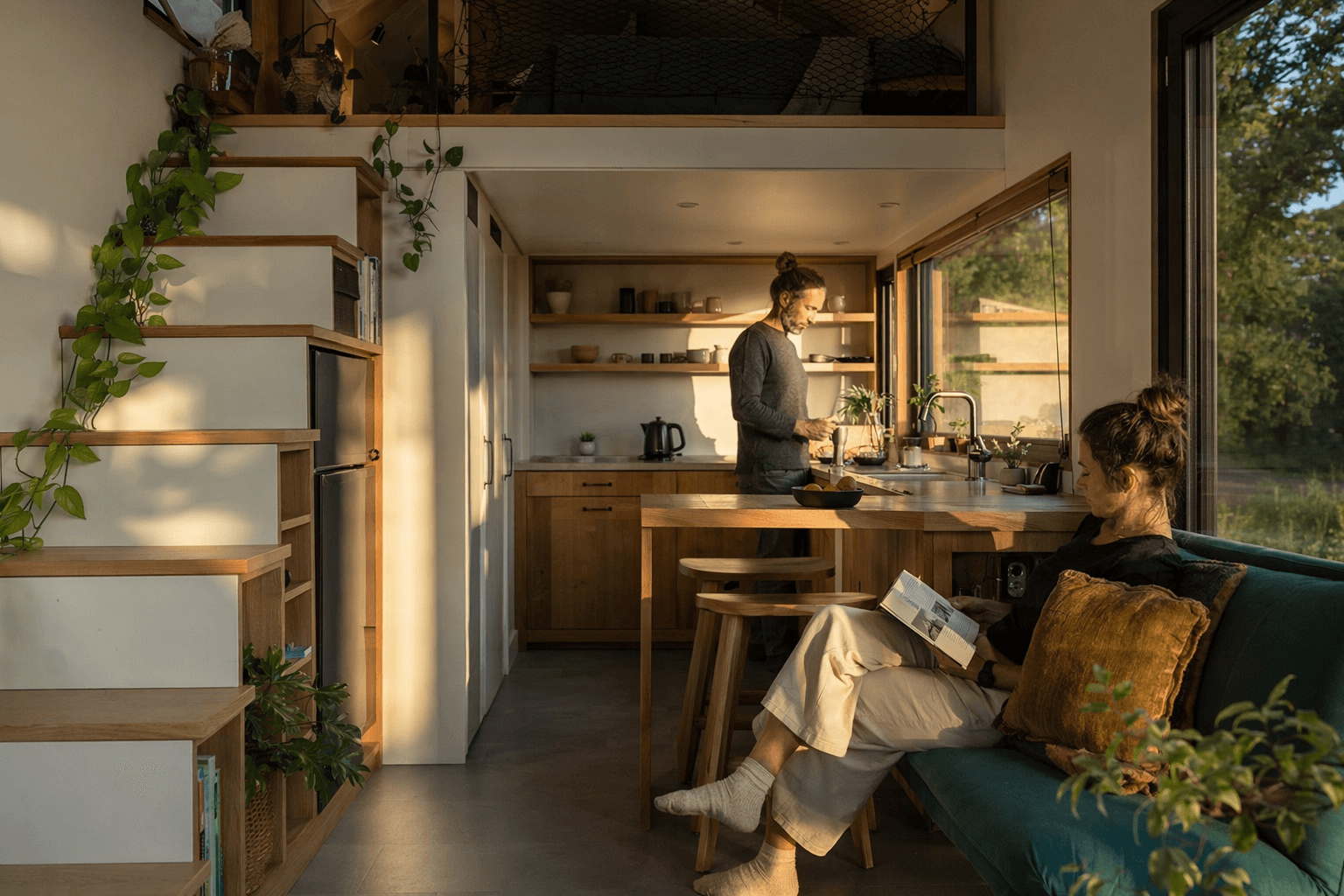
That combination gives the house a more conventional residential rhythm. You get one main sleeping zone on the ground floor and an extra sleeping or storage area above, which makes the plan more flexible for couples, small families, or anyone who wants a guest spot without surrendering the lower level.
What Craft House is really selling here
Craft House describes Samuel as a year-round modular cottage with the possibility of expanding with additional elements. That description matters because it puts Samuel in a different category from many classic tiny houses on wheels. This is not a novelty build centered on mobility first. It is a home that starts with livability and then leaves room to grow.
The company’s wider catalog points in the same direction. Craft House says its modular and mobile homes are available in Poland, Austria, Germany, France, and Ireland, and its offer page describes them as fully functional, cozy homes for year-round use. Samuel fits that positioning neatly, because it behaves less like a vacation unit and more like a smaller permanent residence that can be lived in through all seasons.
The pricing also places it firmly in the serious-home conversation. Samuel is listed at 260,000 PLN net, and Craft House gives its usable areas as 26 square meters on the ground floor, 13 square meters in the mezzanine, and 4.3 square meters for the bathroom. Those numbers help explain why the interior feels so different from many towable tiny houses: the footprint is wider, the living zones are more distinct, and the home is designed around usable area rather than road constraints.
How Samuel fits the current tiny-house shift
Samuel is a strong example of where part of the tiny-house market is heading right now. Craft House’s own mobile-home listings often show towable models at about 2.5 meters wide, which makes Samuel’s 3.2-meter width stand out immediately. That extra width, combined with a 10-meter length and a non-towable format, moves the home into a more spacious, stationary category that is easier to use day after day.
That is the big question Samuel raises for readers tracking the category: when a tiny house stops pretending to be ready for the highway, what do you gain? In this case, the answer is a larger kitchen, a more usable living room, a downstairs bedroom, a better bathroom, and room to breathe. Samuel looks less like a compromise and more like a deliberately scaled-down primary home, which is exactly why it belongs in the center of the tiny-house conversation now.
This article was produced by Prism’s automated news system from verified source data, official records, and press releases, then run through automated quality and moderation checks before publishing. The system is built and supervised by the people who set the standards it runs under. Read our full AI policy.
Did this article answer your question?