Craft House’s Erica tiny house shows two stylish lives in one shell
Craft House’s Erica packs two very different tiny-house lives into one 7.2-meter shell, from rooftop-terrace showpiece to off-grid Scandinavian fitout.
Craft House’s Erica is a good reminder that tiny-house buyers are no longer picking from a single aesthetic and living with it. The same 7.2-meter mobile shell can read as a dark, loungey retreat or a bright, self-sufficient year-round home, depending on how you finish it and what you bolt on. That flexibility is the real story here: one platform, two very different answers to the question of how a tiny house should live.
The same footprint, two very different jobs
Erica sits in that sweet spot where a tiny house is compact without feeling stripped bare. Craft House lists the model at 7.20 m long, 2.5 m wide, and 4 m high to the roof ridge, with usable space broken into a 12 sq m ground floor, a 4.2 sq m mezzanine, and a 2.6 sq m bathroom. It is approved for road traffic and intended for year-round use, which immediately puts it in a different category from the weekend-only cabins that still dominate the imagination around tiny living.
That base package matters because it gives you a real house program in a very small envelope. You get a full kitchen, a bathroom, a sleeping loft, and all-season construction on a road-ready trailer. In other words, Erica is not selling romance alone. It is selling a usable floor plan that can be styled for travel, for permanent residence, or for something in between.
What comes standard, and why it matters
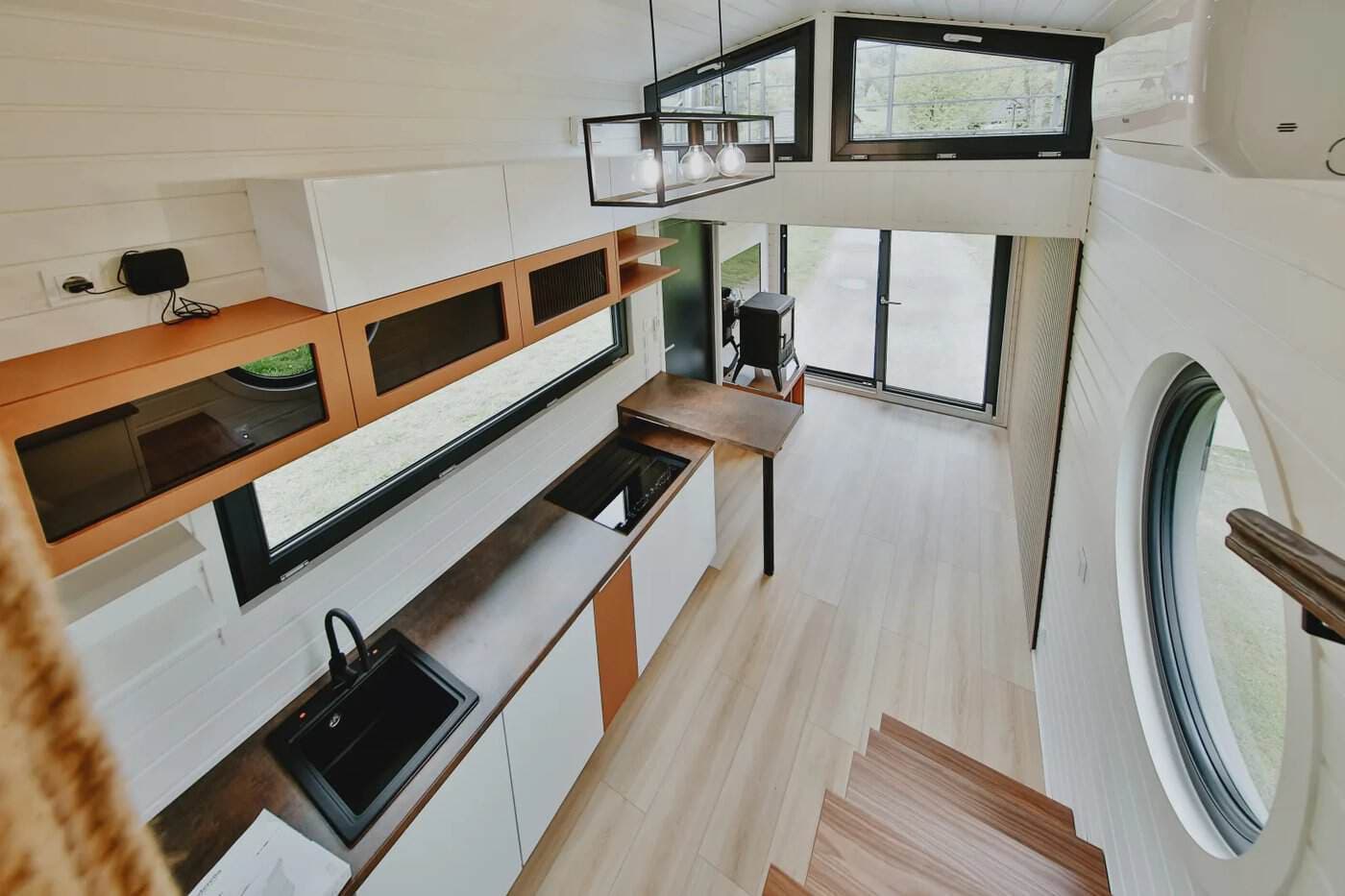
The standard kitchen is built to do actual work, not just look photogenic. Craft House specifies a sink, induction hob, oven, fridge, and furniture made of high-strength plywood. That combination tells you the model is aiming at people who want to cook in the house instead of treating food prep as an afterthought.
The bathroom is similarly complete. Craft House lists a shower, toilet, lighting, washbasin, electric radiator, electric water heater, mirror, and fan. That is the sort of spec sheet that makes a tiny home feel like a real residence rather than a clever trailer with plumbing attached. Add the 220 V electrical installation, smart air conditioning, and underfloor heating, and the Erica starts to look less like a novelty build and more like a serious compact home.
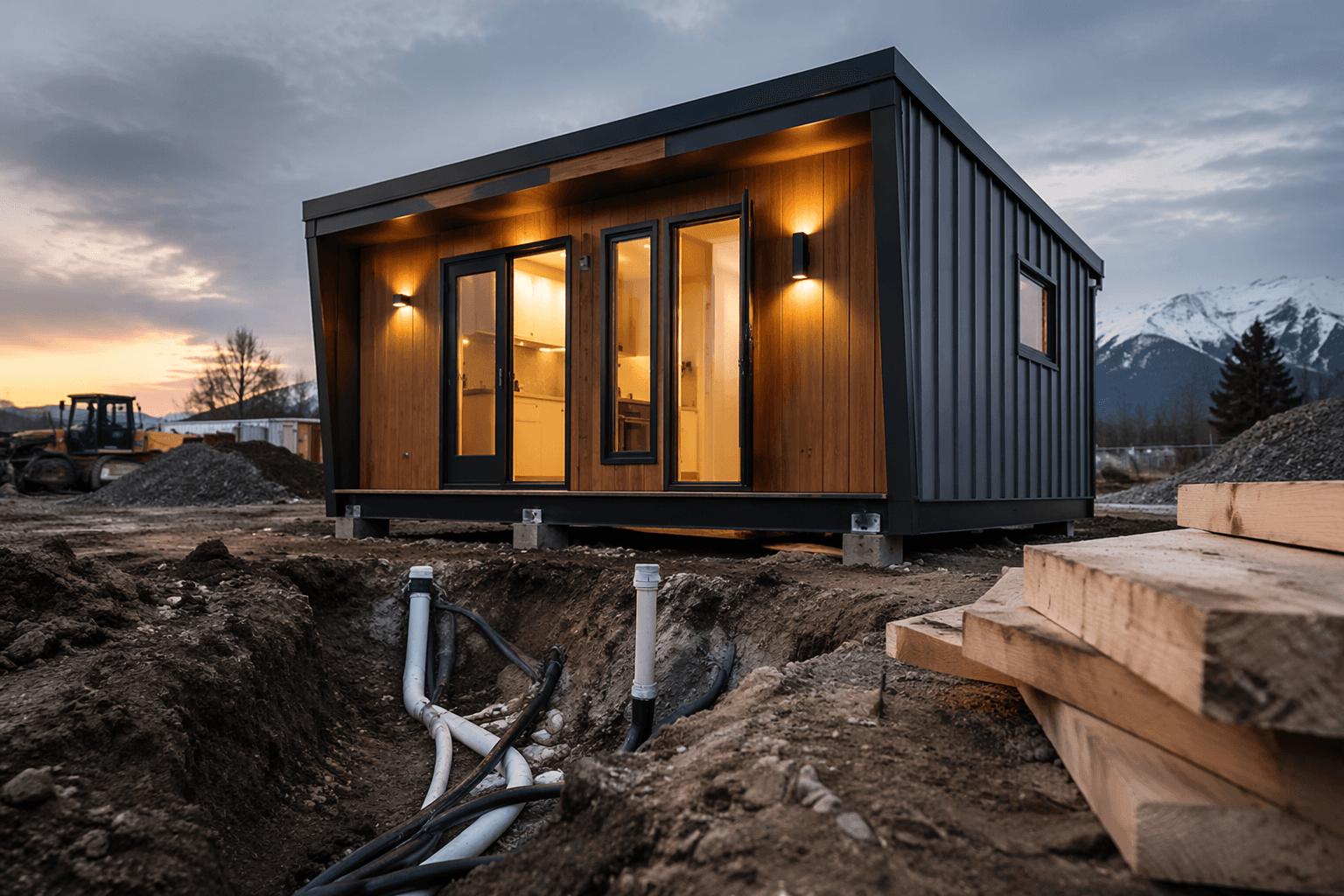
The construction choices back that up. Craft House cites a Scandinavian spruce internal façade, thermo pine and aluminium standing seam sheet metal on the exterior, double-glazed plastic windows, and a SYMA trailer. Those are the kinds of details that matter once you move past the showroom effect and start thinking about durability, insulation, and how the house will behave in weather.
How the add-ons change the lifestyle
This is where Erica becomes interesting as a buyer-decision story. Craft House offers the model with a long list of extras, and those extras change the kind of owner the house suits.
- A sofa bed, coffee table, bar stools, curtains, carpets, a mattress, a cabinet, and a bedside lamp push Erica toward immediate livability for a couple or solo owner who wants the home to feel finished from day one.
- A fireplace, lower terrace, and garden furniture shift the house toward stay-put comfort and outdoor entertaining, especially for buyers who want a small footprint but still expect a social zone outside the shell.
- Photovoltaics change the equation again. With solar capability, Erica stops being just a mobile house with good plumbing and becomes a practical semi-off-grid platform for buyers who care about energy independence or more flexible siting.
- Window blinds sound minor, but in a tiny house they are not. In a compact glass-heavy shell, they are part of how you control heat, privacy, and the feeling of enclosure.
That is the useful part of Erica’s design language. It does not force one identity on every buyer. It lets the same shell become a styled weekend retreat, a compact full-time home, or a more self-sufficient mobile base.
The two versions show the split clearly
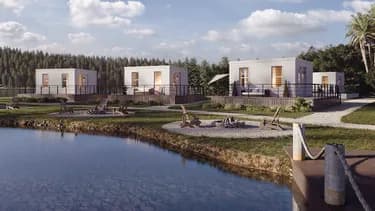
The strongest appeal comes from the contrast between the two finished looks. One version leans dark and moody, with a rooftop terrace reached by an exterior spiral staircase. That setup makes the house feel like a compact entertaining platform, the kind of tiny home that wants to host drinks, sunsets, and short stays where the outdoor space does as much work as the interior.
The other version goes the opposite way, using lighter Scandinavian finishes and solar support to create a cleaner, more practical feel. That approach makes more sense for someone who wants a year-round residence or a mobile base with fewer compromises on energy use and daily comfort. Same shell, same core rooms, very different priorities.
That split is what makes Erica useful as a guide to the market itself. The buyer who wants a stylish short-term retreat is not shopping for the same reasons as the buyer who wants a compact full-time residence, and neither is shopping the same way as the person building toward semi-off-grid travel. Erica shows Craft House understands that difference and is building for it.
Where Erica fits in Craft House’s larger lineup
Erica is not a one-off experiment. Craft House says its modular and mobile homes are found in Poland, Austria, Germany, France, and Ireland, which places this model inside a broader European portfolio rather than as a standalone design stunt. That matters because the house reads like part of a real production strategy: one base platform, multiple identities, and enough configuration depth to speak to different markets.
For tiny-house buyers, that is the real takeaway. Erica is not about choosing between pretty and practical. It is about how finish, add-ons, and power options turn the same 7.2-meter shell into a very different property. One buyer gets a roof-deck showpiece with a social edge; another gets a bright, solar-ready home that can work year-round; both start from the same compact, road-legal frame.
This article was produced by Prism’s automated news system from verified source data, official records, and press releases, then run through automated quality and moderation checks before publishing. The system is built and supervised by the people who set the standards it runs under. Read our full AI policy.
Did this article answer your question?