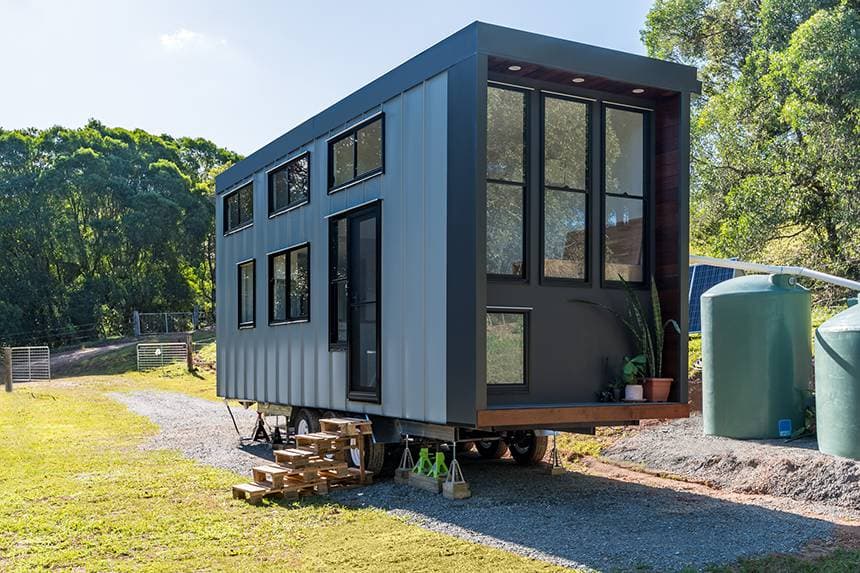
Decathlon Tiny Homes’ Dolphins offers premium family living in 32 feet
Decathlon’s Dolphins makes the 32-foot family tiny house argument better than most: a real ground-floor bedroom, loft sleep, and upgrades that actually change daily use.

When a 32-foot tiny house works for a family
The real question with Decathlon Tiny Homes’ Dolphins is not whether it can squeeze in four sleepers. It’s whether 32 feet can still feel like a home once you add a second sleeping zone, a usable kitchen, and enough circulation that nobody is constantly stepping over somebody else. In this case, the answer looks surprisingly strong, because the Dolphins is built around a layout that tries to behave like a compact family house instead of a glorified weekend cabin.
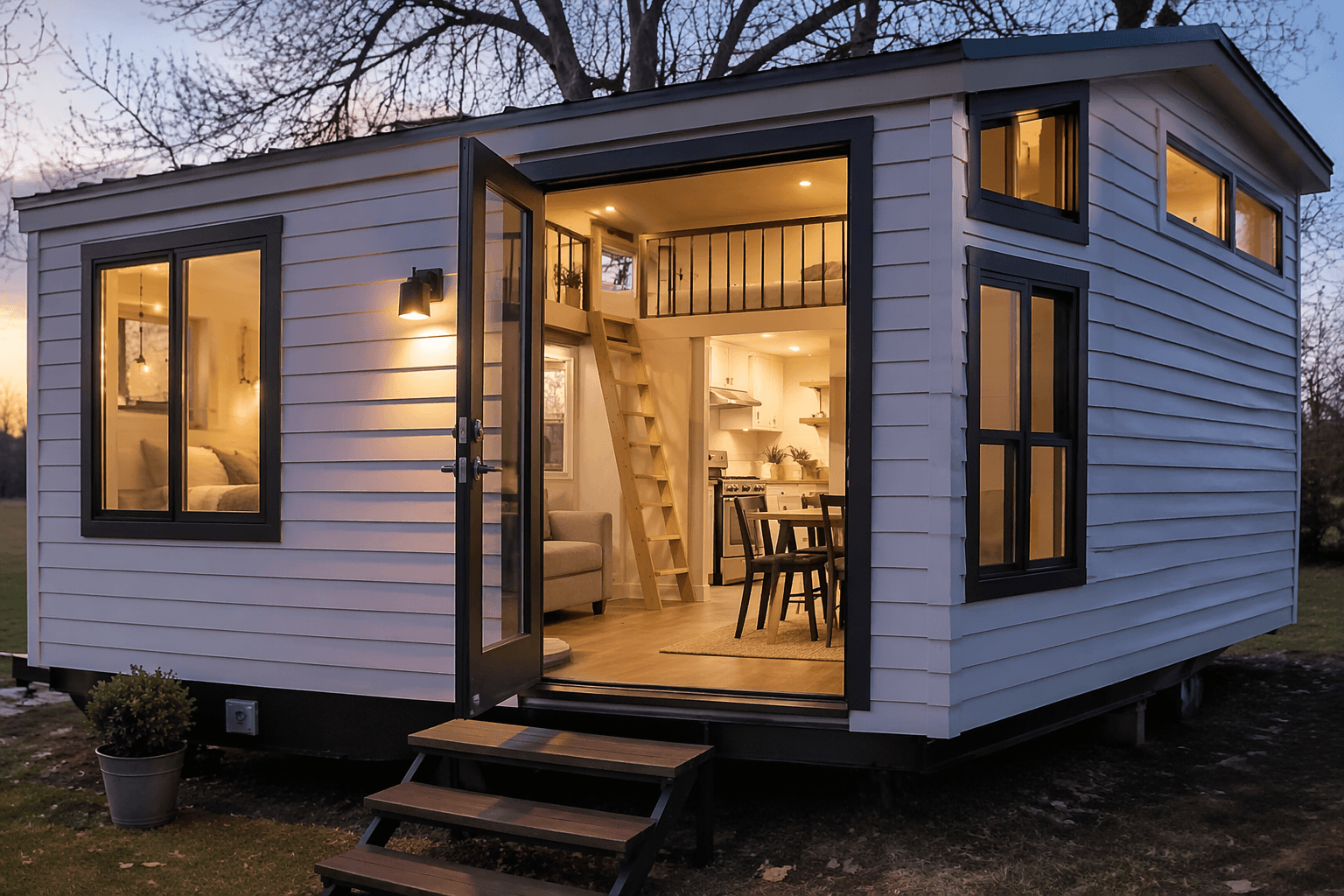
At 32 feet long and 8.6 feet wide, the Dolphins is firmly in towable tiny-house territory, but it sits on a triple-axle trailer, which is exactly the kind of detail that tells you this is being built for more than a casual glance at the curb. The home sleeps four, and Decathlon frames that capacity as a flexible two-bedroom setup, using the main-floor bedroom and loft arrangement to make room for a small family or occasional guests without jumping to a much larger park model.
Why the second bedroom matters more than the brochure language
A second sleeping area only matters if it changes how the house works day to day. In the Dolphins, the value is not just that four people can technically sleep inside. It is that the ground floor keeps a private bedroom in play while the loft handles the overflow, which is a much better setup for parents, older kids, or anyone who does not want to climb a ladder every night.
That is the core livability trick here. A 32-foot tiny house gets cramped fast when every sleeping arrangement lives in one open room, but Decathlon’s layout gives the Dolphins a more conventional rhythm: one private room below, one sleeping space above, and a shared core in between. That makes the house feel less like a puzzle box and more like a small home that has been edited carefully.
Premium finishes are not just cosmetic in a house this small
Homecrux’s framing of the Dolphins as a premium-finish tiny house is important because finish quality shows up everywhere once the square footage gets tight. Better cabinetry, stronger materials, cleaner trim, and a more considered layout do not just look nicer. They affect how often you notice wear, how easy surfaces are to clean, and whether the home still feels composed after a year of everyday use.
That is why the optional Poseidon upgrade catalog matters. It suggests Decathlon is not treating the Dolphins as a fixed-spec starter unit, but as a platform buyers can tune toward different priorities, whether that means comfort, off-grid readiness, or more polished interior choices. In tiny-house terms, that kind of modularity is a big deal because it lets the buyer decide how much of the house should feel basic and how much should feel finished.
What the Poseidon base tells you about the build
Decathlon’s Poseidon model, which provides useful context for the Dolphins, is RV certified and starts at $112,750. The company lists it at 272 square feet plus a 68-square-foot sleeping loft, and says it can be pulled by a one-ton truck. Those numbers matter because they place the home squarely in the practical end of the market, not the fantasy end.
The standard package is also telling. Decathlon includes butcher-block countertops, luxury vinyl flooring, an 18k multihead mini-split HVAC system, a 30-inch refrigerator, a standard flush toilet, a 3-by-3-foot dual-threshold shower, and washer/dryer connections. That is a real home package, not a stripped shell. The headline here is not luxury for luxury’s sake. It is that the base model already covers the essentials well enough that the house should work as a lived-in space, not just a showcase.
The upgrades point to how people actually use tiny houses
The add-ons are where Decathlon clearly expects buyers to personalize the Dolphins and Poseidon path. Washer/dryer options, skylights, a composting toilet, a tankless water heater, and stone countertops all point to different use cases. Some buyers will care most about off-grid flexibility, while others will want a more residential feel or better long-stay comfort.
That is where the premium story becomes more than surface-deep. A tankless water heater changes the experience of daily use. Skylights change the feel of the interior light. A composting toilet changes how self-contained the home can be. Even stone countertops, which are obviously a visual upgrade, also speak to durability in a house where every surface gets touched constantly.
Delivery, setup, and the Texas reality check
Decathlon says it will deliver, level, and block new homes within a 100-mile radius of the Dallas-Fort Worth metroplex at no additional fee. That is the kind of practical detail that matters a lot more than a pretty render, because tiny-house buyers are not just buying a floor plan. They are buying logistics, and delivery plus setup can decide whether a purchase feels manageable or miserable.
The Texas base also fits the broader identity of the model. This is not a remote concept piece aimed at dreamers who never intend to move in. It is a towable, RV-certified, 32-foot home with a defined delivery footprint and a specification sheet that looks ready for real use.
How it compares with Decathlon’s earlier 32-foot formula
The Dolphins does not come out of nowhere. A 2024 Homecrux look at Decathlon’s Happy Ending tiny house already showed the company working in this same lane: 32 feet, four sleepers, two-bedroom layout. The Dolphins feels like a continuation of that idea, only with more emphasis on refinement and a clearer premium pitch.
That continuity matters. It suggests Decathlon is not chasing novelty for its own sake. It is refining a family-sized formula that already made sense on paper, then pushing it toward better finishes and more configurable options. In a market crowded with tiny homes that look clever but live awkwardly, that kind of iteration is worth paying attention to.
When you strip away the branding, the Dolphins asks a very old tiny-house question: can a small footprint still feel comfortable once real people start using it every day? With a ground-floor bedroom, a usable loft, RV-certified underpinnings, and upgrades that affect more than the photos, Decathlon’s answer is yes, if you are honest about how compact you want family life to be.
This article was produced by Prism’s automated news system from verified source data, official records, and press releases, then run through automated quality and moderation checks before publishing. The system is built and supervised by the people who set the standards it runs under. Read our full AI policy.
Know something we missed? Have a correction or additional information?
Submit a Tip