Escape's Shoreline Glass House Offers Single-Level Tiny Living Without Loft Compromises
At $196,240 and 564 square feet total, Escape's Shoreline Glass House tests the 400-sq-ft rule that defines what a park model is legally allowed to be.
The number that stops most park-model buyers cold is 400 square feet. That's the ceiling embedded in ANSI A119.5, the standard that keeps park model recreational vehicles classified as RVs rather than manufactured homes, and the classification that determines where you can legally site one, how you finance it, and what it costs to insure. Escape's new Shoreline Glass House, at 47 feet long by 12 feet wide, sits in complicated territory relative to that threshold.
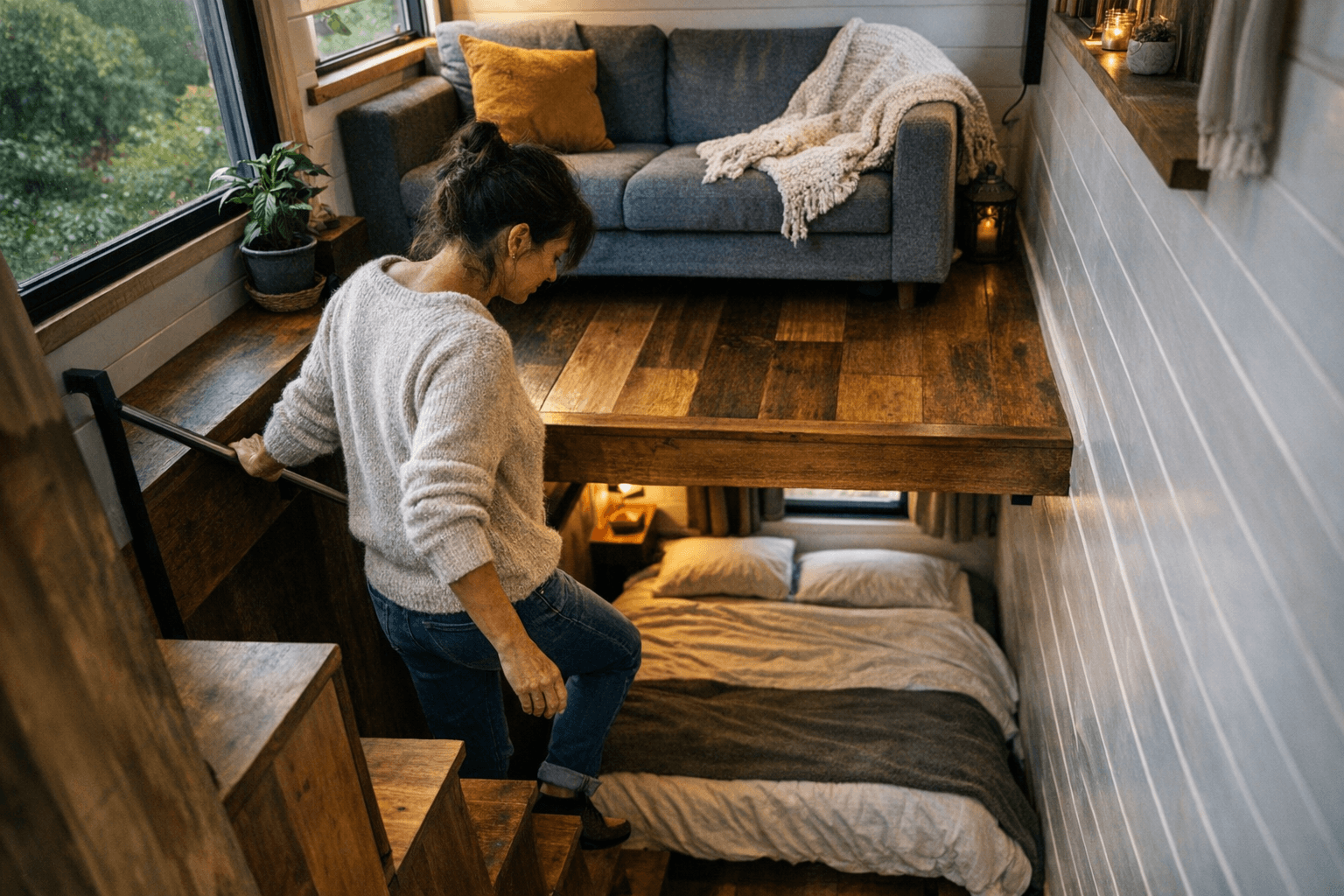
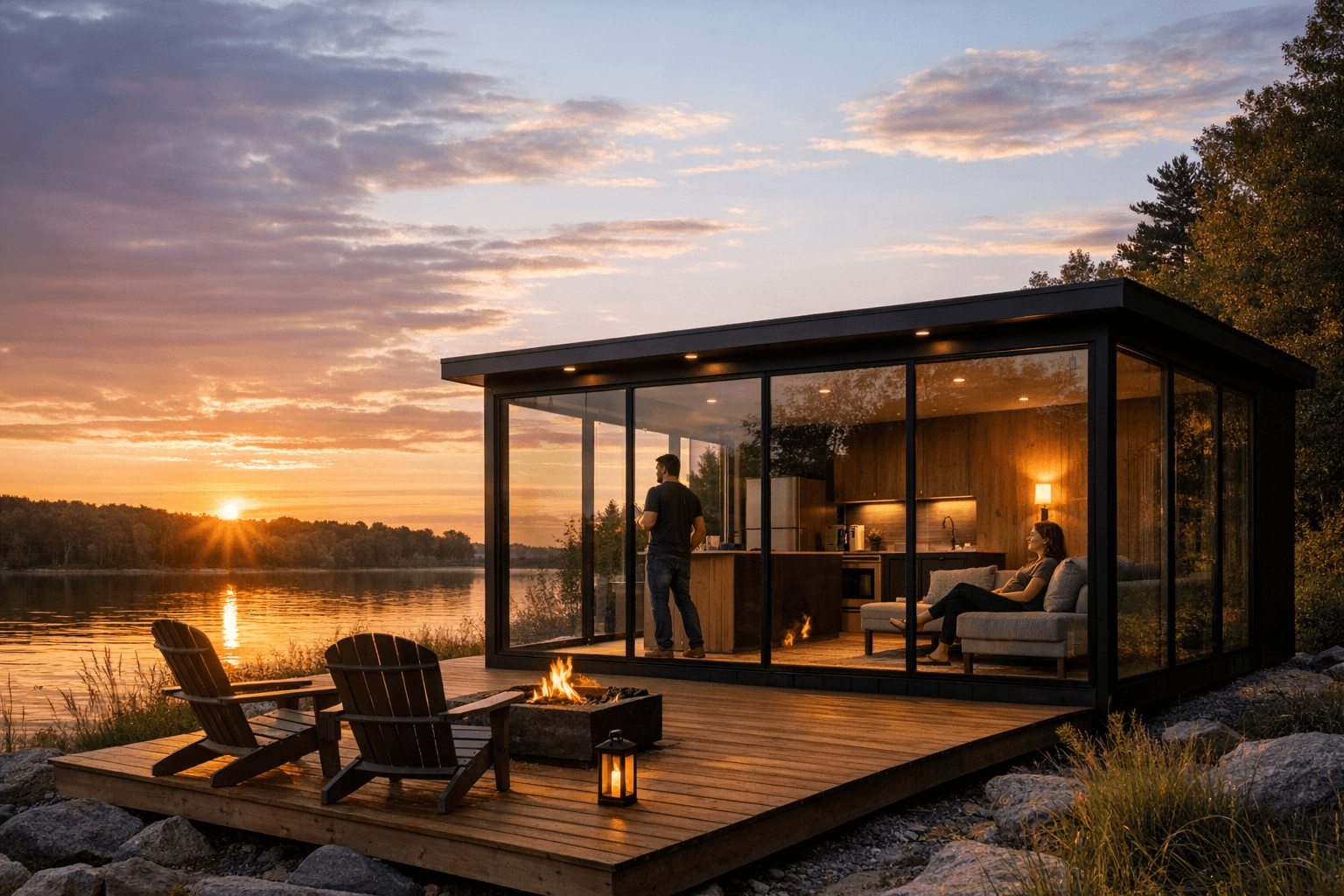
The unit is already built and sited at Escape's Canoe Bay Village in Wisconsin, listed at $196,240 with a $680-per-month plot rental covering the site and services. The floor plan delivers a king bed, walk-in closet, washer/dryer, full bathroom with a 5-foot glass-enclosed shower, stone counters, an L-shaped sofa, and an enclosed porch, all on a single level with no loft required. A 30-foot glazing wall runs the length of one side, giving the interior a quality that reads as apartment-scale rather than tiny-home minimal.
The classification question is the one that doesn't surface in the spec sheet. At 47 by 12 feet, the Shoreline Glass House carries a total footprint of 564 square feet. ANSI A119.5 allows enclosed porches to be excluded from its calculations, but the remaining living area still likely pushes past the 400-square-foot ceiling that separates park-model RV status from manufactured-home classification under HUD standards. That line matters: park models classified as RVs are generally permitted in campgrounds, vacation parks, and communities like Canoe Bay Village. Cross into manufactured-home territory and the permitting path, the eligible financing products, and the applicable energy codes all shift.
For buyers considering placement outside an existing park community, the non-towable designation adds another layer. A tiny house on wheels, a THOW, follows RV rules and can relocate when local ordinances change. A non-towable park model is fixed to its plot, which means the $680 monthly site rental isn't just a convenience fee; it's the ongoing legal basis for placement. Own the home without a secured long-term site agreement and you own a 47-foot structure with severely limited options for where it can go.
The single-level floor plan is genuinely rare in the park-model market, and for buyers with mobility limitations, the absence of a loft ladder carries obvious practical value. The 30-foot glazing wall introduces real performance questions in climate extremes: heat gain in summer, thermal loss in winter, and in wildfire-prone jurisdictions, glazing exposure is among the first variables fire-mitigation codes evaluate.
Escape's positioning of the Shoreline at the edge between RV-park lifestyle and apartment-scale comfort reflects where the broader park-model segment has been heading. The zoning framework governing where these units can legally land has not.
Know something we missed? Have a correction or additional information?
Submit a Tip