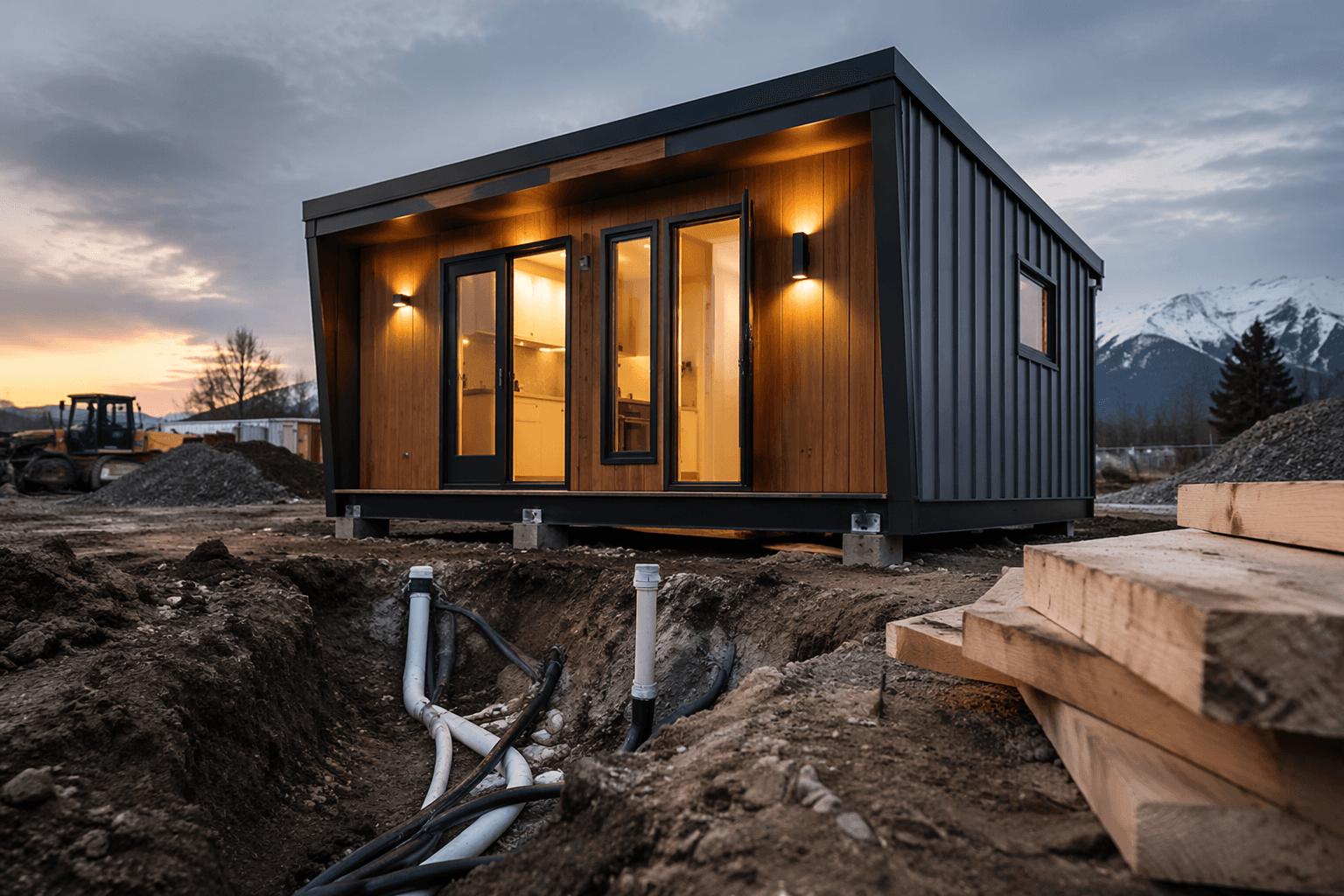
Farmhouse tiny house uses smart storage and a built-in catwalk
This 288-square-foot farmhouse tiny house keeps the main floor clear by turning the loft and built-in catwalk into real storage.
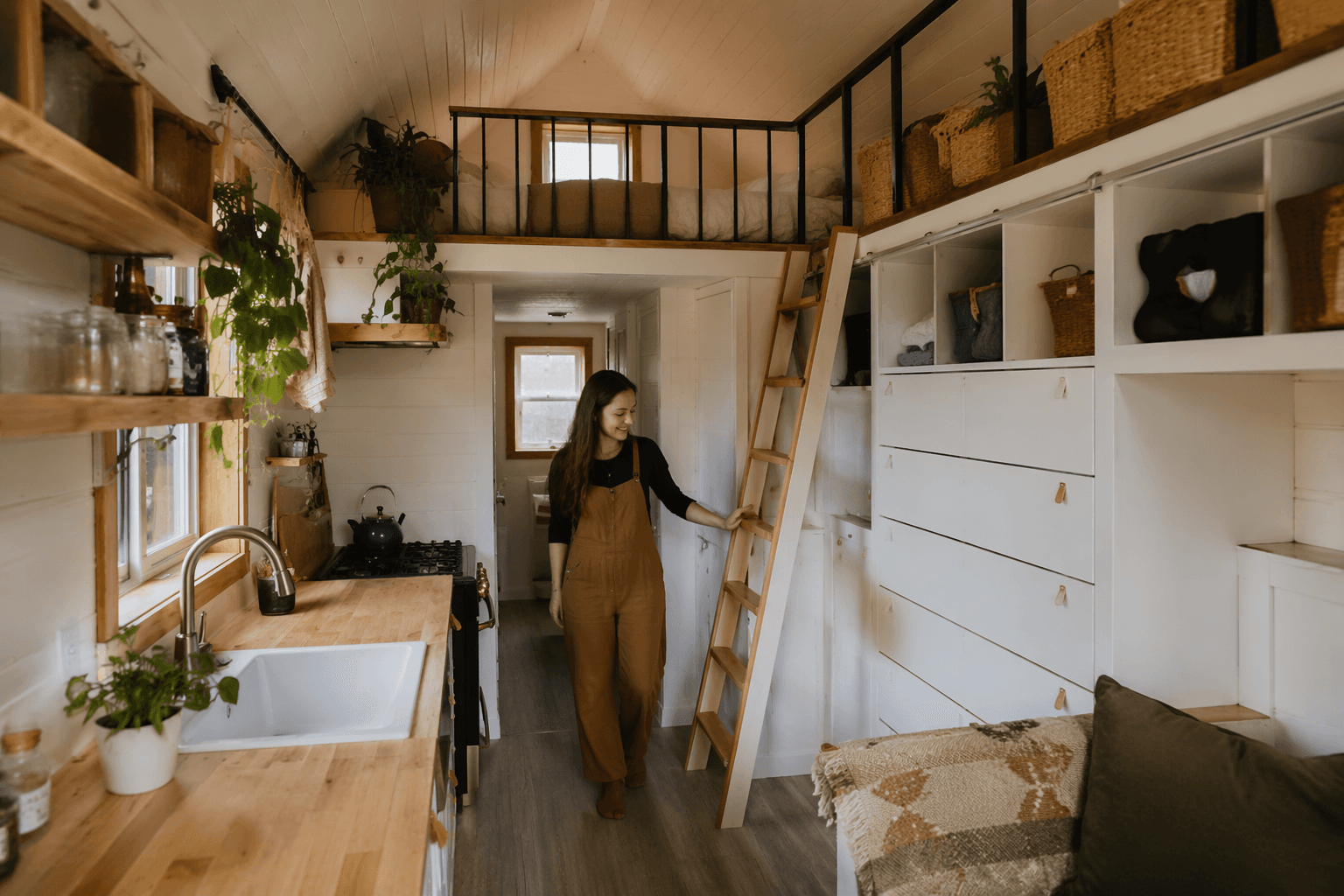
The farmhouse tiny house works because it takes circulation seriously. At 32 feet long and 9 feet wide, with 288 square feet inside, it is set up as a full-time home for two, not a novelty box with a ladder and a prayer. The outside deck gives the household real overflow space for dining and hanging out, which matters more than any cute finish when you are trying to make a tiny build feel livable day to day.
Why the layout feels larger than it is
The smartest move here is that the floor plan never wastes the center of the house. You enter into the living room first, and the space is simple on purpose: a couch, a small coffee table, a few plants, and corner shelves for display or everyday odds and ends. That keeps the front of the home open and readable instead of forcing furniture to fight the circulation path, which is exactly what makes a two-person tiny house feel calm instead of crowded.
From there, the living room flows into the galley kitchen, and that transition is doing a lot of heavy lifting. The kitchen is packed with a refrigerator, microwave, cooktop, shelves, cabinets, a huge pantry, plus a dishwasher and a washer-dryer unit, so the home can handle real daily routines instead of just weekend use. In a tiny house this size, that kind of utility is what keeps clutter from taking over the living area.
The loft is storage, but only because the rest of the house stays disciplined
The title’s built-in catwalk is not just a quirky detail. In the article, the catwalk is described as usable for cats moving from one end to another, but it also has room for storage if you do not have a cat. That is the tell: the upper zone is being asked to absorb the stuff that would otherwise spill into the main floor, which is a much better use of loft space than treating it like a second bedroom you will barely use.
That said, loft-as-storage only helps if you are strict about what goes up there. Seasonal bins, extra bedding, off-season clothing, and less-frequently used household items make sense; random overflow does not. In this build, the catwalk gives the loft a real function and helps the upper level feel intentional, but the win comes from discipline, not from sheer square footage. Otherwise, you are just shifting clutter upstairs and calling it organization.
The bathroom is a circulation trick, not a dead end
The bathroom is where this tiny house really shows its planning. It sits behind a sliding barn door and is arranged as a walk-through space, with the toilet and shower on one side and a vanity sink with drawers on the other. That setup creates a gallery-like passage to the bedroom, which is a far better use of tight square footage than a bathroom that dead-ends the floor plan and blocks the flow through the home.
For tiny-house builders, this is the layout trick worth stealing. Put the necessary functions on opposite sides, keep the pathway clear, and use the bathroom as part of the route instead of a room that interrupts it. The result is practical, not flashy, but that is exactly why it works. You still get privacy, storage, and easy access to the bedroom without sacrificing the sense that the house moves naturally from one zone to the next.
The bedroom stays small on purpose
The sleeping space is snug, and that is the right call for a two-person build like this one. It is enclosed by another sliding barn door and fitted with a queen-size bed, storage underneath for clothing, two side tables with drawers, and shelves for personal items. With windows on both sides and room-darkening blinds, the bedroom is set up to feel like a real retreat rather than a leftover corner stuffed with a mattress.
That matters because the house is not trying to maximize occupancy. It is trying to make a couple comfortable in a compact footprint, and there is a difference. The bedroom, bathroom, kitchen, and loft all have defined jobs, so nothing has to pretend to be something else, which is usually where tiny homes start to feel cramped.
What this build gets right for everyday living
If you are studying the farmhouse tiny house as a problem-solver, the lesson is straightforward: protect the main floor, use the loft for storage with intent, and let the catwalk earn its keep. The deck handles social spillover, the galley kitchen handles utility, the walk-through bath preserves circulation, and the bedroom stays calm because the rest of the plan is pulling its weight. That is how a 288-square-foot home can feel workable for two instead of merely compact.
This article was produced by Prism’s automated news system from verified source data, official records, and press releases, then run through automated quality and moderation checks before publishing. The system is built and supervised by the people who set the standards it runs under. Read our full AI policy.
Did this article answer your question?