Fraser Bear tiny house blends family comfort with outdoor living
Fraser Bear turns 300 square feet into a family-capable tiny house with a loft, full kitchen, and code-ready specs. The tradeoff is privacy, not comfort.

Fraser Bear is interesting because it does not try to win you over with gimmicks. The real question is whether a 300-square-foot mobile home can actually feel livable for a small family, travel well, and still keep a strong tie to the outdoors. Rolling Bear Tiny Homes answers that with a layout that looks practical first and pretty second, which is exactly the right order for a tiny house that claims to work in real life.
A layout that earns its square footage
The basic floor plan is doing most of the work here. Fraser Bear packs in a living room, kitchen, bathroom, and loft bedroom, so the home can function for permanent living as well as weekend stays. That matters because a lot of tiny houses look good in photos but fall apart the moment you need to cook a full meal, sleep more than one person comfortably, or store anything beyond a weekend bag.
The living area is sized to hold a couch, two armchairs, and a coffee table, which is a useful benchmark because it shows the room is meant to be occupied, not merely admired. The kitchen is equally grounded in everyday use, with a refrigerator, microwave, range hood, and cooktop, plus storage under the staircase and even cubbies for plants. A bar table adds the kind of all-purpose surface tiny-home owners end up using for meals, laptops, and overflow prep space whether they planned to or not.
The bathroom is tucked off the kitchen behind a sliding barn door, and that decision keeps the plan compact while preserving a separate washroom zone. Inside, it includes a vanity sink, toilet, and shower. The loft bedroom is the most obviously tiny-house part of the build, but it is not treated like an afterthought: it fits a double mattress, side tables, and storage, and the windows on both sides help cut down on the boxed-in feeling that often makes loft sleeping a dealbreaker.
Why it feels bigger than 300 square feet
The interior finish is where Fraser Bear starts to separate itself from the cramped-cabin look that ruins so many small homes. Rolling Bear leans on high ceilings, expansive windows, and modern finishes to keep the space bright and open instead of cave-like. Add in granite countertops, high-end fixtures, custom woodwork, and premium hardwood flooring, and the whole thing reads more like a compact custom home than a stripped-down trailer conversion.
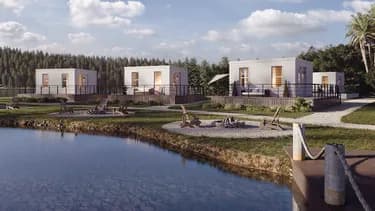
That bright, open feel is not just aesthetic. For a tiny house that is supposed to travel or land in a variety of settings, natural light and ceiling height do a lot of heavy lifting. Fraser Bear is positioned for mountains, lakeside settings, and urban environments, so the design has to support changing views and changing weather without feeling fragile.

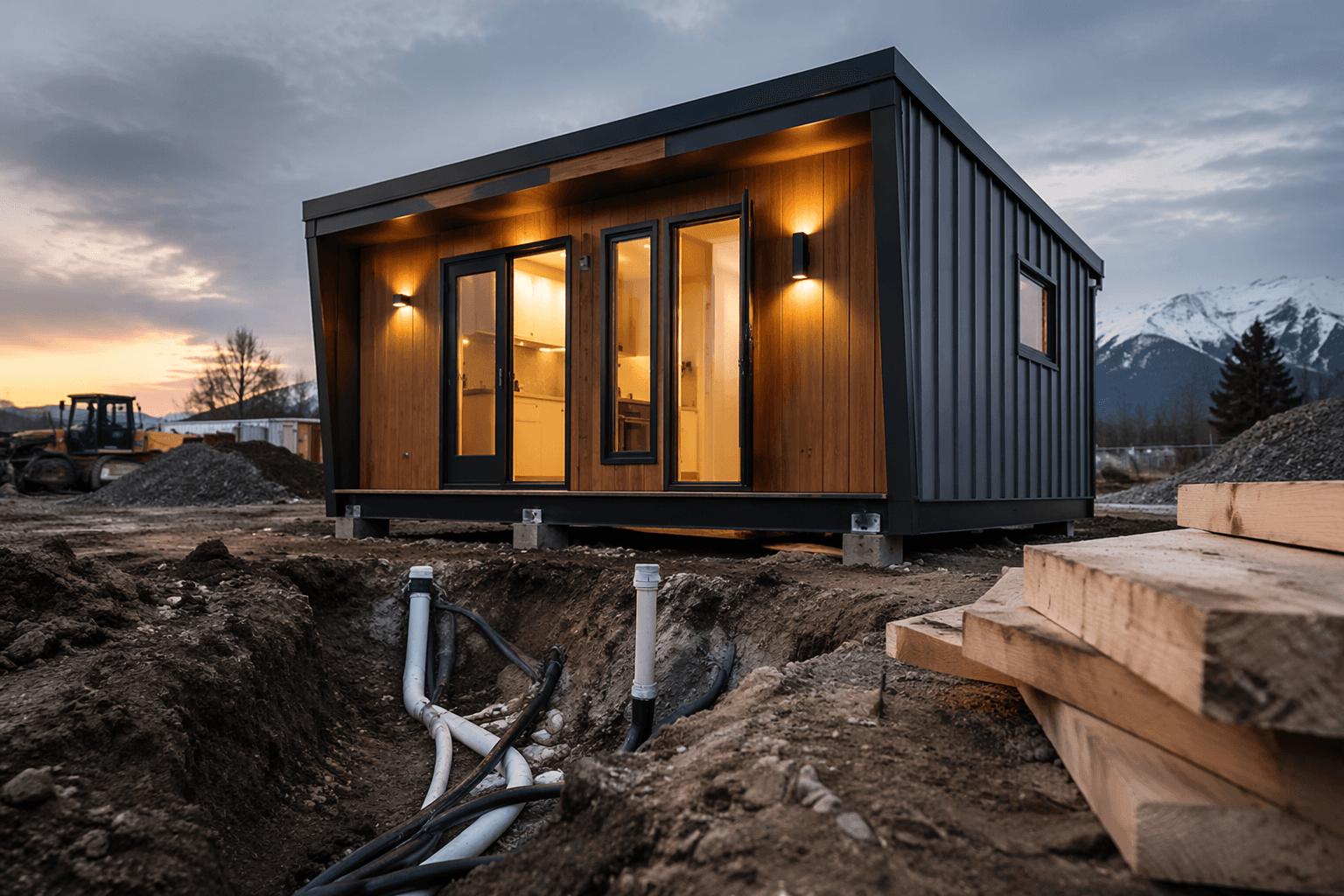
The exterior also matters more than people sometimes admit. Rolling Bear describes the shell as built to withstand the elements, with a choice of styles, which is a smart way to frame a mobile dwelling that may spend its life in cold, wet, windy, or highly exposed settings. A tiny house that is supposed to feel like a retreat has to survive like a utility structure.
Where the family-friendly pitch works, and where it starts to bend
This is the part of the story that needs a pressure test. Fraser Bear is clearly meant to be family-friendly, and Rolling Bear places it within its Lodge Series and its Fraser Valley family-lodge offering for British Columbia families. The broader family-lodge framing emphasizes multiple bedrooms, a practical kitchen, and a lounge area, which tells you the company is thinking about togetherness, not just solo minimalism.
But the Fraser Bear itself still has a very small-house reality: one loft bedroom, one bathroom, and a shared main level. That makes it easy to imagine for a couple, a couple with a young child, or a family using it as a weekend base, but the privacy question gets sharper fast once sleep schedules, gear, or older kids enter the picture. In tiny-house terms, it works best as a compact family retreat or movable home for a small household, not as a substitute for the kind of separation a larger multi-bedroom house gives you.
That is also why the outdoor connection matters so much. When a home is this size, decks, views, and easy movement between inside and outside stop being nice extras and become part of the living room. Fraser Bear’s appeal is that it does not pretend to solve every family housing need inside 300 square feet; it solves the ones that can be solved by smart planning, daylight, and a plan that stays usable when the doors open.
The compliance and utility details are not window dressing
If you are looking at Fraser Bear as a real purchase, the certification language is just as important as the floor plan. Rolling Bear says the model is designed to surpass CAD Z240 RV and Canadian Building Code guidelines, and that it is “NOAH Certification Ready.” That combination matters because standards and certification pathways can influence safety, insurance, financing, and where a tiny home can legally be placed in Canada.

The utility package backs that up. Fraser Bear is listed with 50-amp service and an optional hot tub circuit, along with full-sized modern appliances, an on-demand water heater, and optional underfloor heating. Those details push the model closer to a true year-round living unit and away from the stripped-down vacation cabin category. Delivery and setup services also matter, because mobility is only useful if the installation side does not become a headache.
Ontario’s tiny-home guidance helps explain why this emphasis is so practical. Factory-built tiny homes must meet Building Code requirements, and once they are placed on a property they still need municipal approval and inspection. Ontario also notes that an open-concept tiny home can be as small as 17.5 m² in some cases, but the bigger point is that tiny-home success in Canada is always tied to compliance, not just clever design. Standards Council of Canada guidance on CSA Z240 RV adds another layer here: the standard covers recreational-vehicle dimensional and safety requirements, while park model trailers fall under a different standard. In other words, the paperwork path can shape the whole buying decision.
Part of a bigger ladder of tiny-house formats
Fraser Bear also makes more sense when you place it inside Rolling Bear’s broader bear-branded lineup. The company markets other models for different household types, including Spirit Bear, Koala Bear, Kodiak Bear, and Berenstein Bear. That tells you Fraser Bear is not a one-off stunt build; it is part of a deliberate product family aimed at different living patterns.
The Berenstein Bear, at about 450 square feet including the loft and roof deck, shows how quickly the brand scales upward once the brief changes from compact living to larger family use. Fraser Bear sits lower on that ladder, but it hits a sweet spot for buyers who want real amenities without jumping straight into a much larger footprint.
Fraser Bear succeeds because it understands the hard truth of tiny-house living: 300 square feet only works when every inch has a job, and when the home does not fight the outdoors. The family-friendly pitch holds up best when comfort means daylight, utility, and flexibility, not extra rooms. Once you look at it that way, Fraser Bear feels less like a novelty and more like a compact plan for living well in a very small box.
This article was produced by Prism’s automated news system from verified source data, official records, and press releases, then run through automated quality and moderation checks before publishing. The system is built and supervised by the people who set the standards it runs under. Read our full AI policy.
Did this article answer your question?