French tiny house in Provence showcases handcrafted timber charm
Handcrafted timber and Provence scenery turn this tiny house into a premium retreat, not just a smaller floor plan.
Craftsmanship is the real selling point
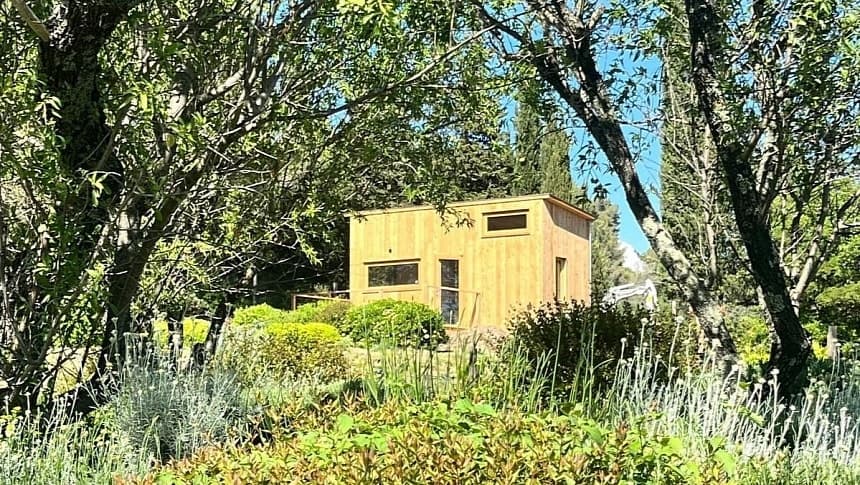
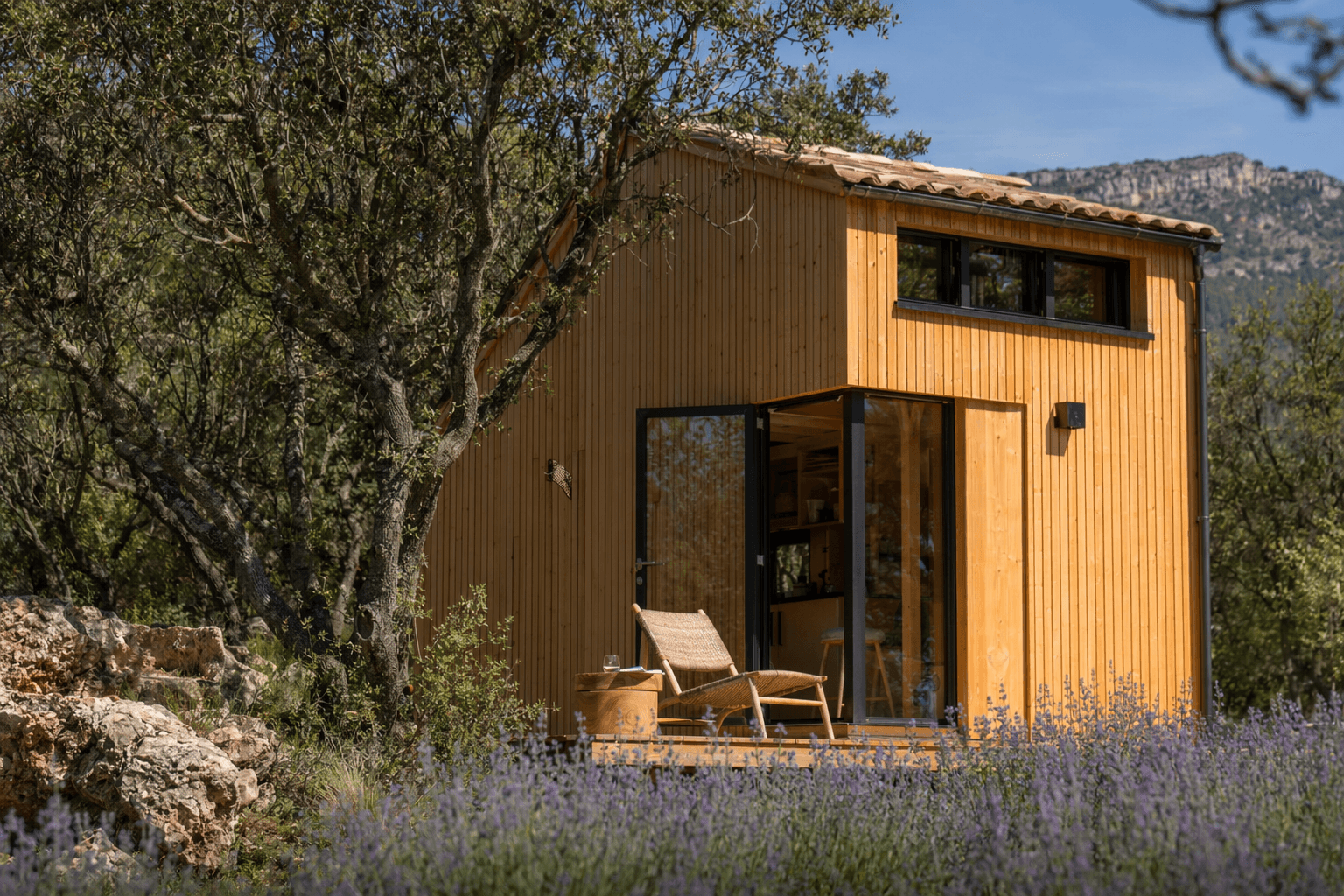
The French tiny house in Provence stands out because it is built to feel made, not merely minimized. Its natural timber, tactile interior texture, and handcrafted finish give it the kind of presence that mass-produced tiny homes often cannot match, especially in a market where many compact builds can blur together once they shrink to trailer size. Here, the appeal is not just that the home is small. It is that every visible surface reinforces the sense of care, material quality, and place.
That matters in the tiny-house world because size alone rarely commands a premium anymore. What does create value is a clear identity: custom woodwork, a refined finish, and a setting that makes the home feel like a destination rather than a compromise. This French example sits squarely in that craft-first lane, where the home’s atmosphere is part of the product.
Provence turns a tiny house into a destination
The Provence setting is doing as much work as the timber. Official tourism branding for Provence and the Côte d’Azur leans heavily on crafts, perfumery, gastronomy, flowers, and scenic routes, which makes the region a natural fit for a tiny home that wants to sell more than square footage. In a place associated with sensory experience and local making, a small structure reads less like reduced housing and more like a curated retreat.
That destination identity is strengthened by the landscape itself. Provence tourism material highlights the Luberon as a land where red cliffs meet ochre-toned villages, and that kind of visual language matters in tiny-house media. A compact dwelling set against a romantic landscape instantly feels more intentional, and that helps explain why Provence-based tiny homes can attract both compact-living enthusiasts and hospitality audiences looking for something memorable.
Why the timber finish signals premium value
The home’s handcrafted timber feel is not a decorative afterthought. In a market where many tiny houses rely on similar footprints, similar trailer formats, and similar cabin-like silhouettes, the woodwork becomes the easiest way to distinguish one build from another. Natural timber, visible grain, and a warm interior texture all signal time, labor, and design judgment, which are exactly the traits buyers notice when deciding whether a tiny house feels premium or generic.
That difference is especially important for readers who care about tiny homes as design objects as much as dwellings. A mass-produced unit can be efficient, but a craft-forward build suggests a different set of priorities: joinery that is meant to be seen, finishes that are meant to be touched, and an interior that feels intentional from wall to ceiling. In this case, the French build’s artisanal tone is the market differentiator.
France built a framework for this kind of growth
The French tiny-house market did not appear by accident. The ALUR law in 2014 gave legal recognition to lightweight habitats such as yurts, tiny houses, and tiny homes on wheels, and that opened the door for a broader market to develop. Coverage of the movement has described the industry as surging after that legal shift, moving from experimental builds into a more established niche.
That timeline helps explain why a Provence tiny house can now be framed as a polished hospitality object instead of a fringe curiosity. France’s first tiny-house village arrived in Brittany in 2019, a signal that the category had already expanded beyond one-off hobby builds into community and hospitality use. Once tiny homes began appearing in villages and destination settings, craftsmanship became even more important, because the home was no longer just a private experiment. It had to compete as an experience.
The builders behind the movement shaped the standard
French builders have been central to that evolution. Yvan Saint-Jours built one of the first Tiny House on Wheels in France in 2013, helping establish an early benchmark for the country’s mobile builds. Around the same time, Bruno Thiéry launched La Tiny House in 2013 and was already being cited as having built more than 15 tiny homes for European customers, which shows how quickly the niche began to professionalize.
That early growth also pushed builders to adapt to European transport realities. Industry coverage frequently cites a 3.5-ton towing limit, and that number affects everything from structure to layout to material choice. A builder working under that constraint has to think carefully about weight, durability, and how much visual richness can be delivered without making the home impractical to move. In other words, the craftsmanship is not just aesthetic. It is structural strategy.
From mobile dwellings to hospitality and fixed habitats
The French tiny-house scene has widened well beyond the original trailer dream. The market has expanded into fixed habitats and hospitality-oriented uses, which changes how these homes are designed and sold. A tiny house meant for short-stay guests or a scenic retreat can afford to lean harder into ambiance, local materials, and a stronger sense of place than a purely utilitarian mobile build.
That is where Provence gives the home extra leverage. A craft-driven tiny house in a region known for pottery, ceramics, Santon figurines, glassblowing, perfumes, and food can borrow credibility from the surrounding culture. The result is a home that feels aligned with the region’s identity rather than dropped into it. For buyers, hosts, and builders, that alignment can justify higher attention, and often higher cost.
What to look for when judging a craft-first tiny house
A tiny house like this should be evaluated on the details that make handcrafted work visible. The important cues are not just how small the home is, but how convincingly it uses materials and finish to create value.
- Natural timber that feels deliberately selected rather than purely utilitarian
- Visible interior texture that adds warmth and depth
- Handcrafted woodwork that distinguishes the build from factory repetition
- A layout and structure suited to the 3.5-ton towing reality common in Europe
- A setting, like Provence, that reinforces the home as a destination experience
Those choices tell you whether a tiny house is leaning on romance alone or actually delivering craftsmanship that justifies the premium. In the French market, the strongest builds are doing both at once, and Provence makes that combination feel especially convincing.
The smallest homes can be the most revealing ones. In Provence, the timber, the texture, and the landscape all point in the same direction: this is tiny living presented not as a stripped-down compromise, but as a carefully built place worth noticing.
Know something we missed? Have a correction or additional information?
Submit a Tip