Hawaii tiny-home homelessness program faces auditor warning over spending flaws
The auditor warned Hawaii lawmakers that kauhale spending needed immediate scrutiny after more than $37.1 million in no-bid contracts to HomeAid Hawaii lacked clear records.
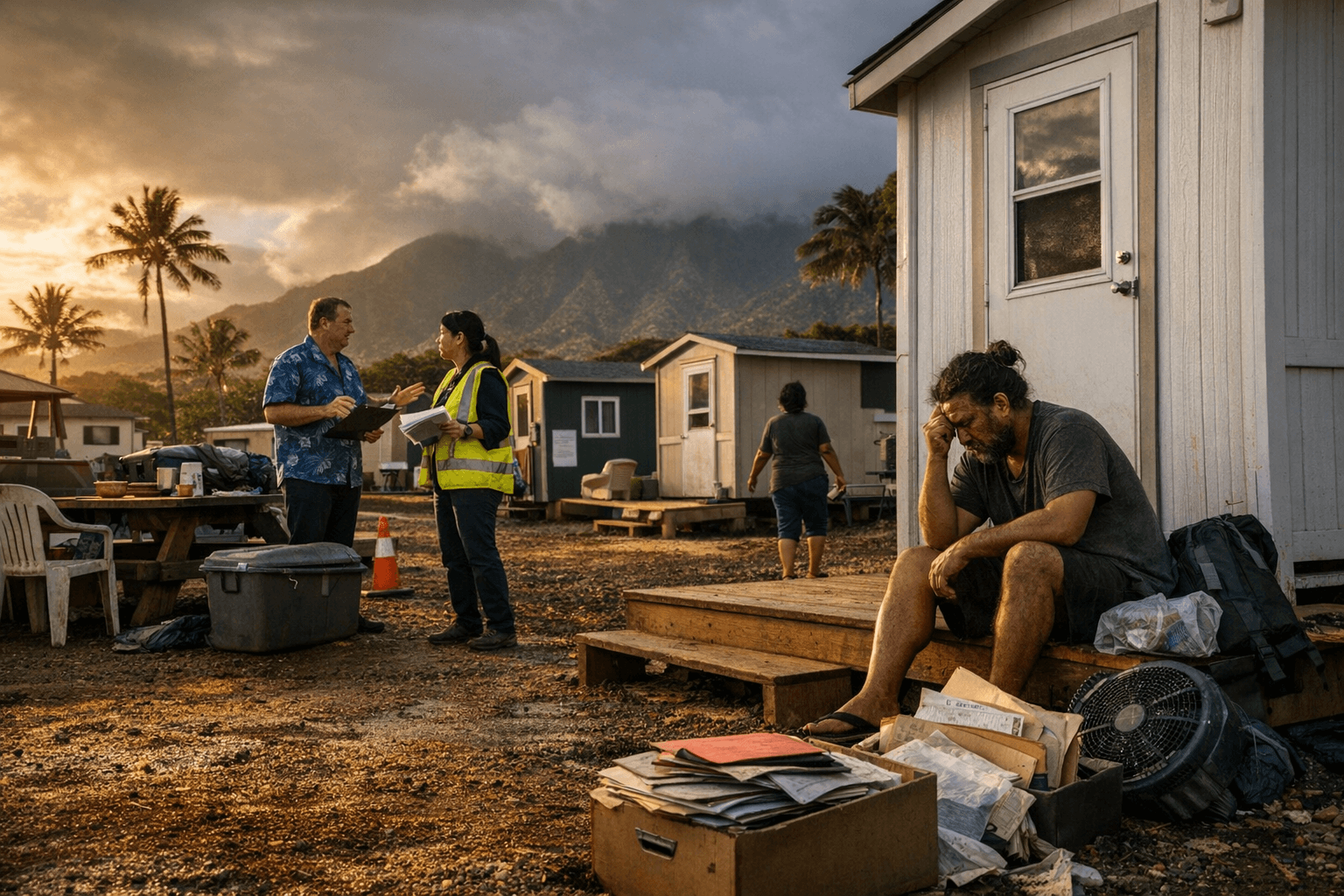
Hawaii’s kauhale experiment hit a hard accountability test as state Auditor Les Kondo warned lawmakers that the tiny-home homelessness program showed deficiencies serious enough to demand immediate attention from those in governance. His early warning came as the state’s payments to HomeAid Hawaii had climbed to nearly $40 million, with weak internal controls and little public oversight now sitting at the center of the debate.
The warning matters because kauhale was sold as more than a cluster of small units. Gov. Josh Green pushed the program forward after declaring a state emergency on homelessness in 2023, a move that suspended the procurement code and allowed no-bid contracting. The idea was to move quickly and build community-based housing with services attached, but the audit questions now go straight to whether the state can show where the money went, what it bought, and whether the model is delivering stable outcomes for people still waiting for housing.

Civil Beat’s April 17, 2025 review had already exposed the core problem: the Department of Human Services lacked records showing how more than $37.1 million in no-bid contracts to HomeAid Hawaii had actually been spent. The reporting said more than $14 million in work lacked documentation, and some payments were made in large lump sums instead of the smaller installments required by contract. Lawmakers then formally requested a performance and management audit, and Kondo told legislators and human services director Jun Yang that waiting for the final report could leave public funds exposed to unsupported or inappropriate costs.
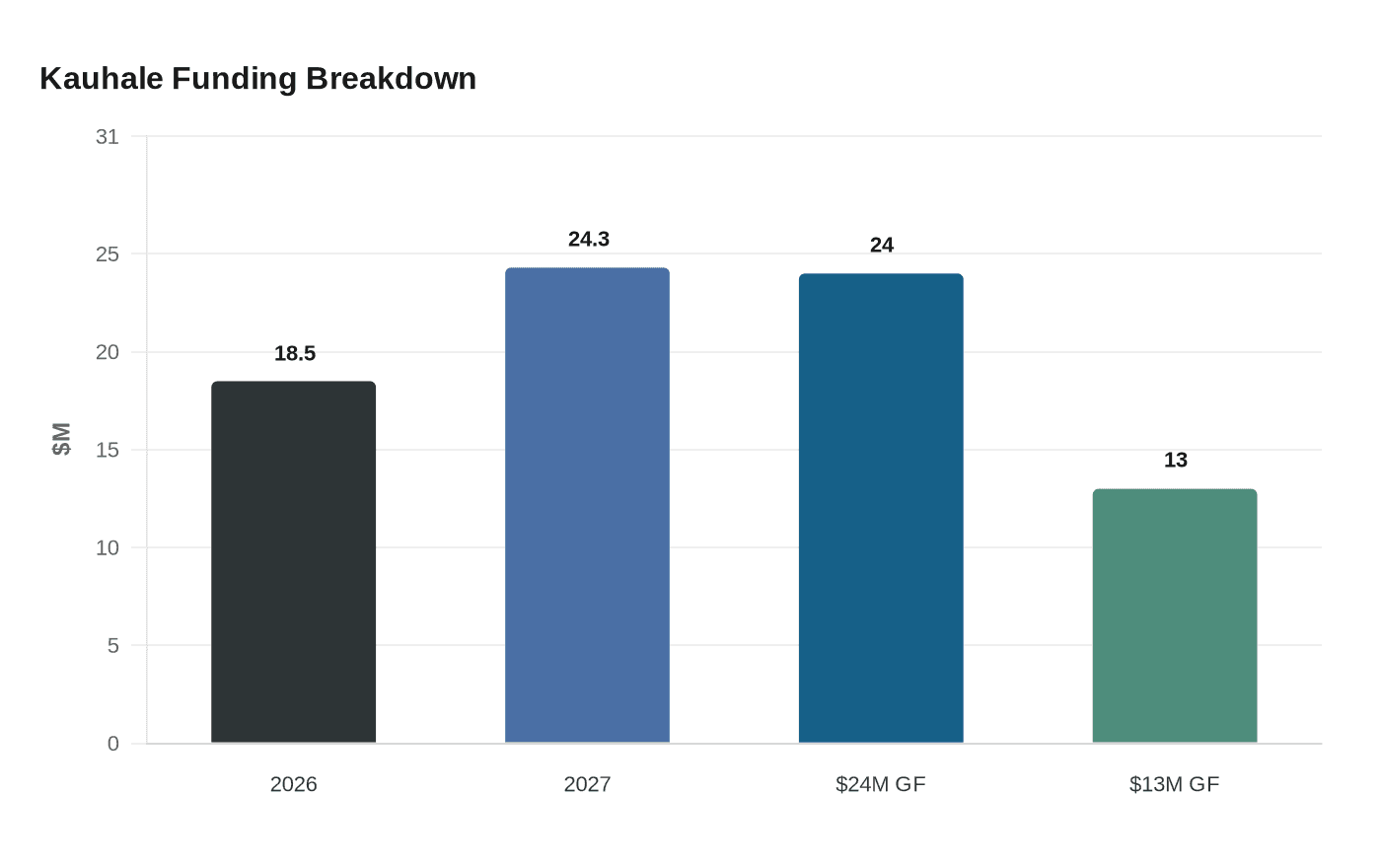
The stakes are bigger than bookkeeping. By spring 2025, Green’s team had built 12 kauhale statewide, while the governor said he wanted 30 by the end of 2026. The funding package tied to the kauhale bill totaled $88.2 million, including $18.5 million in 2026, $24.3 million in 2027, plus $24 million and $13 million in general-fund approvals. For a program that has been pitched as a statewide homelessness strategy, that is real taxpayer money riding on whether the state can prove the units, the services, and the oversight are all in place.
The public pitch has been ambitious from the start. In 2023, the governor’s office said the first medical respite kauhale would rise near the State Capitol and The Queen’s Medical Center, with 10 units, fencing, 24-hour private security, and staffing from Project Vision Hawaii. It also described Kukuiola in Kealakehe as the first kauhale on Hawaii Island, with 48 units, emergency shelter, on-site medical care, mental health services, and workforce training opportunities.
That ambition now sits beside the fiscal scrutiny. A March 2024 Civil Beat article said a state-operated kauhale with 24/7 security and wraparound social services could cost as much as $120 per day per resident, which is why the oversight fight has become central. Jun Yang said the State Office of Homelessness and Housing Solutions takes oversight of public funds seriously and welcomed a fair and objective audit process. The final report will show whether Hawaii’s tiny-home push is becoming a durable housing tool or a cautionary tale about speed outrunning accountability.
Know something we missed? Have a correction or additional information?
Submit a Tip