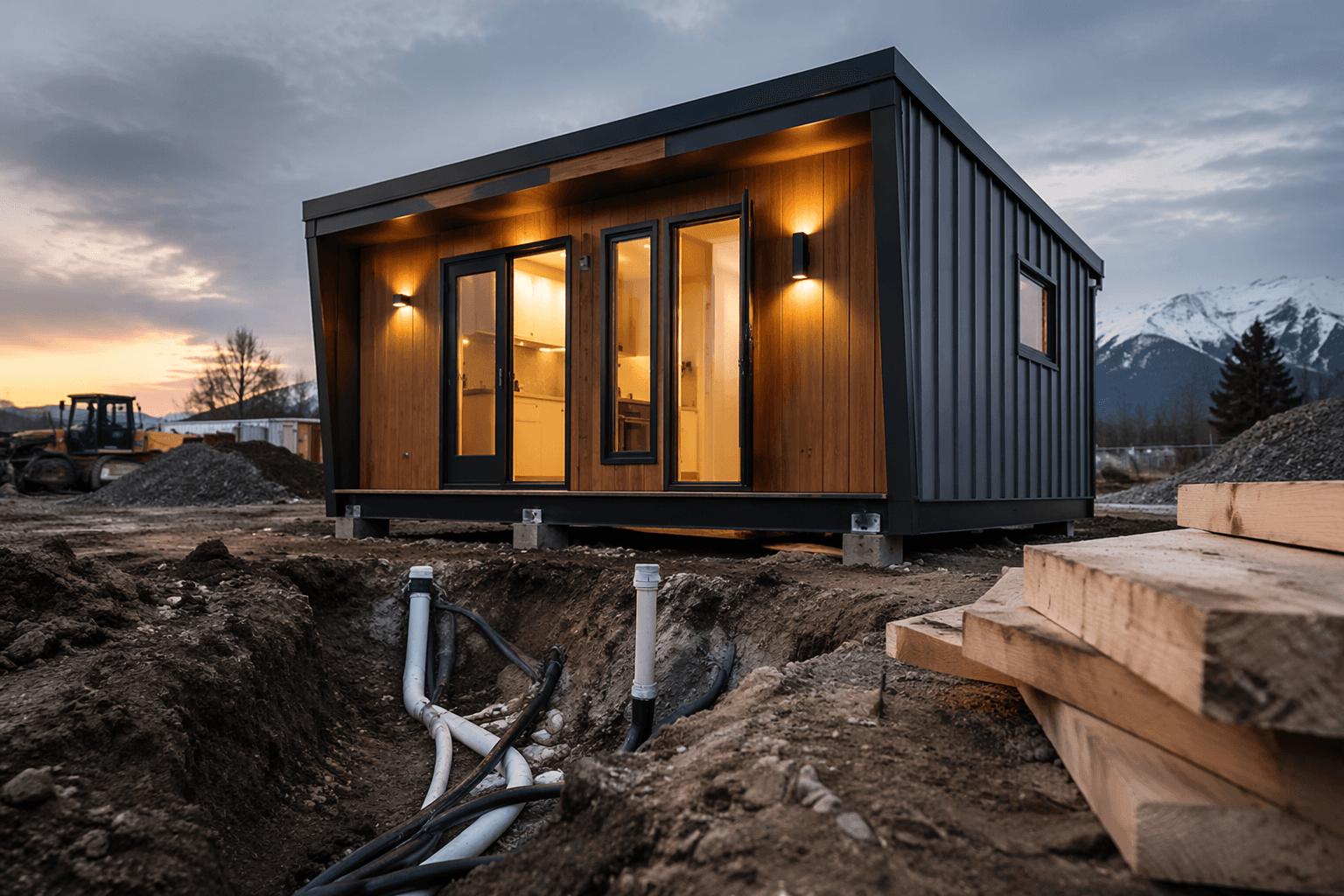
Hope Village finishes 10th tiny home, advances Grand Rapids housing project
Hope Village has finished its 10th tiny home, leaving six to go in Grand Rapids. The 16-unit build is turning a former furniture site into permanent housing and job training.

Hope Village has reached its halfway mark in Grand Rapids, with the 10th of 16 tiny homes now finished on Garden Avenue SE and six more still to build. What started as a vacant former Kindel Furniture site is steadily becoming a compact housing community, and the project is now far enough along that its effect on the ground is visible.
The 1.65-acre development at 101, 119 and 135 Garden St. SE has moved well beyond the first unit completed in August 2025. In less than a year, Mel Trotter Ministries and Next Step of West Michigan have turned the property into a working demonstration of tiny-home housing at permanent scale, with people already living there and a mix of market-rate and low-income homes planned as the buildout continues.
The homes are not bare-bones shelters. Each one is designed to be between 400 and 530 square feet, with a kitchen, living and sleeping areas, a full bathroom, and laundry hookups or in-unit laundry. Earlier plans also showed a range of sizes, with 11 of the homes planned at 10-by-20 feet and five at 20-by-24 feet, giving the village enough variety to serve different household needs while keeping the footprint small.
The project carries a budget of about $2.8 million, backed in part by a $944,000 MI Neighborhood grant from the Michigan State Housing Development Authority and by Mel Trotter’s capital campaign. State officials have pointed to Hope Village as part of Michigan’s broader push to expand housing supply, and at the August 26, 2025 ribbon cutting, leaders noted that Gov. Gretchen Whitmer’s original goal of 75,000 new or rehabilitated homes had been reached more than a year early.
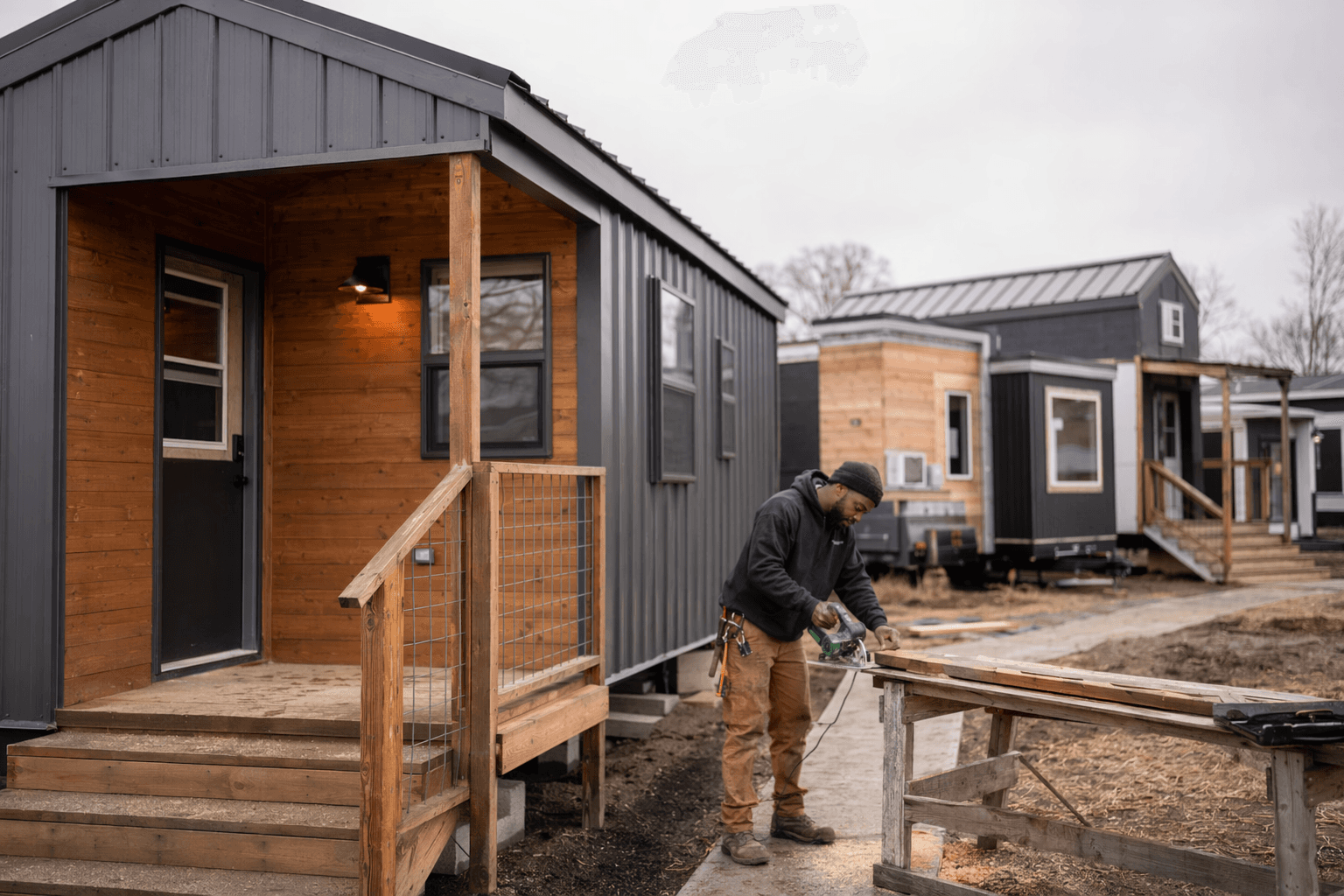
Hope Village is also built around workforce development. MSHDA said each home is being constructed by Next Step trainees, and once complete, the units will be reserved for people trained by Next Step or for people who have been homeless within the past three years. That pairing of housing and job training has helped make the project stand out as more than a one-off tiny-home development.
The remaining six homes are expected to be finished by Christmas, with a waiting list already in place. For Grand Rapids, Hope Village is becoming a local test case for what tiny homes can do when they are tied to training, savings, and a clear path toward stable housing.
This article was produced by Prism’s automated news system from verified source data, official records, and press releases, then run through automated quality and moderation checks before publishing. The system is built and supervised by the people who set the standards it runs under. Read our full AI policy.
Did this article answer your question?