Princeton builds $50,000 straw-bale tiny house for sustainable living
A Princeton tiny house in Hudson uses straw, thatch, and a $50,000 budget to test whether low-carbon materials can work beyond a one-off prototype.
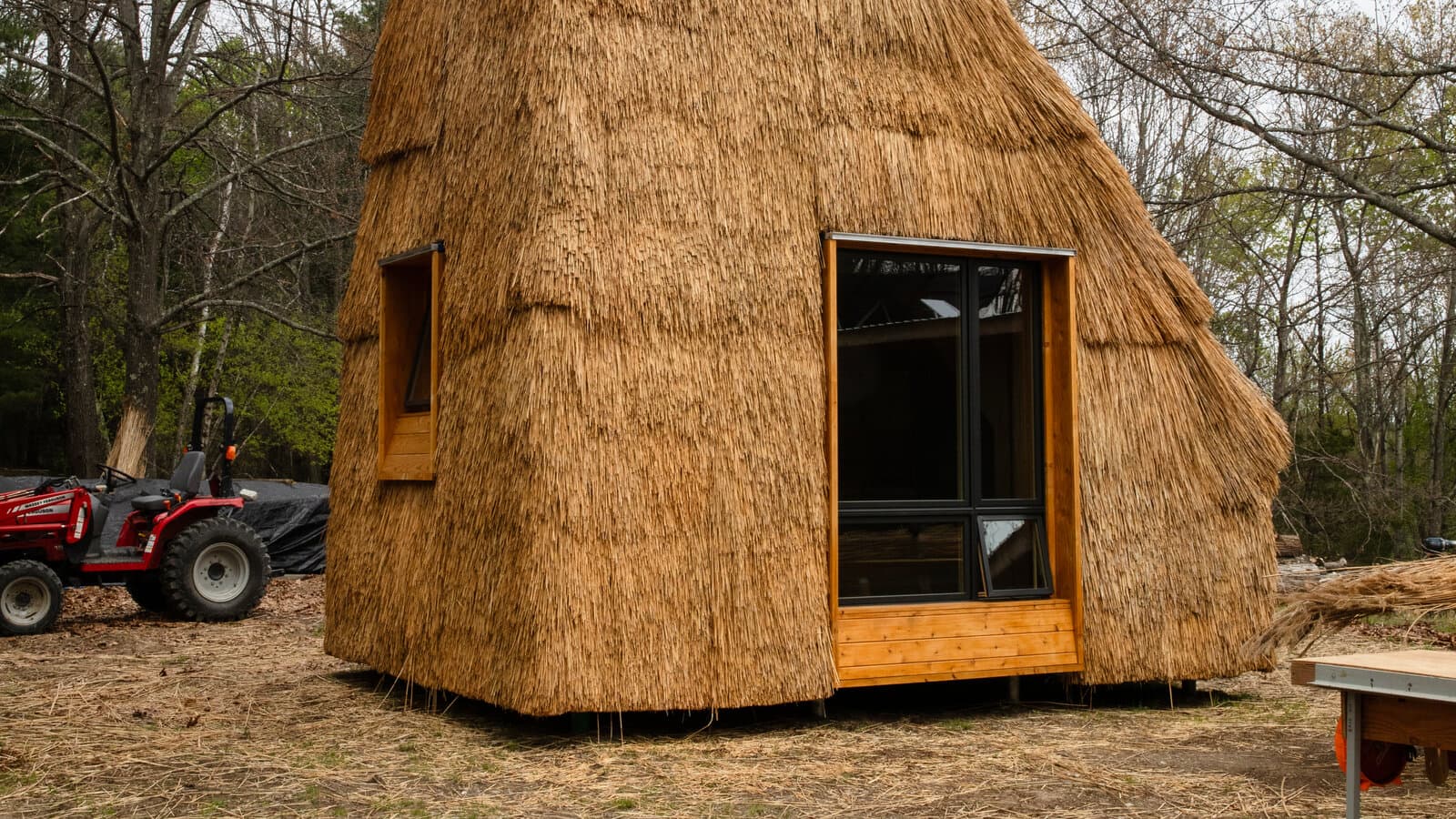
A Princeton-built tiny house in Hudson, New York, is making its case with straw, not steel or foam: the $50,000 build is meant to show whether a biogenic shell can compete as a real model for sustainable living, not just a clever concept.
Princeton University School of Architecture says the All Straw House was developed by professors Paul Lewis and Guy Nordenson with alumni and current student researchers, after more than three years of work. The house was prefabricated over three months at Princeton’s Architecture Lab, using highly compacted straw boards held together with pneumatic and wood nails plus internal rods. Princeton also says the project turned more than 500 bundles of thatch into 33 modular cassettes for the walls and roof, giving the house a prefabricated rainscreen as well as a straw-based core.
LTL Architects says the straw assembly reaches a density of 370 kg/m3, more than three times the density of straw bales, and can function at once as structure, insulation, and interior finish. That matters for tiny-house builders because it collapses several building layers into one system. In a conventional tiny house, builders usually rely on a separate frame, insulation package, and interior finish. Here, the goal is to let the material itself do more of the work while leaning on straw’s carbon-storing properties instead of brick or concrete, which carry far higher embodied carbon.
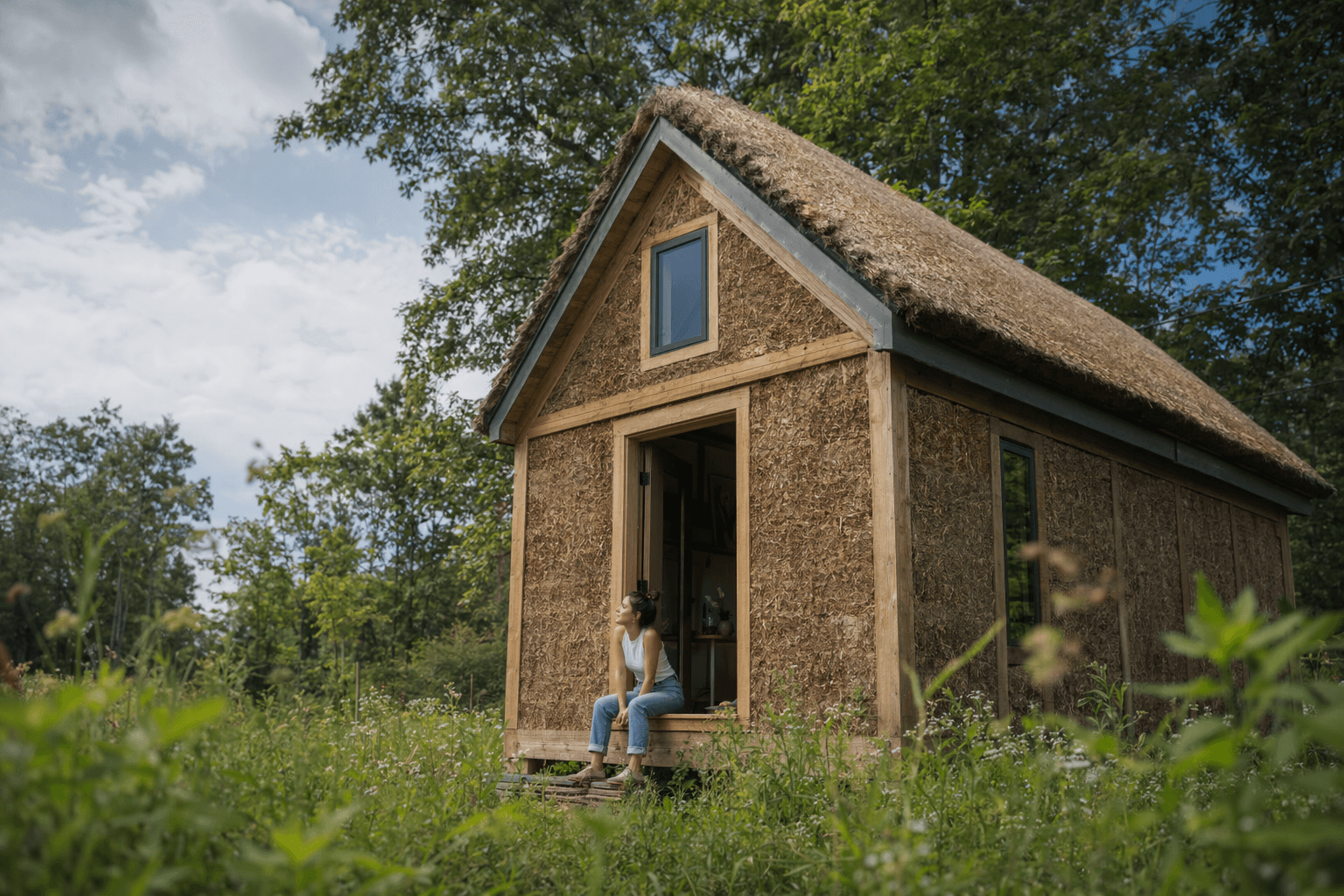
Paul Lewis described the finished building as a cross between an art studio and a guest house. Once construction wraps up in early 2026, the house is slated for upstate New York, where it will be tested over the coming years in a range of weather conditions. That long test period is where the project may prove its value to the tiny-house world: not just as a build costed at $50,000, but as a repeatable system that can handle moisture, seasonal swings, and everyday use.
The project also reaches back to the Great Plains tradition that helped inspire bale building after mechanical baling equipment arrived in the late 19th century. According to the Encyclopedia of the Great Plains, straw-bale construction had its historical center from about 1900 to 1940, then surged again in the 1970s and 1990s, becoming more widespread than the original movement. Properly built and maintained bale structures can have an indefinite lifespan, which is exactly the kind of claim that gives this Princeton house its edge: it is not just a showcase for plant-based materials, but a live test of whether straw can move from niche curiosity to serious low-carbon housing practice.
This article was produced by Prism’s automated news system from verified source data, official records, and press releases, then run through automated quality and moderation checks before publishing. The system is built and supervised by the people who set the standards it runs under. Read our full AI policy.
Did this article answer your question?