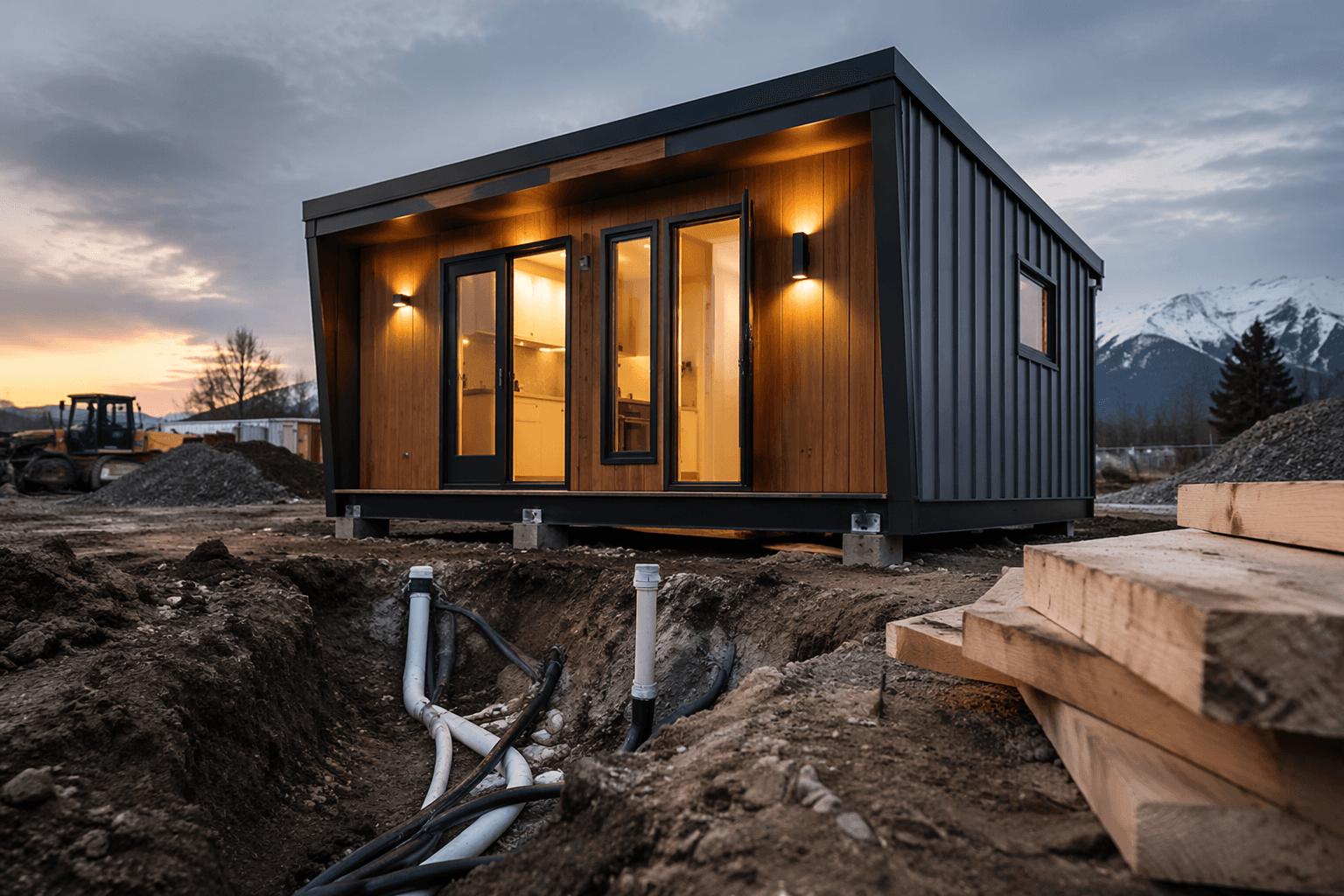
Japandi-inspired Sophia tiny house blends warmth, storage, and style
Sophia shows when Japandi is more than a mood board: its wood tones, storage, and one-bedroom layout make a 248-square-foot home feel calmer and more usable.
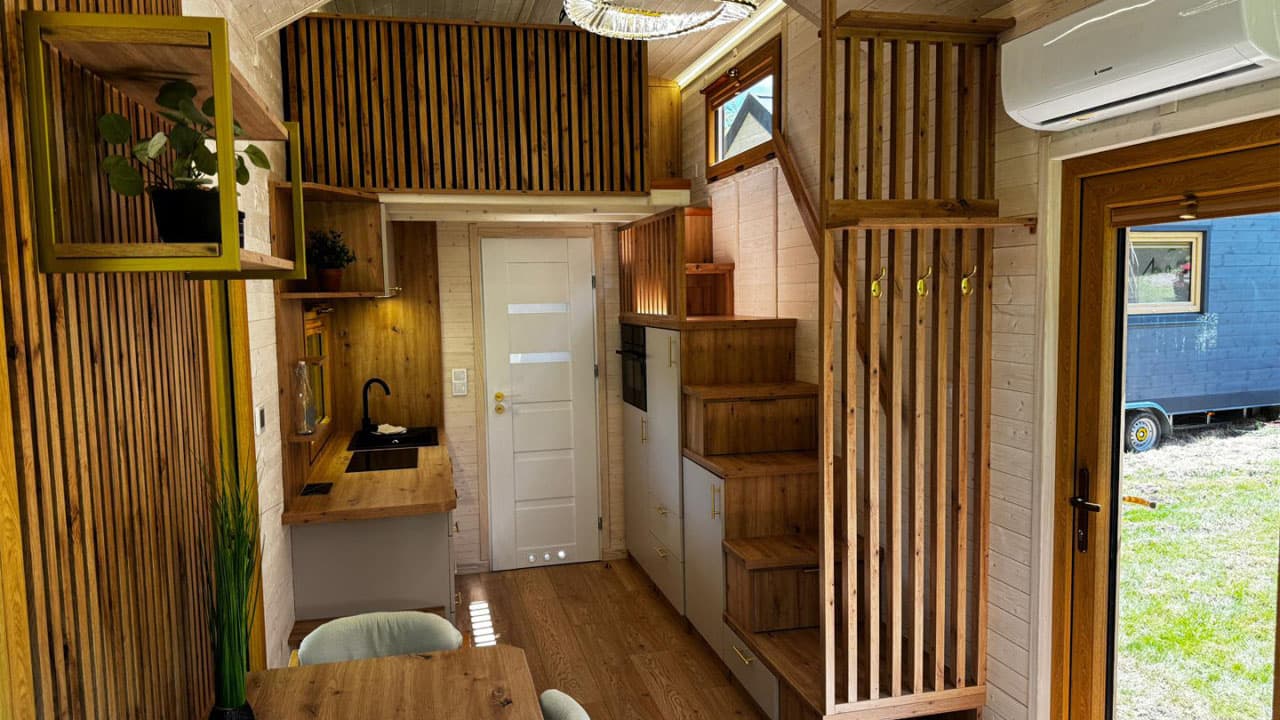
Japandi can be pure wallpaper in a tiny house, but Sophia makes a stronger argument for the style: the wood, the restraint, and the storage actually do work in 248 square feet. Built by Poland-based Tiny House BAR-TOF, the towable home folds a loft bedroom, living room, full bathroom, and integrated storage into a finish that reads calm instead of crowded.
Why Sophia’s Japandi look matters
The best thing about Sophia is not that it looks expensive. It is that the finish seems designed to reduce the usual tiny-house friction points: visual noise, dark corners, and the sense that every surface is fighting for attention. Timber slat panels divide the zones, while the interior uses a wood-wrapped palette that gives the space a cabinesque warmth without turning it into a cave.
That is the real test for Japandi in a tiny home. Too often the style gets reduced to a few warm boards and a minimalist lamp, which can leave a small space feeling stripped bare instead of restful. Sophia avoids that trap by pairing restraint with enough material warmth to make the interior feel lived-in, not unfinished.
The layout does more than look tidy
Homecrux frames Sophia as a one-bedroom tiny house with a loft bedroom, and that is the right way to read the layout if you care about day-to-day livability. In a home this size, the difference between “compact” and “claustrophobic” usually comes down to whether the sleeping zone is kept separate from the main living area. Sophia’s setup does that, and the integrated storage helps keep the living room from becoming a catchall.
The company’s own specifications add an important wrinkle: Sophia is listed with sleeping space for 2 to 4 people, which suggests the loft and main layout are being marketed with some flexibility beyond the single-bedroom framing. That makes sense in a tiny-house context, where a home may serve a couple, a small family, or guests depending on the season. The key point is that the layout is not decorative first and functional second. It is built to keep clutter out of sight and daily routines moving.
Light is the difference between warm and heavy
The exterior design is doing more than making the house photogenic. Sophia uses honey-colored tongue-and-groove cladding, charcoal metal side panels, and a matching standing-seam roof, a combination that gives the shell a polished, contemporary profile. The glazed door and windows are crucial here because they break up the darker metal surfaces and pull light into the interior.
That matters in a tiny house more than it does in a larger build. Dark finishes can look refined in a render and oppressive in a real room if the glazing is stingy. Sophia’s balance of wood, metal, and glass keeps the Japandi palette grounded in actual livability, not just visual trend-chasing.
The numbers show it is still a real road-ready tiny house
Sophia is not a fixed design concept dressed up as a portable home. Tiny House BAR-TOF lists it at 7.60 meters long, 9.10 meters with drawbar, 2.55 meters wide, 3.95 meters high, and about 3,500 kilograms, with a surface area of 23 square meters. Homecrux describes it as a 248-square-foot home on a double-axle trailer, roughly 25 feet long and 8.3 feet wide, and those numbers line up with the same basic idea: this is still a fully towable tiny house, not a prefab that only behaves like one.
That portability is part of the appeal. The trailer is registered and insured, which reinforces that Sophia is being sold as a road-legal home with real-world mobility, not a one-off showpiece. In a market where some high-design tiny homes get so polished they stop feeling practical, that detail keeps Sophia on the right side of the line.
What the builder actually packs into the shell
Sophia’s feature list is where the style starts earning its keep. Tiny House BAR-TOF says the home includes PIR insulation, underfloor heating in the living room, kitchen, and bathroom, and an air-to-air heat pump with heating function. It also comes with LED lighting, a fully equipped kitchen, a washer-dryer, and bathroom options that include an incinerating or composting toilet.
Those are not luxury extras in a tiny house. They are the difference between a pretty weekend unit and something that can actually be used year-round. The underfloor heating, in particular, helps the compact plan feel more coherent because it eliminates the need for bulky heat sources eating into the living area. That is where Sophia’s practical value starts to overtake its visual appeal.
Where Sophia fits in the tiny-house market
Sophia sits in a very specific corner of the tiny-house world. Homecrux’s broader coverage notes that tiny houses are generally considered to be under about 500 square feet, and that tiny house-on-wheels living was popularized by Jay Shafer, who lived in a 96-square-foot home. Against that history, Sophia is relatively generous in size, but it is also far more finished than the stripped-down early archetype.
Tiny House BAR-TOF helps explain why. The company describes itself as a family firm and factory with more than 15 years in construction and renovation, building and delivering tiny houses across Europe. It says its houses have gone to Germany, Austria, Switzerland, Hungary, and the Czech Republic, and that it appears at trade fairs in Poland and abroad, including Karlsruhe, Germany. That gives Sophia a broader market meaning: it is part of a cross-border, design-conscious European tiny-house business, not a novelty built for one audience.
The company also says its houses answer today’s needs and problems by offering warmth, safety, comfort, lower maintenance costs, mobility, and the option to build to a customer’s budget and even German standards. Add the 2-year guarantee and custom design options, and Sophia starts to look less like a lifestyle indulgence and more like a compact housing product with serious commercial intent.
Sophia’s real achievement is simple: it proves that Japandi in a tiny house is worth something only when the calm finish helps the space function better. Here, the wood, the glazing, the storage, and the restrained palette all pull in the same direction, and that is what keeps the home from feeling like a styled trailer with a bedroom bolted on.
This article was produced by Prism’s automated news system from verified source data, official records, and press releases, then run through automated quality and moderation checks before publishing. The system is built and supervised by the people who set the standards it runs under. Read our full AI policy.
Did this article answer your question?