Japandi tiny house in Victoria blends calm design with family living
A 624-square-foot Victoria tiny house shows Japandi can do more than look good. Its single-level, family-first layout turns calm style into everyday livability.
Japandi that works harder than a mood board
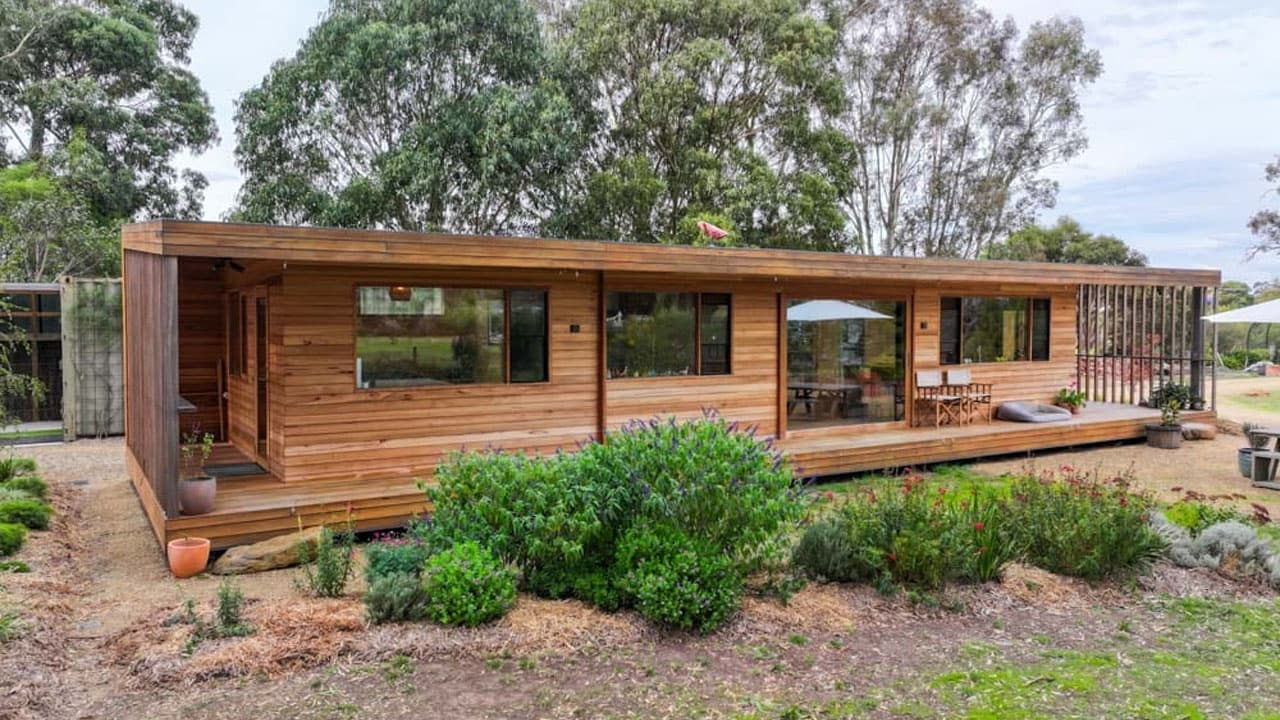
Mountain Studio is the kind of tiny house that makes the Japandi question worth asking: does the style actually improve daily life, or just look clean in photos? In Dunkeld, Victoria, builder-owners Jerrard Byrne and Kellie Hose turned that aesthetic into a family home, and the result feels less like a styling exercise and more like a serious attempt to make compact living breathe. At 624 square feet, this is a small footprint with real ambition.
What stands out first is that the house is a low-profile, rectangular, single-story build. That matters in tiny-house terms because one level removes the daily nuisance of loft access and keeps the plan friendly for family routines, not just weekend stays. The whole project reads like a decision to make small-space living easier to occupy, easier to clean, and easier to settle into.
Why the Japandi look makes sense in a tiny house
Japandi minimalism has become a bit of a buzzword, but Mountain Studio shows why it keeps getting used in compact homes. The style blends Scandinavian restraint with Japanese simplicity, and in a tiny house that means fewer visual interruptions, calmer surfaces, and a layout that lets the eye rest. Instead of loading every wall with competing finishes, the house leans into warm texture and a restrained palette, which makes the interior feel more spacious than the square footage suggests.
That is not just a pretty effect. In a tiny house, overdesigned interiors can feel busy fast, especially when the home has to hold family life, storage, and everyday movement in the same footprint. Japandi, done well, takes pressure off the room. It helps the house feel organized even when life is not, which is exactly the kind of practical calm tiny-house owners pay for.
A family home, not a novelty build
Mountain Studio matters because it was built for Jerrard Byrne and Kellie Hose’s own family, not as a one-off rental or a weekend cabin. That changes the brief completely. When the people designing the house are also the people living in it, the priorities shift toward durability, liveability, and the kind of storage discipline that gets tested every single day.
Homecrux frames the project as part of a broader move in tiny-house design toward full-time living, and this build backs that up. The appeal is no longer just the romance of shrinking down. It is whether a tiny house can handle real routines without feeling like a compromise, and Mountain Studio suggests that the answer is yes when the design is disciplined from the start.
The materials do a lot of the heavy lifting
Creations in Parallel describes Mountain Studio as externally clad in silvertop ash and blackbutt timber screening, with baltic pine internal lining across the surfaces. That combination gives the home a timber-forward identity that feels deliberate rather than rustic for the sake of it. The exterior reads as grounded and natural, while the interior lining adds warmth and continuity, which is a smart move in a small house where material shifts can quickly feel choppy.

This is where the build stops being merely photogenic. Timber choices in a tiny house are not just about style, they affect how calm the space feels, how coherent it looks from room to room, and how durable the home seems under family use. The strong use of woodwork here supports the Japandi brief, but it also keeps the house from tipping into the sterile minimalism that can make small homes feel cold and impractical.
Why the single-story plan is the real luxury
Tiny-house enthusiasts talk a lot about finishes, but the layout often matters more than the decor. A single-story plan like Mountain Studio’s removes one of the most common pain points in tiny living: the loft ladder or staircase that eats space and creates friction in everyday movement. For families especially, that can be the difference between a house that feels nimble and one that feels like a clever compromise.
Homecrux describes the home as a larger-than-life living space within a compact footprint, and that is believable when you look at the plan as a whole. The sense of space comes from careful spatial planning, not from pretending the house is bigger than it is. That is the right lesson for tiny-house builders: good design does not inflate the footprint, it makes the footprint work harder.
The regulatory backdrop still lags behind the design
Mountain Studio is also notable because it sits inside Australia’s messy tiny-house rules. ABC News reported in 2023 that tiny homes can fall into a regulatory grey area between caravans and granny flats, and that some local laws limit stationary occupation to 30 days. At that time, only Surf Coast Shire in Victoria and Esperance in Western Australia were noted as allowing tiny homes as permanent residences.
That context makes a family tiny home in Victoria feel more significant than a stylish build in isolation. The design is moving ahead of the policy conversation, which is where a lot of serious tiny-house projects end up now. The market is clearly maturing, but the regulations are still catching up, especially when a build is meant to support real, long-term family life rather than temporary use.
What Mountain Studio gets right
If you are trying to judge whether Japandi is just internet-friendly styling, Mountain Studio gives a strong answer. The look works here because it is tied to the practical realities of a 624-square-foot family home: one level, durable timber finishes, a restrained palette, and a layout that feels calm instead of crowded. The aesthetic is doing real work, not decorative work.
That is why this tiny house lands so well. It shows that minimalism can be useful when it reduces visual noise, supports storage discipline, and makes compact living feel easier to maintain day after day. In Mountain Studio, Japandi is not just a photograph-friendly finish. It is the reason the house feels livable.
This article was produced by Prism’s automated news system from verified source data, official records, and press releases, then run through automated quality and moderation checks before publishing. The system is built and supervised by the people who set the standards it runs under. Read our full AI policy.
Did this article answer your question?