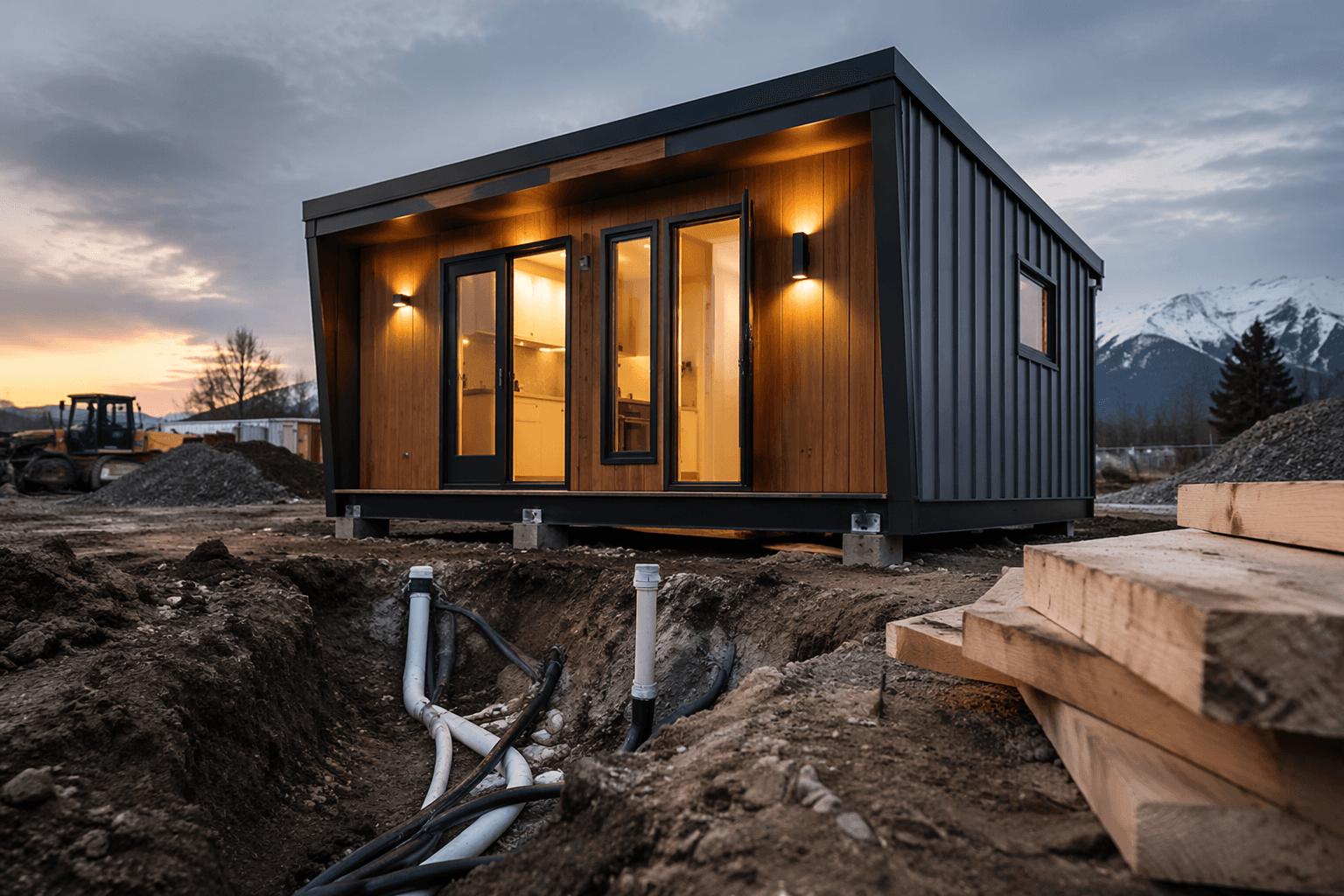
LJM Tiny Homes' NOOSA brings full-time comfort to tiny living
The NOOSA treats tiny living like a real home, with a ground-floor bedroom, full kitchen, and lock-up pricing from $121,000.

LJM Tiny Homes’ NOOSA is aimed at the buyers tiny living keeps promising and often misses: people who want less house, not less comfort. At 10 metres long, 3 metres wide, and 4.5 metres tall, it delivers roughly 320 square feet on the main floor plus loft space, but the real story is the layout. Instead of asking you to climb, squeeze, or improvise, it puts a proper bedroom, kitchen, and bathroom into a form that still travels on a road-rated chassis.
A tiny home that reads like a real home
The NOOSA is a clean break from the “camping, but polished” look that still hangs over a lot of tiny homes. LJM Tiny Homes, a two-time Tiny House Builder of the Year, built this model around the idea that you should be able to live small without living like you are roughing it. That shows up immediately in the proportions: the 10m x 3m footprint is compact, but it is not gimmicky, and the 4.5 metre height leaves room for loft layouts without making the home feel like a stack of compromises.
LJM offers the NOOSA in single- or double-loft layouts, and the model sits on a robust dual-axle chassis. That matters for buyers who are thinking beyond the weekend and into full-time use, because the structure and transport setup reinforce the same message as the floor plan: this is meant to function as a real dwelling, not a novelty build.
The floor plan is where the NOOSA earns its keep
The biggest buyer-utility win here is the ground-floor master bedroom. In tiny living, that one detail changes the daily experience more than any aesthetic upgrade ever could. It means no ladder for bedtime, no waking up half-asleep to climb down, and no forcing a couple or a downsizer to treat sleep as an athletic event.
LJM’s standard inclusions back up that same practical thinking. The kitchen comes with a breakfast bar, pantry, and custom drawers and cupboards, which is exactly the sort of specification that separates a serious full-time home from a weekend shell. The bathroom and laundry are joined with standard joinery, and the bathroom itself can include a tub plus a separate toilet, which pushes the NOOSA well past bare-bones tiny-house norms. This is the difference between “we fit everything in” and “we planned the home around how people actually live.”
What to look for if you are buying for full-time living
If you are comparing tiny homes as a downsizing solution, the NOOSA is a useful checklist in itself. The features that matter most are the ones that remove daily friction, not the ones that photograph best.
- A main-floor bedroom, if you want the home to work like a permanent residence rather than a loft-dependent retreat.
- A full kitchen with pantry storage, breakfast bar space, and proper cabinetry, if you cook real meals and do not want to live out of bins.
- A bathroom with a tub and separate toilet, if you are replacing a conventional home and want the routines to feel familiar.
- Integrated laundry and standard bathroom/laundry joinery, if you are trying to reduce the number of compromises that pile up over time.
- A road-rated, dual-axle chassis, if you care about mobility without sacrificing the feel of a permanent home.
Taken together, those details show why the NOOSA is not really speaking to the hobbyist end of the tiny-house market. It is built for the buyer who wants to shrink square footage while keeping everyday function intact.
The price point makes the positioning clear
LJM says the NOOSA starts from $121,000 at the lock-up stage. That places it squarely in the serious-buyers category, where the conversation is less about fantasy living and more about how much home you can carry into a smaller footprint. It is also fully customisable, which is important if you are downsizing from a conventional house and want the layout to solve your specific pain points instead of forcing you into a one-size-fits-all plan.
That custom angle is part of why the NOOSA has become one of LJM’s signature designs. The builder says it has been delivering tiny homes Australia-wide since 2017 and has built over 350 custom tiny homes, so this is not a one-off concept piece. The company also says it won Tiny House Builder of the Year in 2023 and again in 2025, while the NOOSA took out Best Family Tiny Home 2025 and Best Design 2025. Awards do not make a floor plan livable, but they do suggest the market is rewarding designs that solve practical problems instead of merely looking innovative.
The family test is where the NOOSA gets more interesting
One of the strongest examples of the NOOSA’s direction comes from a regional Victoria project built for a family of three. Their brief was not about novelty or minimalism for its own sake. It centered on everyday family life, work-from-home needs, and long-term wellbeing without a large mortgage, which is exactly the kind of use case that expands tiny living beyond the hobby market.
That home includes a ground-floor main bedroom, dedicated work-from-home spaces, a full-sized kitchen, and a bathroom with a Japanese soaking tub. In other words, it treats tiny living as a serious housing choice, not a lifestyle stunt. The design suggests that the ceiling on tiny-house demand may be higher than many builders assumed, but only if the homes feel like places people can actually settle into.
That is why the NOOSA stands out. The model does not try to win buyers with the romance of sacrifice. It wins by making a smaller home feel like a proper one, and that is the direction tiny living has to keep moving if it wants to reach people who are downsizing from conventional houses and looking for fewer compromises, not more.
This article was produced by Prism’s automated news system from verified source data, official records, and press releases, then run through automated quality and moderation checks before publishing. The system is built and supervised by the people who set the standards it runs under. Read our full AI policy.
Did this article answer your question?