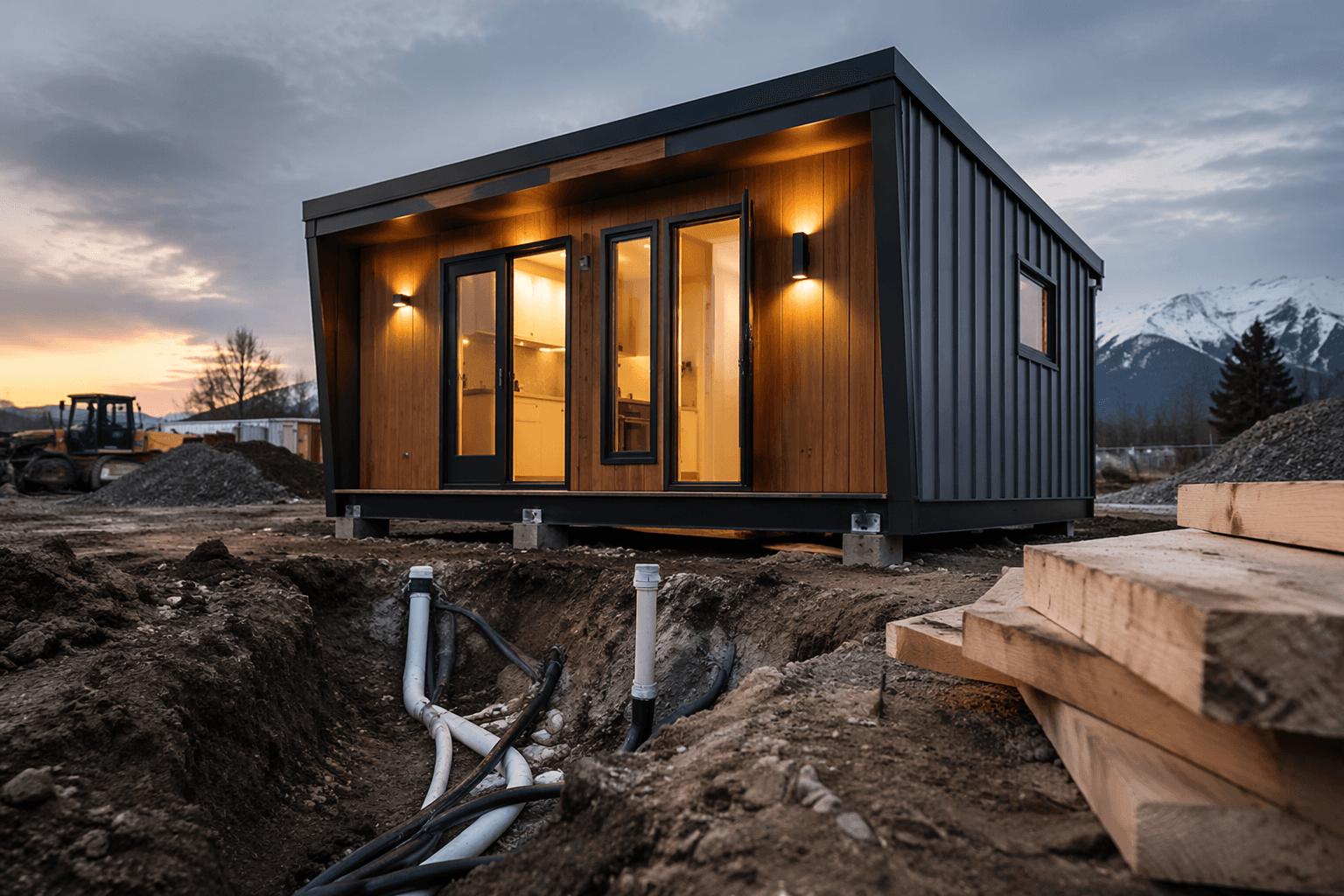
London student lives in modular tiny home to test low-cost housing
A 19-year-old Western University student is living in a modular tiny home in London, Ontario, to see if it can work as low-cost housing.

Ribal Zebian is moving into a modular tiny home in London, Ontario, and living there for a year to test whether the build can work as low-cost housing. The 19-year-old Western University engineering student is treating the unit as a live-in stress test, watching for the real-world basics that decide whether a tiny home is useful: durability, winter comfort, and whether a small footprint still feels livable after months of daily use.
Zebian is not new to hands-on projects. He previously built a fully electric wooden replica of a Mercedes G-Wagon and won a $120,000 scholarship for that work, which helps explain why his housing experiment is being watched closely in local innovation circles. The microhome now pushes that same problem-solving approach into shelter, where the question is no longer whether the idea looks clever, but whether it holds up when someone actually lives in it.
The timing matters because London is already grappling with homelessness and housing pressure. The City of London says homelessness is fluid and may be undercounted in traditional data collection, and London and Middlesex have approved a 2026-2031 Housing Stability Action Plan to respond to homelessness, affordable housing, rising rents, low vacancy rates, and gaps in social and health supports. The city is also operating a separate micro-modular shelter site at 3900 Cheese Factory Road, which it describes as temporary modular homes providing safety, support, and connection for Londoners previously experiencing homelessness.

That shelter site has already been framed at a much larger scale. A CBC report in 2025 said the planned site would hold 60 modular shelters for the city’s homeless population, and some politicians have since expressed optimism after news that the city planned to hire a security firm to run it. One report quoted Zebian as saying London has around 1,800 homeless people, a reminder of how quickly a student-built prototype enters a broader policy fight over what can be built fast enough to matter.
The pressure is not limited to London. A provincial estimate put homelessness in Ontario at 85,000 people in 2025, up 8% from the year before, with nearly 2,000 encampments across the province. London and Middlesex Community Housing says it provides 3,286 housing units across 32 properties for more than 5,000 people, a useful snapshot of how far existing supply still falls short.

Zebian’s project lands in a city that is already testing small-scale shelter and already measuring the gap. His year inside the modular home will not solve homelessness, but it may produce the most useful kind of evidence: whether a compact, factory-built unit can stay practical, affordable, and worth repeating once the novelty fades.
This article was produced by Prism’s automated news system from verified source data, official records, and press releases, then run through automated quality and moderation checks before publishing. The system is built and supervised by the people who set the standards it runs under. Read our full AI policy.
Did this article answer your question?