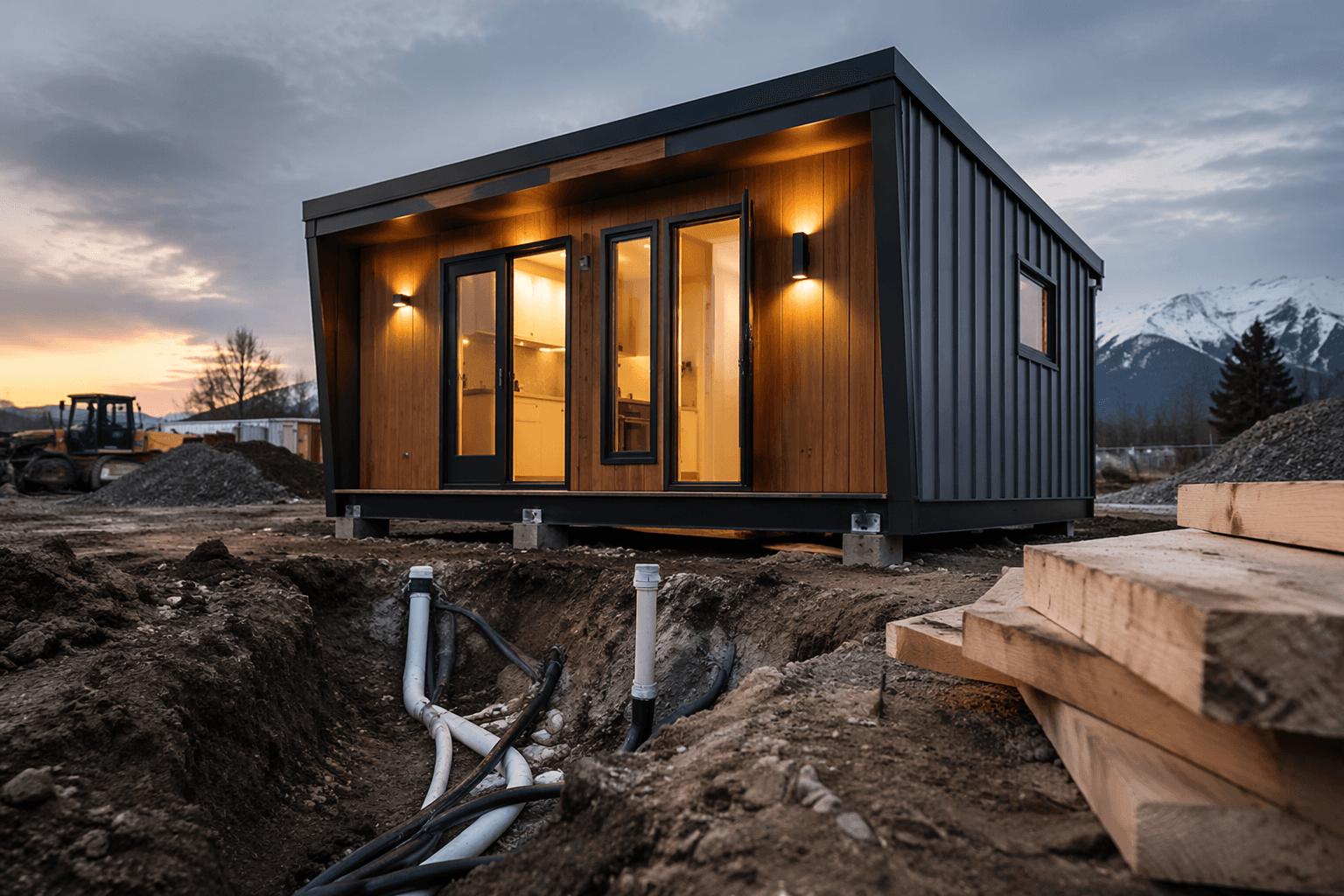
Los Angeles tiny house villages face abuse claims and funding cuts
LA’s tiny-home promise is colliding with 550-plus incident reports, a $218 million audit finding, and HUD’s June 11 suspension of LAHSA.
Los Angeles sold tiny-home villages as a fast, practical answer to homelessness. Instead, the system is now being judged by what happened on the ground at places like Chandler Boulevard, where complaints piled up, oversight fell short, and federal support was cut off.
The city’s COVID-19 Homelessness Roadmap, adopted in June 2020, aimed for 6,700 homelessness interventions in 18 months. LA agreed to build 6,000 new beds and move 700 more already planned, while the County of Los Angeles pledged up to $300 million over five years for supportive services. The first village opened in North Hollywood in February 2021, and HUD later described Chandler Boulevard as a 39-unit interim housing development and the prototype for 11 more carefully planned sites.

By 2024, LAHSA and city partners had expanded the network to 12 tiny home villages across Los Angeles, usually with 40 to 100 units each. But public records and later investigations showed a program fraying under the weight of missed oversight. More than 550 incident reports across a dozen villages documented assaults, drug use, unsanitary conditions, violence and other complaints. LAHSA estimated it had about 5,000 internal incident reports when it settled a records lawsuit, and it began releasing at least 175 incident reports every other week.
The resident experience looked just as rough in the data. A Los Angeles Public Press analysis of LAHSA records for the year ending March 1, 2024, found staff were often unresponsive to noise, harassment, theft, leaks, floods and broken heaters. Less than one-quarter of residents moved into permanent housing after leaving the villages, and more than half later became homeless again.
A December 2024 city controller audit widened the indictment. It found that less than two in ten people in interim housing secured permanent housing over five years, more than half exited to homelessness or unknown destinations, and roughly one in four interim beds sat unused. That wasted capacity cost taxpayers an estimated $218 million. The audit also said LAHSA’s program management and monitoring were “vastly inadequate,” with data-quality problems so severe they made oversight difficult.
Then came the federal blow. On June 11, 2026, HUD suspended LAHSA, saying the agency and the Los Angeles Continuum of Care had received nearly $1 billion in taxpayer dollars over five years while failing to verify thousands of housing sites and mishandling financial controls, conflict-of-interest safeguards and federal money. Mayor Karen Bass said she had “grave concerns” about the allegations, even as her office kept promoting new construction.
On May 14, Bass broke ground on a new East Hollywood tiny home village on Sierra Vista Avenue, planned for more than 50 interim-housing units, including 10 beds for transitional-age youth, with opening expected in early 2027. It is backed by a $33 million state investment. The hard question now is whether Los Angeles is still refining a shelter model or simply repeating the same failures at a new address.
This article was produced by Prism’s automated news system from verified source data, official records, and press releases, then run through automated quality and moderation checks before publishing. The system is built and supervised by the people who set the standards it runs under. Read our full AI policy.
Did this article answer your question?