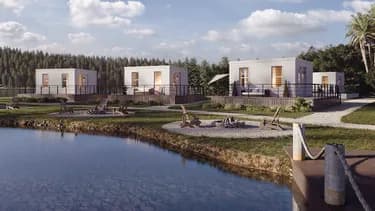
Mainefactured unveils Casa Aurora, a compact tiny house for short-term stays
Mainefactured’s Casa Aurora pairs a 240-square-foot layout with guest-ready hookups, a porch, and turnkey furnishing for short-term rental operators.
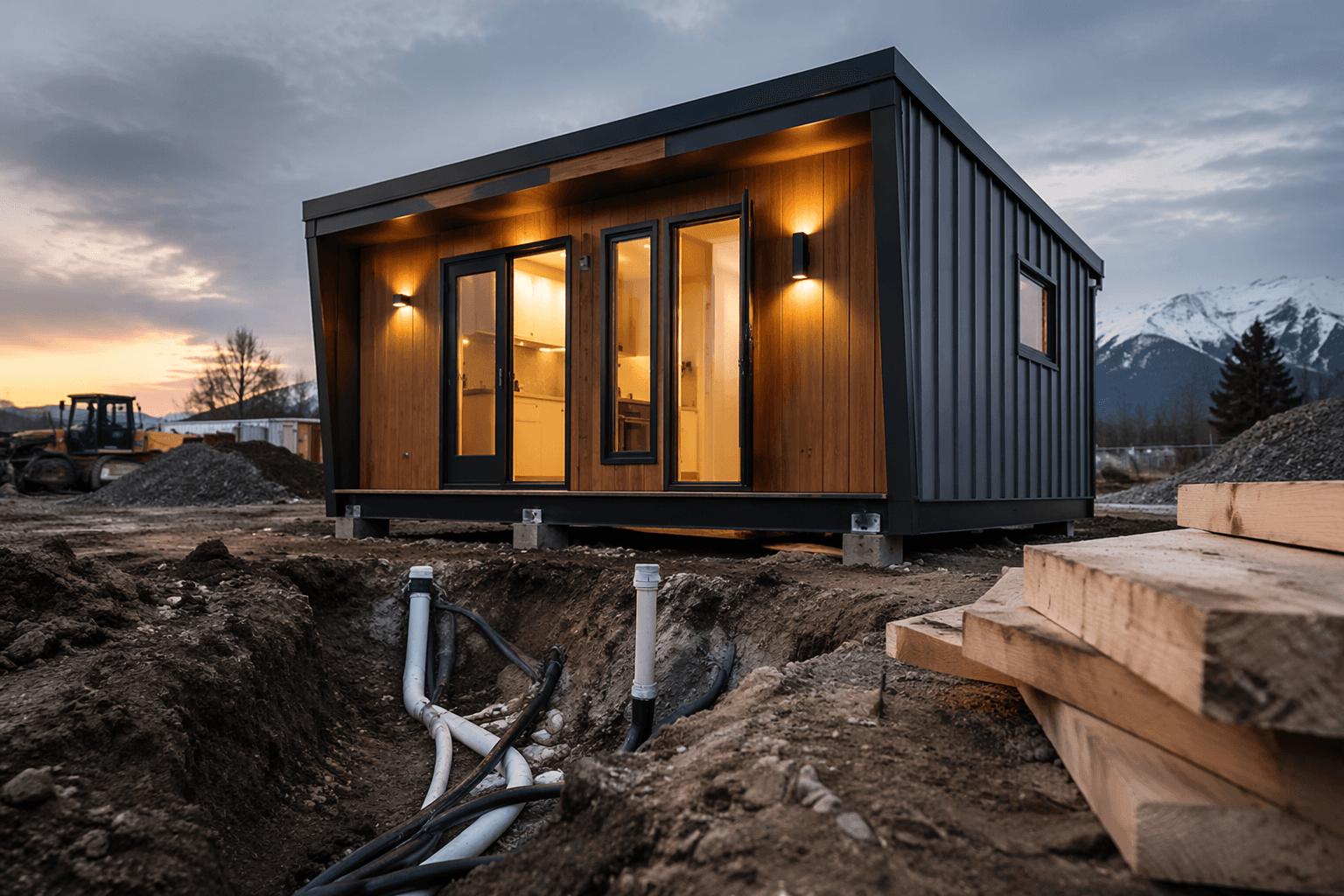
Mainefactured pitched Casa Aurora as a revenue-ready stay, not a stripped-down tiny home. The Texas builder unveiled the studio-style model with short-term vacation rentals in mind, giving it a 28-foot by 10-foot footprint, a 4-foot covered porch, and guest-ready hookups so it can arrive prepared for hospitality use rather than as a bare shell.
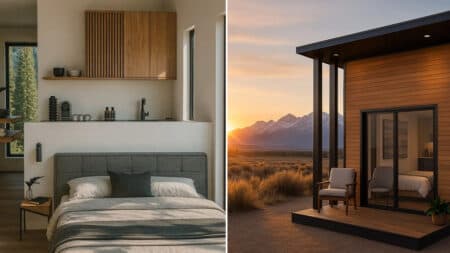
At 240 square feet, Casa Aurora is arranged to make a compact booking feel open. The bedroom, kitchenette, bathroom, and dining space share one free-flowing interior, a layout that keeps circulation simple while leaving room for the kind of light and visual breathing room guests expect from a premium tiny stay. Expansive windows do much of that work, while the porch adds a second living zone for two people to sit outside and read, drink coffee, or take in the setting.
Mainefactured said the unit sleeps up to two and is built on a steel frame, with durable finishes, energy-efficient insulation, quiet interiors, and easy-care flooring aimed at reducing turnover headaches between guests. The company also lists a mini-split heating and cooling option, an optional fireplace, turnkey furnishing on request, and an off-grid package on request. Nationwide delivery through trusted transport partners rounds out the plug-and-play pitch, which is clearly aimed at operators who want a property that can be installed and rented with minimal lag.
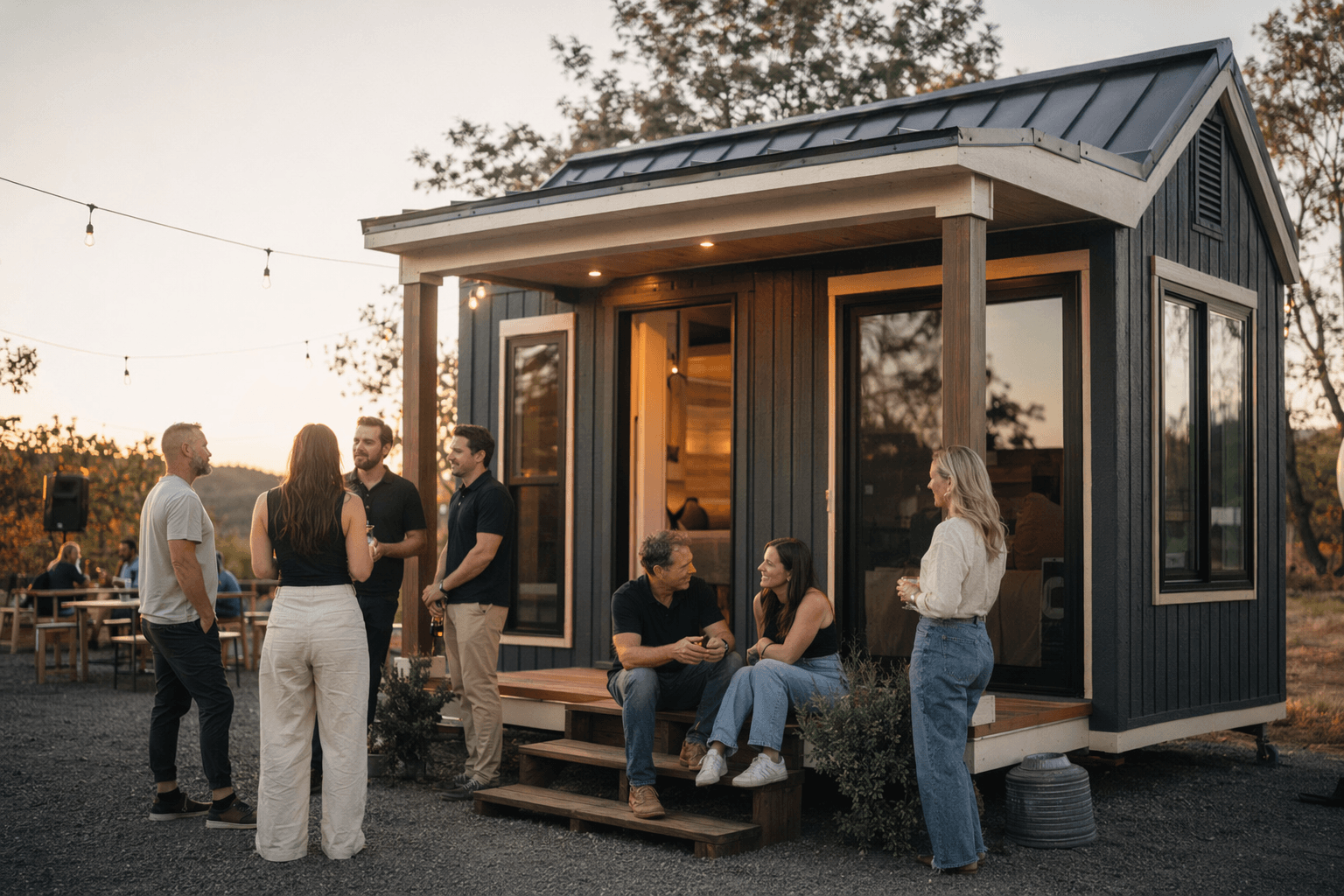
The pricing starts at $125,000, placing Casa Aurora in the premium end of the tiny-house rental market. Mainefactured describes the model as built for resorts, venues, and premium short-term rentals, and the company says its steel-framed homes are designed for investors and developers across the United States. That positioning matters in a sector where design has become part of the business model: guests are choosing from more inventory, and operators are under pressure to deliver a consistent experience, not just an unusual footprint.
NOAH certification strengthens that sales pitch. NOAH RDI says certified structures are intended to improve placement, insurance, financing, and salability, while also meeting safety, structural, and energy-efficiency standards. For tiny-house hosts, that kind of paperwork can matter as much as the porch or the windows. Casa Aurora shows how the category is moving toward hospitality-first design, where durability, comfort, and booking appeal are built in from the start.
This article was produced by Prism’s automated news system from verified source data, official records, and press releases, then run through automated quality and moderation checks before publishing. The system is built and supervised by the people who set the standards it runs under. Read our full AI policy.
Did this article answer your question?