Minitopia's Tiny-Home Villages Offer a Fourth Path to Housing Stability
Minitopia turns vacant land into tiny-home villages that make stability cheaper, faster, and more flexible than apartment-first housing.
A fourth path to housing stability
Joshua Nelken-Zitser’s reporting trip to Minitopia starts with a familiar kind of win that does not feel all that winning for long. In London, he bought a modest suburban apartment after moving back in with his parents, only to realize that roughly 30 percent of his salary now goes to the mortgage. That is the tension Minitopia makes impossible to ignore: for many people, conventional homeownership is not a clean finish line, just a very expensive lane.
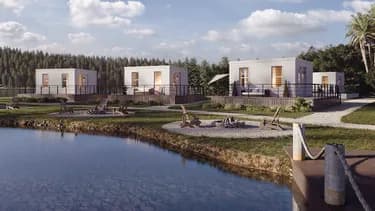
Minitopia, based in North Brabant in the south of the Netherlands, offers something different. It is not a pastoral escape or a novelty village for people who want to live small. It is a foundation-run system that secures leases on derelict land, divides the sites into plots, and rents those plots for a few hundred euros a month so residents can build or place tiny homes. In practice, that turns land from a barrier into an enabling tool, and it opens a fourth housing path between renting and full-scale ownership.
How the model works
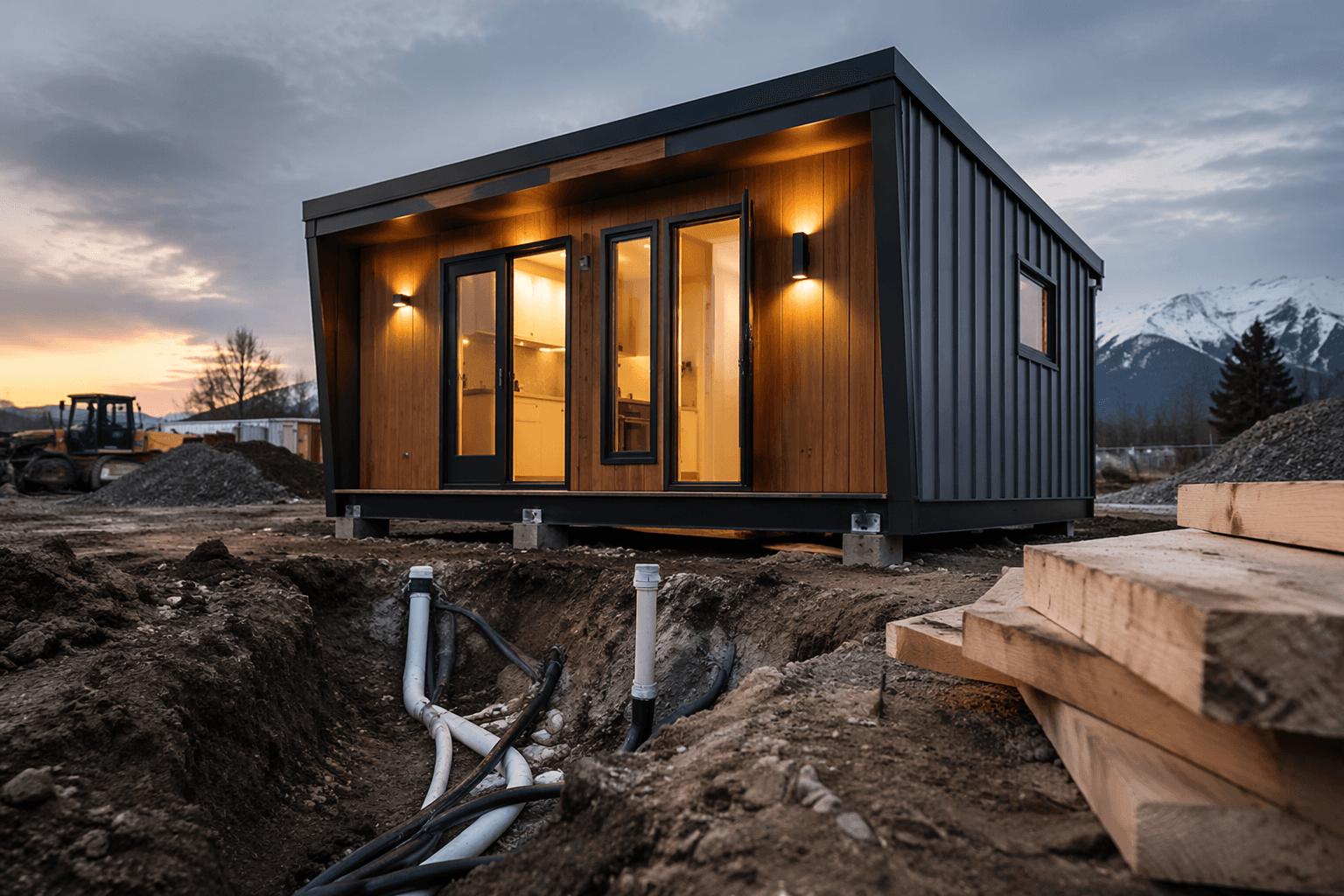
The logic behind Minitopia is straightforward, but the implications are broad. The organization works with municipalities, housing corporations, construction companies, digital workshops, and other partners to identify underused land and turn it into temporary neighborhoods. Residents get infrastructure such as water, electricity, and sewer connections, then shape the homes themselves within the limits of the site.
That combination matters because it lowers the entry point in ways the apartment-first model rarely can. In ‘s-Hertogenbosch, the first residents reportedly built houses for as little as €5,000, a number that changes the conversation immediately. The point is not that every home costs that little, but that when land is structured differently, self-build becomes something more people can actually imagine.
Minitopia describes its work as focused on future-proof housing questions since 2016, and that framing is important. This is not just about tiny size. It is about flexibility, reuse, and the ability to create stable homes on land that would otherwise sit vacant.
Poeldonk in ‘s-Hertogenbosch: the proof of concept
The first Minitopia project began in 2016 on the former Eekbrouwersweg/Poeldonk site in ‘s-Hertogenbosch, a place that had been vacant for about ten years before redevelopment. That detail matters because it shows the project was never simply about aesthetics. It was about taking a dormant site and testing what housing could be when the land itself was treated as the scarce resource, not the apartment.
Zayaz, the housing association involved, says the Poeldonk site has 30 homes. Six of those were built by residents using different construction concepts, and the homes were planned to remain for about five years while still being relatively easy to dismantle and move. Residents were given three months to build, a timeframe that reflects the temporary, experimental character of the neighborhood.
That temporary quality challenges a common assumption in housing debates: that stability must mean permanence in the traditional, mortgage-backed sense. Poeldonk suggests another definition. A home can be temporary in structure and still offer continuity, community, and control over daily life.
The broader network: from experimental site to housing pathway
Minitopia is no longer a one-off village in Den Bosch. The network now includes five sites and more than 150 plots, with around 2,000 people on the waiting list. That scale tells you the model is not just charming to observe. It is answering a real demand.
The current projects listed by Minitopia include Buurtschap te Veld in Eindhoven, Tiny Oevers in Roosendaal, Tiny Beljaart in Dongen, and Tiny Wedert in Valkenswaard. Each site extends the same basic idea into a different land-use context, but Eindhoven is the largest and most revealing example.
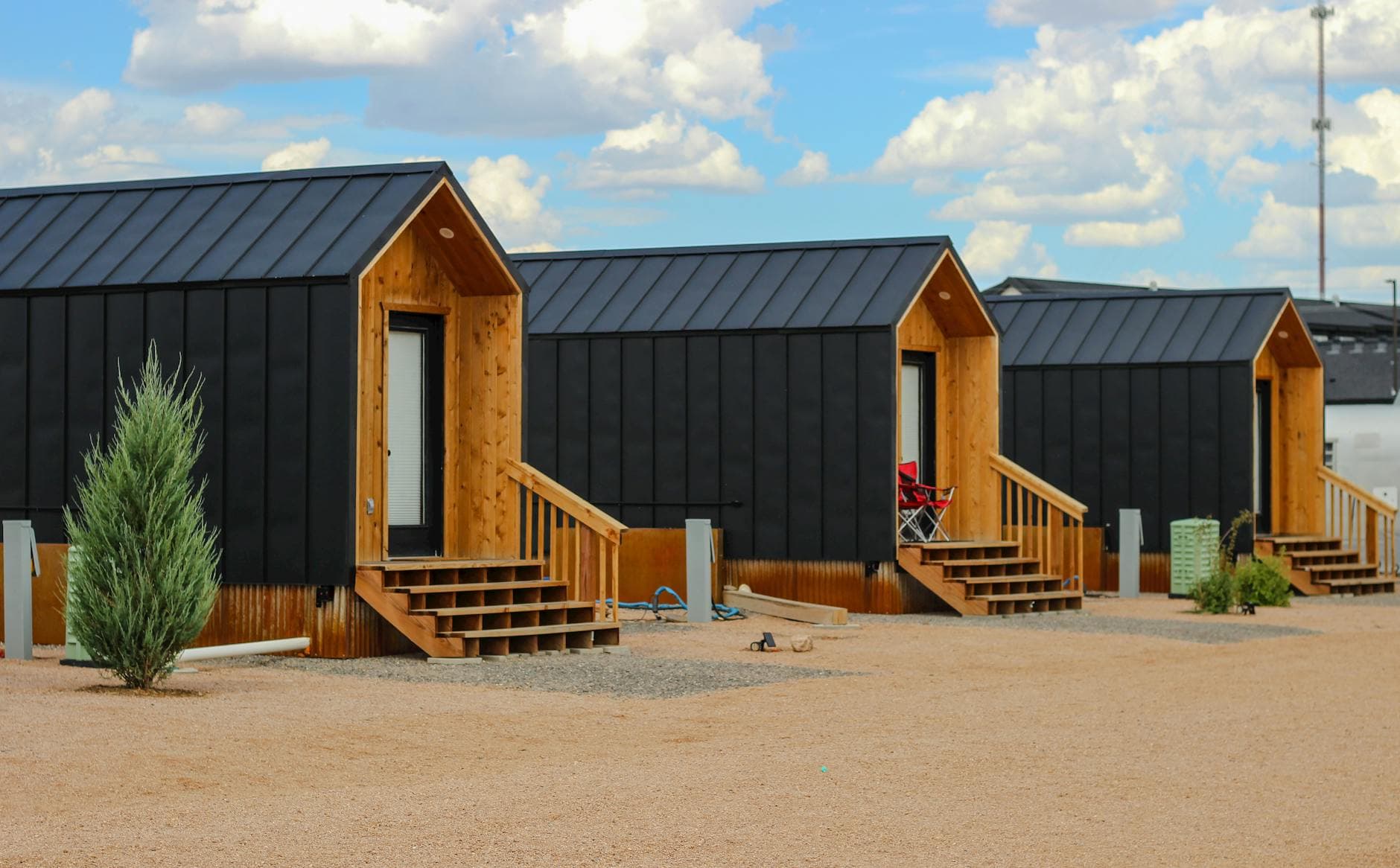
Buurtschap te Veld has room for 100 self-built microwoningen, and Minitopia says those spots are currently filled. The site allows a maximum footprint of 50 square meters, while floor area may reach 100 square meters. Homes there can be fully self-designed, completed from existing units, or placed as turnkey tiny houses, which means the village supports very different levels of builder involvement.
A separate Minitopia page says the broader Buurtschap te Veld development covers 14 hectares and is planned to include about 700 homes overall. That mix of tiny homes, rental homes, owner-occupied homes, and social and mid-market housing is exactly what makes the project interesting beyond the tiny-house world. It is not a siloed subculture. It is a way of stitching affordability into a larger neighborhood plan.
Why it resonates beyond the tiny-house scene
Minitopia’s appeal is partly architectural, but its deeper argument is social. On Funda, Tessa Peters has pointed out that many people cannot get mortgages, social landlords have long waiting lists, and housing needs change over time, especially as the population ages. That is a sharper diagnosis than the usual tiny-house pitch about simplicity or minimalism. It says the current housing system leaves too many people with no workable middle ground.
The materials reinforce that point. Many Minitopia homes are built from natural or reused materials, which keeps the projects aligned with a low-impact, resource-conscious ethic that tiny-house builders already recognize. But the real innovation is in the land model: flexible shells around cities where people can shape a housing wish without waiting years for a conventional path to open.
The demand figures show how urgent that is. An ED.nl report said Minitopia had 500 candidates on the Eindhoven waiting list in 2022, and a more recent estimate from Rolf van Boxmeer put the share of single women on the waiting list at around 30 percent, many of them older and divorced. That is a striking reminder that this is not a niche dream for the young and mobile. It is becoming a fallback for people who need housing that is faster, cheaper, and less rigid.
What tiny-house readers should take from it
Minitopia works as design inspiration, but it matters more as a social model. The footprint limits, self-build options, and use of reused materials will speak to anyone who cares about small-space living. Yet the bigger lesson is how the villages reframe the role of land, infrastructure, and community in housing stability.
For tiny-house readers, the useful takeaway is not just that a 50-square-meter home can work. It is that a village can be built to support multiple household types, different ownership models, and temporary or permanent needs at the same time. That is what makes Minitopia feel like a genuine fourth path: not a compromise, but a structured alternative.
The project even documented its thinking in book form, with Minitopia. Ruimte voor je woonwens published on December 4, 2020. That title captures the core idea neatly. The work is not only about smaller houses. It is about making room for the housing wish itself, and doing it on terms that conventional apartment markets rarely allow.
This article was produced by Prism’s automated news system from verified source data, official records, and press releases, then run through automated quality and moderation checks before publishing. The system is built and supervised by the people who set the standards it runs under. Read our full AI policy.
Did this article answer your question?