Nordic tiny house glamping retreat brings luxury to coastal Maine
A pine-and-fir microstay in Sullivan turns a tiny house into a premium glamping pitch, with Acadia nearby and hotel-level details inside.
A tiny house built to sell the stay
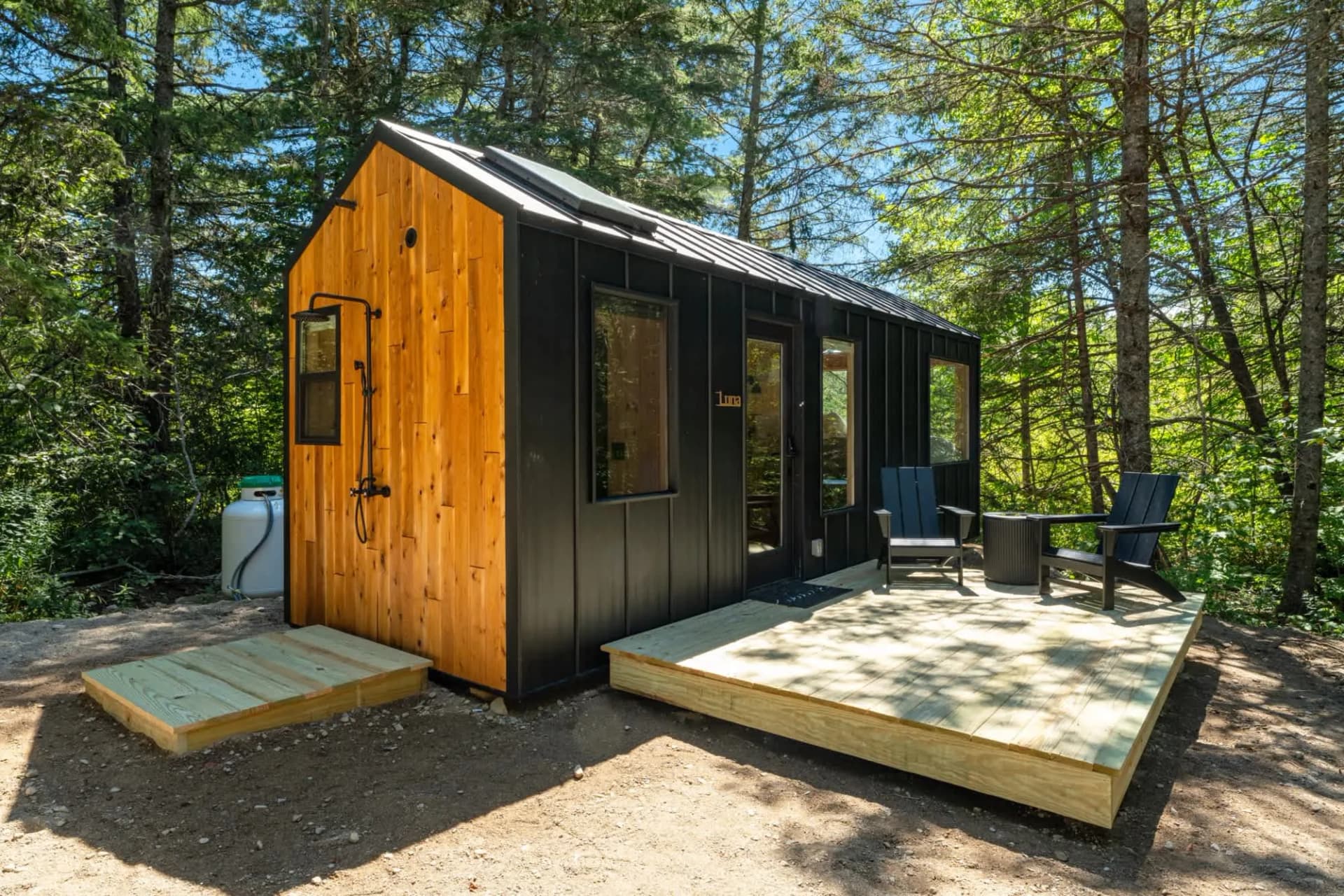
The newest coastal Maine tiny house is not being sold as a downsizing dream. It is being packaged as a luxury escape, with Nordic styling, a forest setting, and the kind of polished amenities that make a small footprint feel expensive. Set within Nature Nooks and Salt Air Properties in Sullivan, Maine, the retreat sits in the pine-and-fir woodlands of coastal Maine, near Acadia National Park and the Schoodic Peninsula.
That positioning matters. The property is not just a house with a small square footage story attached to it. It is a hospitality product, designed to earn attention in a market where tiny homes increasingly have to justify themselves as rentals, retreats, and memorable short stays. In that frame, the appeal is not permanence. It is the promise of a well-staged night, or weekend, in a setting that feels secluded without feeling stripped down.
Nordic style is doing real business here
The Nordic angle is more than a design label. In tiny-house marketing, it signals calm, light, and restraint, which are all useful when the living area is compact. Clean lines, timber-rich finishes, and floor-to-ceiling windows help the space read as airy rather than cramped, and that visual language is exactly what makes a small unit look premium in photos and in person.
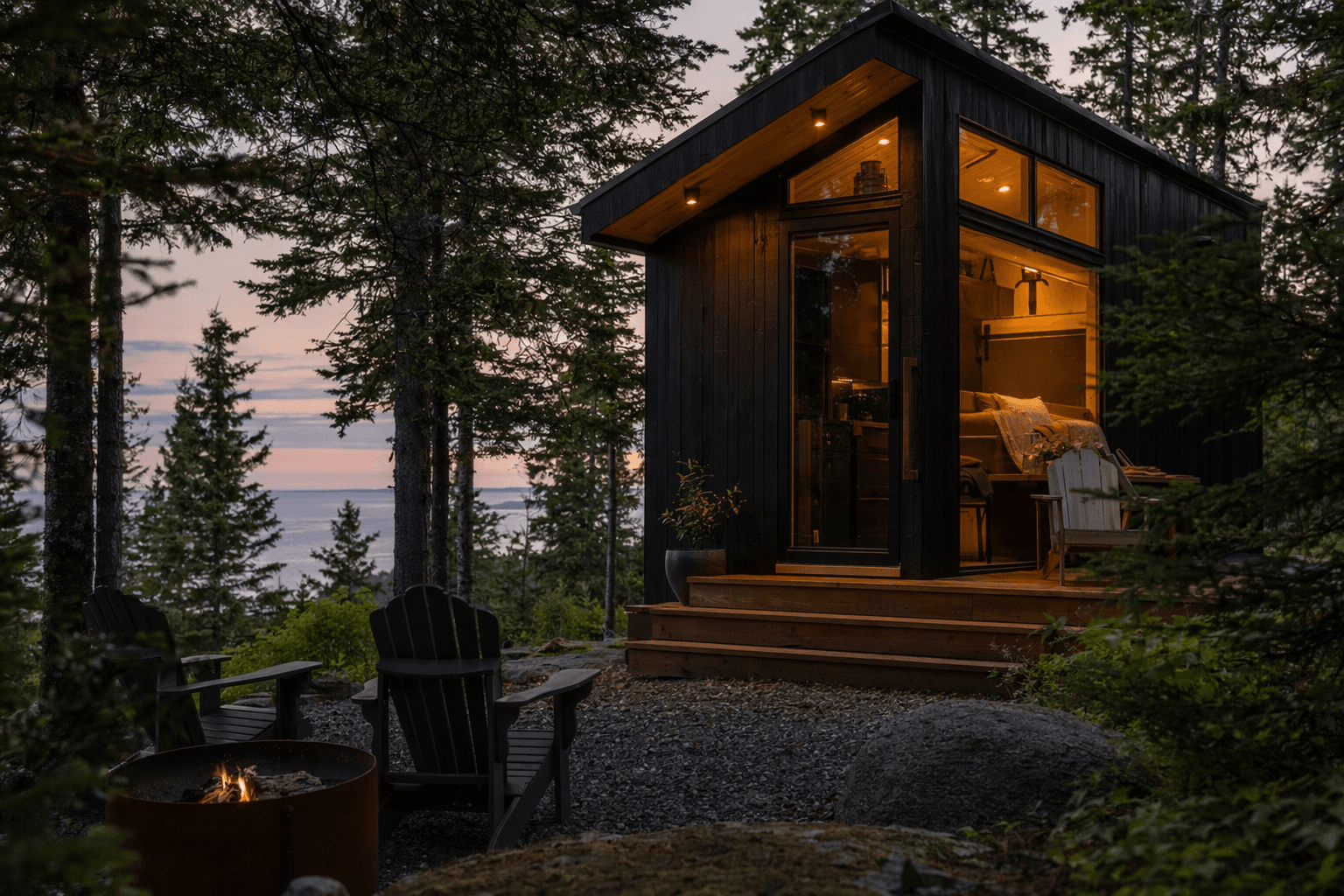
Salt Air Properties describes Vesta Nook, the one-bedroom vacation rental tied to the retreat, as sleek, nature-forward, and anchored by a private deck and fast Wi-Fi. That combination tells you how the category is evolving: the design has to photograph beautifully, but it also has to function like a real short-stay asset. Nordic styling becomes part of the sales pitch because it suggests curation, not compromise.
The premium value is in the details, not the square footage
The listing details show where the guest experience actually comes from. Vesta Nook is described as sleeping four, with a queen bed, a full bathroom with shower, and a pull-out sofa. The amenity list goes beyond the basics and leans hard into the kind of extras that make a compact stay feel deliberate rather than makeshift.
Among the features highlighted across the listing pages are:
- a private deck
- fast Wi-Fi
- a Nespresso machine
- a TV projector
- a telescope
- outdoor showers
- high-end linens
That mix says a lot about what premium value means in the tiny-house hospitality market. Guests are not paying for sprawl. They are paying for a coherent experience, where the bed feels good, the coffee setup feels intentional, the internet works, and the setting is framed as part of the stay instead of just a backdrop. In a unit this small, every upgrade has to earn its place.
Why coastal Maine makes the concept work
The location is a major part of the value proposition. Acadia National Park draws more than 4 million recreational visits a year, making it one of the most-visited national parks in the country. Put a tiny-house glamping retreat near that kind of traffic, and the logic becomes obvious: travelers already want to be in the region, and a stylish microstay gives them a more distinctive place to land than a standard motel room.
The nearby Schoodic Peninsula strengthens that draw, giving the retreat a clear outdoor identity. Add the 17-acre forest setting described for one Nature Nooks listing, and the property starts to look less like a novelty and more like a carefully framed hospitality option. That matters in a place where visitors come for landscape first, then look for lodging that preserves the feeling they came for.
The glamping market is the real story behind the story
This tiny house also sits inside a much bigger shift. Grand View Research estimates the global glamping market at $3.79 billion in 2025 and projects it to reach $7.87 billion by 2033. That growth helps explain why tiny houses are showing up more often as short-term stays instead of only as full-time homes. The category has found a second life in leisure, and operators are chasing guests who want design-forward stays that feel more personal than a hotel.
Maine has already seen that trend take root. Luxury campgrounds gained a foothold in the state during the early coronavirus pandemic, and that period helped normalize the idea that travelers would pay for privacy, fresh air, and a more curated outdoor stay. There has also been local pushback around some proposals, which is part of the larger tension in glamping: the market wants more premium nature stays, but communities still weigh land use, access, and character carefully.
What tiny-house hosts can learn from this model
The strongest lesson here is not to stuff a tiny house with more things. It is to choose the right things. A premium microstay needs a clear visual identity, a location with a story, and a handful of amenities that make the guest feel considered from the first photo to the last morning coffee.
For hosts and retreat operators, the takeaways are straightforward:
- use a strong design language, like Nordic minimalism, so the space reads as intentional
- make the outdoor setting part of the product with decks, views, and window placement
- invest in the basics guests notice immediately, especially Wi-Fi, bedding, and the bathroom
- add a few memorable extras, such as a projector or telescope, that fit the setting
- market the stay as an experience, not just a unit size
That is what makes the coastal Maine retreat stand out. It is still small, but it is no longer trying to sell smallness alone. It is selling a polished night in the woods, wrapped in Nordic design and backed by the growing appetite for experience-based lodging. In a crowded glamping market, that is the kind of tiny house that can feel much bigger than its footprint.
Know something we missed? Have a correction or additional information?
Submit a Tip