Poland-built Tommy tiny house packs full kitchen, two lofts, hotel-like comfort
Tommy packs a full kitchen, two lofts, and hotel-like comfort into a 23.6-foot shell, making it one of the more practical family-ready tiny homes to emerge from Poland.
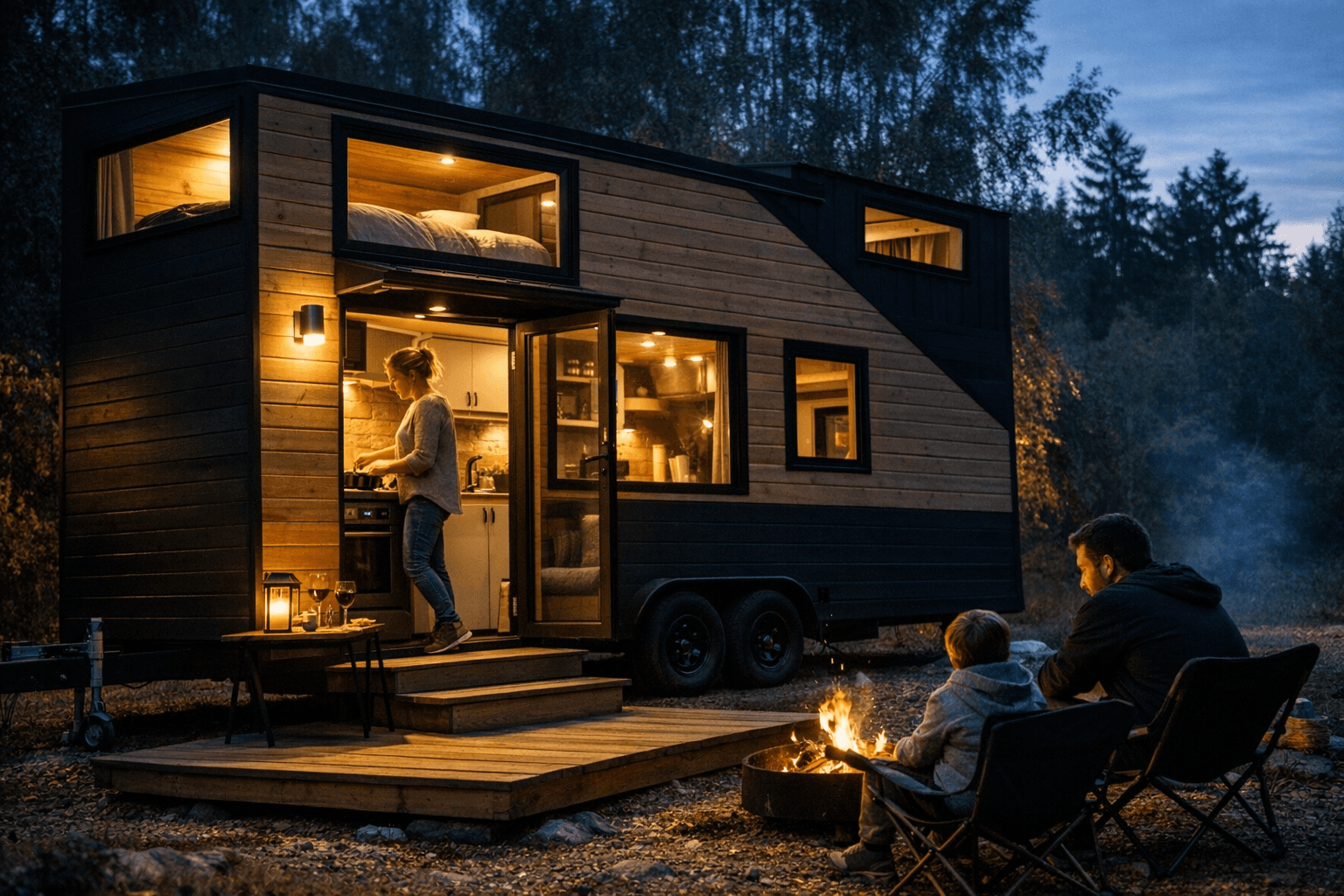
The Tommy tiny house makes a strong case that small-footprint living does not have to feel stripped down. Built by Poland-based Craft House on a double-axle trailer, it measures 23.6 feet long by 8.2 feet wide and leans into the kind of livability that matters once a tiny house stops being a novelty and starts acting like a real home.
A compact shell built for actual use
The exterior immediately sets the tone. Thermo-pine cladding, standing-seam metal siding, and double-glazed windows give the Tommy a more serious finish than a purely decorative showpiece, with durability and insulation clearly part of the plan. That matters in a tiny house this size, where every surface has to work hard and every choice affects how comfortable the home feels across the seasons.
The overall look is closer to a boutique cabin than a bare-bones trailer build. Homecrux describes it as mixing Scandinavian cabin warmth with a more contemporary edge, and that blend helps explain why the Tommy feels more livable than many single-loft models. It is designed to feel inviting from the curb, but the real story starts once you step inside and see how much function Craft House packed into the footprint.
A kitchen that changes the livability equation
The kitchen is the clearest sign that this home is meant for everyday use. Instead of a token galley or a minimal prep zone, the Tommy includes a two-burner induction cooktop, an electric oven, an undercounter fridge, a dishwasher, and generous storage. That combination is unusual in a tiny house of this scale and says a lot about the builder’s priorities.
For a couple, a family, or guests staying longer than a weekend, the difference is huge. A dishwasher saves counter space and cleanup time, an oven expands what you can cook, and proper storage keeps the living area from becoming a cluttered pass-through. In other words, this is not a kitchen built just to look complete. It is built so people can actually live there without immediately feeling the limitations of the footprint.
The kitchen also helps the home read more like a compact apartment than a camping cabin. That is a meaningful shift in tiny house design, especially for buyers who want to use the home full-time or host family without constantly adapting their routines around the layout.
Two lofts make the layout feel family-ready
The Tommy’s biggest livability move is its dual-loft setup. The home has two lofts, and together with the sofa bed in the living room, it can sleep up to six people. That instantly puts it in a different category from the common one-loft tiny trailer, which often works best for a single person or a couple.
Access matters here, too. One loft is reached by a staircase with storage underneath, while the other uses a folding ladder. That mix gives the layout a more practical rhythm than a design that relies on only ladders for every sleeping space. The staircase adds safer, easier access for frequent use and provides a useful storage base, while the folding ladder keeps the second loft light and efficient.
This is the kind of arrangement that makes sense for families with children, for people who host visiting relatives, or for tiny-home owners who want one loft to function as a primary sleeping area and the other to serve guests. It does introduce compromise. Lofted sleeping still means climbing, ceiling clearance is never generous, and shared sleeping areas require a degree of coordination that larger homes do not. But compared with a standard single-loft trailer, the Tommy offers much more flexibility without losing its compact character.
Comfort features that make small living feel less temporary
The Tommy goes beyond furniture and floor plan tricks. Homecrux notes underfloor heating and smart air conditioning, two features that push the home toward true year-round use rather than fair-weather living. That matters in a tiny house because thermal comfort can define whether a space feels cozy or cramped.
The bathroom follows the same logic. It includes a tiled shower, toilet, floating vanity, and electric radiator, giving it a more polished and permanent feel than the utility bathrooms that often appear in small trailers. These are the kinds of details that quietly shape daily life: how quickly the space dries out, how comfortable it feels after a shower, and whether the room reads as a real bath rather than an afterthought.
Inside, the living room keeps the plan open enough to feel airy despite the tight footprint. The sofa can convert into a bed, which adds another layer of flexibility for guests or larger households. That matters in a layout where every square foot has to earn its place, and it helps the Tommy avoid the boxed-in feeling that can happen when a tiny house tries to squeeze in too many fixed functions.
Who the Tommy suits best, and where it compromises
The Tommy is best for people who want tiny-house efficiency without giving up the practical basics of a conventional home. Families with one or two children, couples who regularly host guests, or buyers looking for a weekend place that can handle real cooking and real sleeping arrangements will get the most out of this layout. Its dual lofts, full kitchen, and layered comfort features make it especially appealing for small groups that need more than a minimalist hideaway.
The tradeoff is that this is still a compact trailer home, not a substitute for spacious apartment living. Privacy is limited, loft access takes planning, and the sleeping arrangement works best when everyone is comfortable sharing a small envelope. Still, those compromises feel more acceptable here because the home gives back so much in usable function.
That is what makes the Tommy stand out in the crowded tiny-house field. It does not rely on a stripped-down aesthetic to sell the dream. Instead, it delivers a full kitchen, serious heating and cooling, two lofts, and a bathroom that looks ready for everyday use. For readers watching where tiny living is headed, the Tommy is a clear sign that the strongest designs are becoming less about sacrifice and more about making compact homes truly workable.
This article was produced by Prism’s automated news system from verified source data, official records, and press releases, then run through automated quality and moderation checks before publishing. The system is built and supervised by the people who set the standards it runs under. Read our full AI policy.
Did this article answer your question?