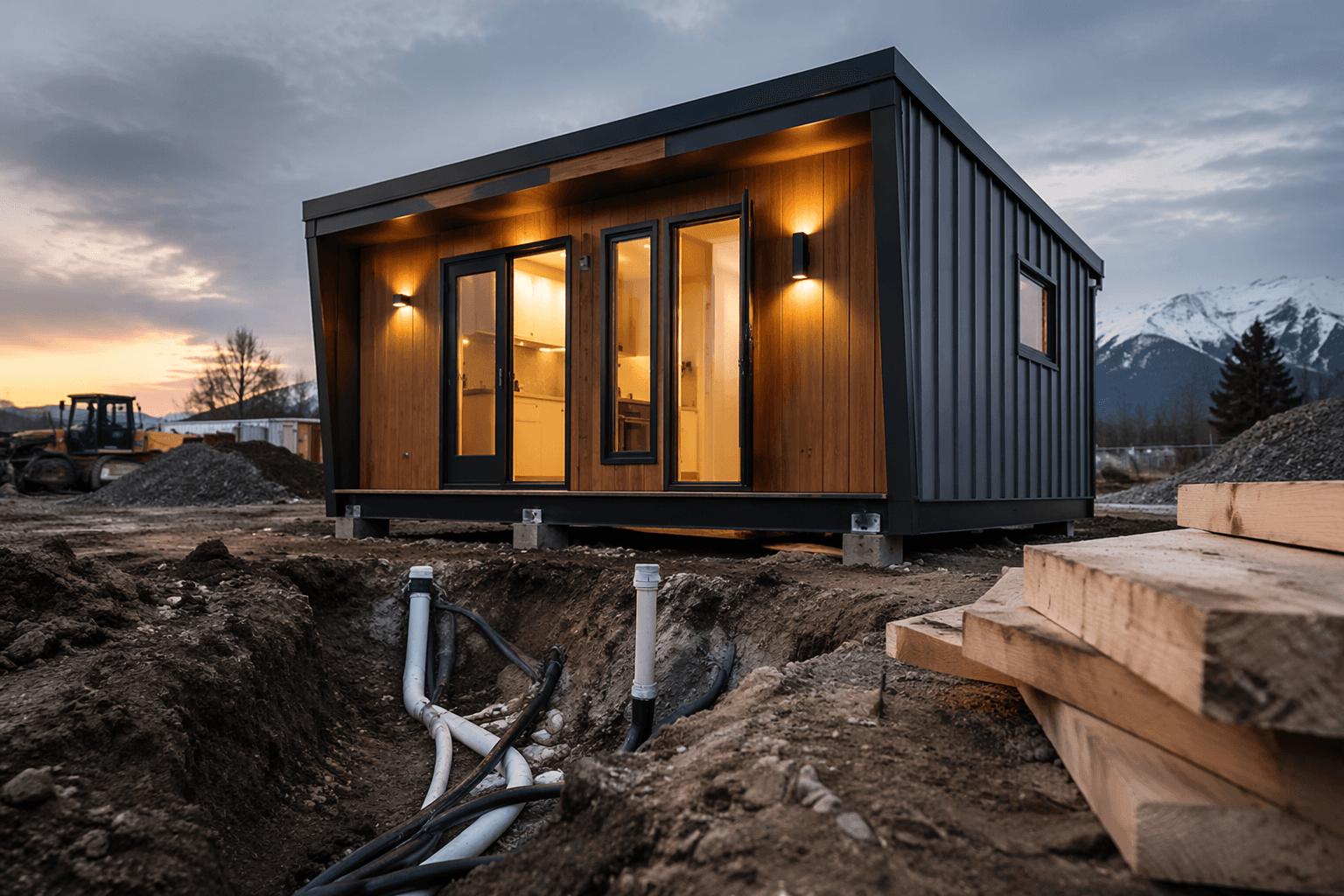
Removed Tiny Homes' Byron Bay tiny house feels more like an apartment
Removed Tiny Homes’ Byron Bay pushes 355 square feet toward apartment-like livability, with real storage, a workable kitchen, and lofts that avoid the usual tiny-house squeeze.

A tiny house that bets on width, not just cleverness
Removed Tiny Homes’ Byron Bay takes the familiar tiny-house tradeoff and makes it very plain: if you want less cramped daily living, you have to give up some of the ultra-narrow, trailer-first look. The model rides on a triple-axle trailer, stretches 27.5 feet long, and offers 355 square feet inside, with the 9.10-foot-wide version shown in the profile and a narrower 7.10-foot option for easier regular travel. That extra width is the whole story here. It does not turn the Byron Bay into a full-size house, but it does make the interior read much closer to a small apartment than a tight cabin on wheels.
The kitchen is where the space starts paying off
The strongest proof comes in the kitchen and main living zone, which are laid out to do real family-duty instead of looking good in photos. The kitchen packs in upper and lower cabinetry, a sink, oven and cooktop, microwave, and a fridge/freezer, plus a breakfast bar that seats two. That combination matters because storage is usually the first thing that makes tiny homes feel temporary; here, the cabinetry and appliance run give the room a more settled, everyday feel. In practical terms, this is the kind of kitchen that can handle normal cooking without every pan and packet becoming an obstacle course.
The living area backs that up with a sofa, an entertainment center, a large picture window, and a high ceiling that opens the room up visually. The ceiling height is doing real work here, because in a wider tiny home the difference between “spacious” and “boxy” often comes down to how the vertical space is handled. In the Byron Bay, the living room feels designed for sitting and staying put, not just passing through.
The bathroom sits cleanly away from the main zone
On the opposite side of the home, the bathroom keeps the layout from collapsing into one crowded end of the trailer. It includes a glass shower, flushing toilet, and vanity sink, which is a more complete setup than the bare-bones wet bath arrangements that often signal a compromise. The placement matters as much as the fixtures: separating the bathroom from the kitchen and living area helps the home feel more like a compact apartment plan and less like a string of functions stacked too tightly together.

That separation is part of why the Byron Bay comes across as livable for small families. The house is still towable, but the plan gives each zone enough breathing room that you are not constantly bumping from one task into another.
The lofts are trying to behave like real bedrooms
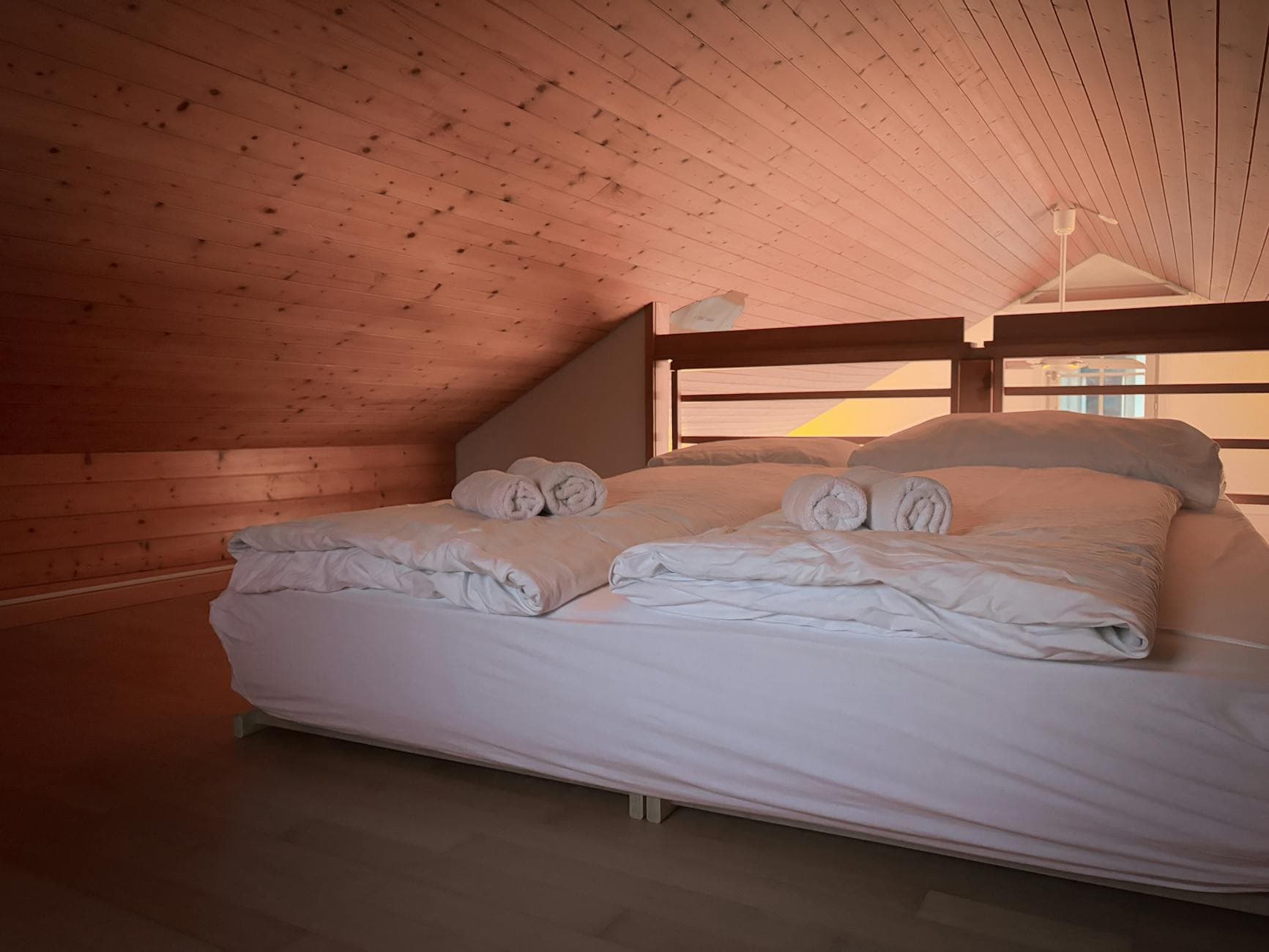
Upstairs, both bedrooms are lofts, and that is usually where tiny houses lose the storage and comfort battle. Removed Tiny Homes takes a smarter approach by putting a lowered platform between the rooms, which makes standing and dressing easier instead of forcing every movement to happen crouched over. It is a simple move, but it changes the feel of the upper level from “sleeping nook” to something closer to usable bedroom space.
Each loft includes a double bed and storage, which is the other detail that separates this layout from the usual weekend-only tiny house. A double bed gives the rooms enough scale for actual adults, and the built-in storage helps keep the bedrooms from turning into catch-all zones. That is the kind of design choice that matters when the question is not whether a tiny house is cute, but whether it can work day after day for a household that needs somewhere to put clothes, bedding, and the rest of family life.
Why the Byron Bay feels more like a product answer than a concept build
Removed Tiny Homes also offers an off-grid upgrade, which widens the Byron Bay’s appeal beyond fixed-lot living. That option makes sense because the home is still built for flexible siting, occasional travel, or semi-permanent placement, even if the larger footprint means the 7.10-foot version will be the easier pick for regular towing. In other words, this is not a tiny house pretending to be a full-size suburban alternative. It is a tiny house that openly leans into being a practical family-sized unit, with enough versatility to fit different kinds of setups.
That approach lines up with the way New Atlas framed the model: as a spacious, family-friendly tiny house centered on an open kitchen and living area, not a novelty shell with a ladder and a sink. The Byron Bay is aimed squarely at buyers who want tiny-house mobility without giving up the basics that make a home function smoothly.
Part of a bigger shift in Removed Tiny Homes’ lineup
The Byron Bay also fits into a clear run of wider, more usable models from Removed Tiny Homes. Just days earlier, the Cabarita was presented as a two-bedroom tiny house with a downstairs master bedroom and a loft bedroom, a layout that already pushed toward more practical family use. Before that, the Onda went even further, with three bedrooms and two bathrooms in a 32-foot design. Taken together, those models show a deliberate move away from the one-room tiny-house stereotype and toward floor plans that behave more like compact housing.
That broader direction is what makes the Byron Bay worth paying attention to. It is not simply bigger for the sake of bigger. It is part of a product trend that treats width, storage, and room flow as the real barriers to family adoption.
The Byron Bay’s answer to the cramped tiny-house problem is straightforward: widen the footprint, build in storage, and make the rooms feel separate enough to live in. That does not erase the compromises of a 355-square-foot towable home, but it does blunt the ones that usually drive families away.
This article was produced by Prism’s automated news system from verified source data, official records, and press releases, then run through automated quality and moderation checks before publishing. The system is built and supervised by the people who set the standards it runs under. Read our full AI policy.
Did this article answer your question?