Removed Tiny Homes' Currumbin maximizes comfort in a compact tiny house
Currumbin turns a 23.7-foot towable into a real full-time home, with a standing loft, big picture window, and off-grid packages that actually add livability.
Why Currumbin stands out
Removed Tiny Homes’ Currumbin is not trying to be a cute weekend pod. It is built for people who want a tiny house that can handle full-time life on wheels without feeling cramped, and that distinction matters the moment you look at the numbers. The home rides on a triple-axle trailer and measures 7.2 meters, or 23.7 feet, which is compact by North American standards, yet the interior is laid out to feel open instead of squeezed.
Removed says Currumbin is its most popular model, and the name comes from Currumbin, the coastal suburb on the Gold Coast. That fits the overall vibe: this is a house that leans into a bright, livable, coastal feel rather than the stripped-back, purely functional style that still shows up in a lot of towable tiny homes. For buyers comparing it with a typical tiny house on wheels, the difference is obvious: Currumbin is designed around daily routines, not just sleeping and storage hacks.
A layout that gives the living room the win
The smartest move in the Currumbin is how much of the 270 square feet of interior space is given to the living area. That room gets a high ceiling and a huge picture window, and Removed’s own materials call that window the marquee feature of the design. In practice, that matters more than a lot of cosmetic upgrades because natural light and vertical volume are what keep a small home from feeling boxed in.
The living zone reads as the main event, not an afterthought. In a tiny house this size, that is the difference between a place you tolerate and one you can actually live in every day. If you are looking for a towable that can function as a real home for two people, the Currumbin’s open-feeling common space is one of its strongest arguments.
The kitchen is built for actual cooking
Currumbin’s kitchen sits in the center of the home, which is a smart use of space because it keeps the work zone connected to the rest of the plan without wasting floor area on a corridor-like layout. The fit-out is more serious than the usual “tiny house kitchen” shorthand suggests: it includes an oven, two-burner propane cooktop, sink, fridge-freezer, dishwasher, and storage.
There is also a drop-down counter extension, plus a window that opens to an outside breakfast bar. That combination is practical in a way tiny-house buyers will recognize immediately. The counter extension gives you prep space when you need it, and the breakfast-bar window lets the kitchen spill outward without forcing a bigger footprint inside.
The bathroom is full-size tiny-house thinking, not a compromise
The bathroom continues the same approach. Currumbin includes a glass-enclosed shower, vanity sink, composting toilet, and washer-dryer, which puts it squarely in the category of tiny homes designed for real occupancy rather than occasional use. A washer-dryer in a compact home is a strong signal that the builder expects people to live in it, not just visit it.
That matters because a lot of tiny homes look good in photos and then fall apart once you try to organize clothes, laundry, and hygiene in the same tight shell. Currumbin’s bathroom setup does not eliminate compromise, but it reduces the daily friction that makes some tiny homes wear thin after the honeymoon phase.
The loft is the feature that actually changes livability
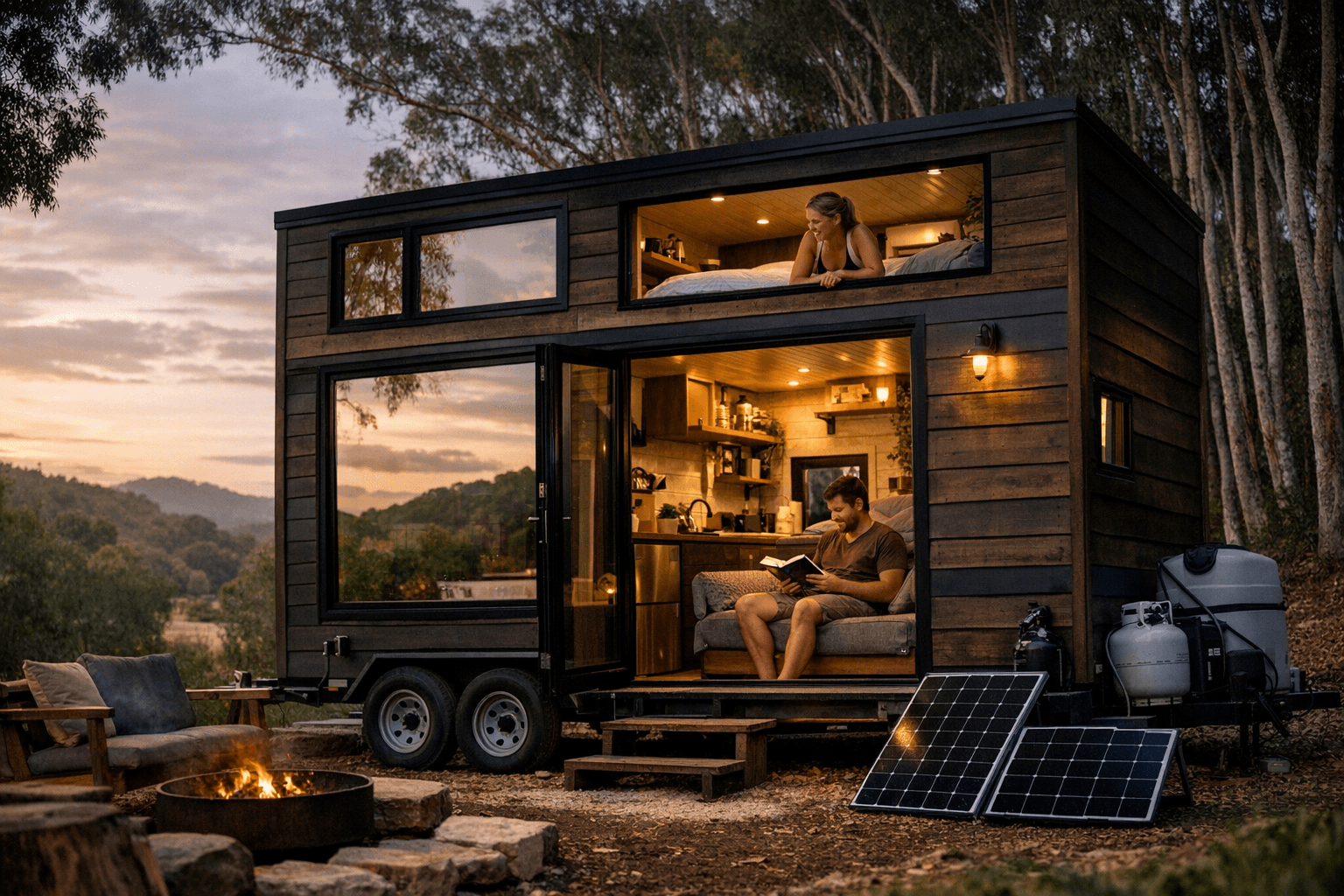
The most important design decision in Currumbin is the bedroom access. Instead of treating the loft like a crawlspace with a mattress, Removed uses a storage-integrated staircase leading to a loft with a lowered standing platform. That lets occupants stand upright to dress and move around more naturally, which is a direct answer to one of the most common complaints about tiny-house lofts: too much crouching, too much climbing, and too many awkward mornings.
Removed also describes the loft as having a standing walkway, which reinforces that this is not just a sleeping nook. In tiny-house terms, that is a meaningful shift. Standard lofts often work fine until you have to change clothes, make the bed, or shuffle through a daily routine while hunched over. Currumbin’s loft does not erase the realities of a compact footprint, but it makes the most annoying parts of loft living less punishing.
Off-grid capability is not an afterthought here
Removed Tiny Homes says it specializes in off-grid, high-quality, sustainable tiny homes delivered across Australia, and Currumbin can be ordered with optional off-grid capability. That is a major selling point for buyers who want independence from hookups, especially if the house is meant to be lived in full time rather than parked as a holiday cabin.
The company says it offers three all-inclusive off-grid packages, and its off-grid materials point to details that matter in everyday use, not just brochure appeal. Those include a hardwired internal monitoring screen in the kitchen wall and a triple whole-house water filtration system with a stainless-steel enclosure. That is the kind of infrastructure that separates a genuinely self-contained tiny home from one that merely advertises the idea of going off-grid.
- Hardwired monitoring in the kitchen keeps system status visible where you already spend time.
- Triple whole-house filtration is the sort of upgrade that supports real daily use, not just emergency backup.
- All-inclusive packages reduce the guesswork for buyers who want utility independence without piecing together a system themselves.
The outdoor terrace extends the footprint without adding bulk
Currumbin also offers an optional outdoor terrace, which adds a dining and lounging area outside the main body of the home. That is a smart option for buyers who want more usable space without increasing the trailer length. In tiny-house living, exterior square footage can be just as valuable as interior square footage, especially when the indoor plan is already working hard.
This is where Currumbin feels especially considered. The core house is already built around comfort, and the terrace gives owners a way to stretch the living experience when weather and site conditions allow it. For a couple planning to live in the home full time, that extra outdoor room can make the whole setup feel less closed-in.
Who this tiny house makes the most sense for
Currumbin is best suited to buyers who want a towable tiny house but refuse to give up on normal routines. It makes the most sense for two people, especially if they care about storage, decent headroom, a real kitchen, and a loft that does not feel like punishment every morning. It also fits buyers who want off-grid readiness without building the system piecemeal themselves.
The bigger picture is that Currumbin shows where tiny-house design is heading. Instead of treating lofts as purely decorative sleeping zones, builders are trying to make them genuinely usable, and Removed’s standing-height loft platform is a clear example of that shift. Homecrux later noted that Removed expanded the line with a larger 9.6-meter Currumbin that adds a downstairs bedroom, which makes the original 7.2-meter model look less like a novelty and more like the successful base version of an evolving full-time home.
This article was produced by Prism’s automated news system from verified source data, official records, and press releases, then run through automated quality and moderation checks before publishing. The system is built and supervised by the people who set the standards it runs under. Read our full AI policy.
Did this article answer your question?