San Jose Clears Columbus Park, Offers Tiny Homes Amid Cost Backlash
San Jose emptied its biggest encampment at Columbus Park, then pointed residents toward tiny homes that critics say cost more than luxury housing per square foot.
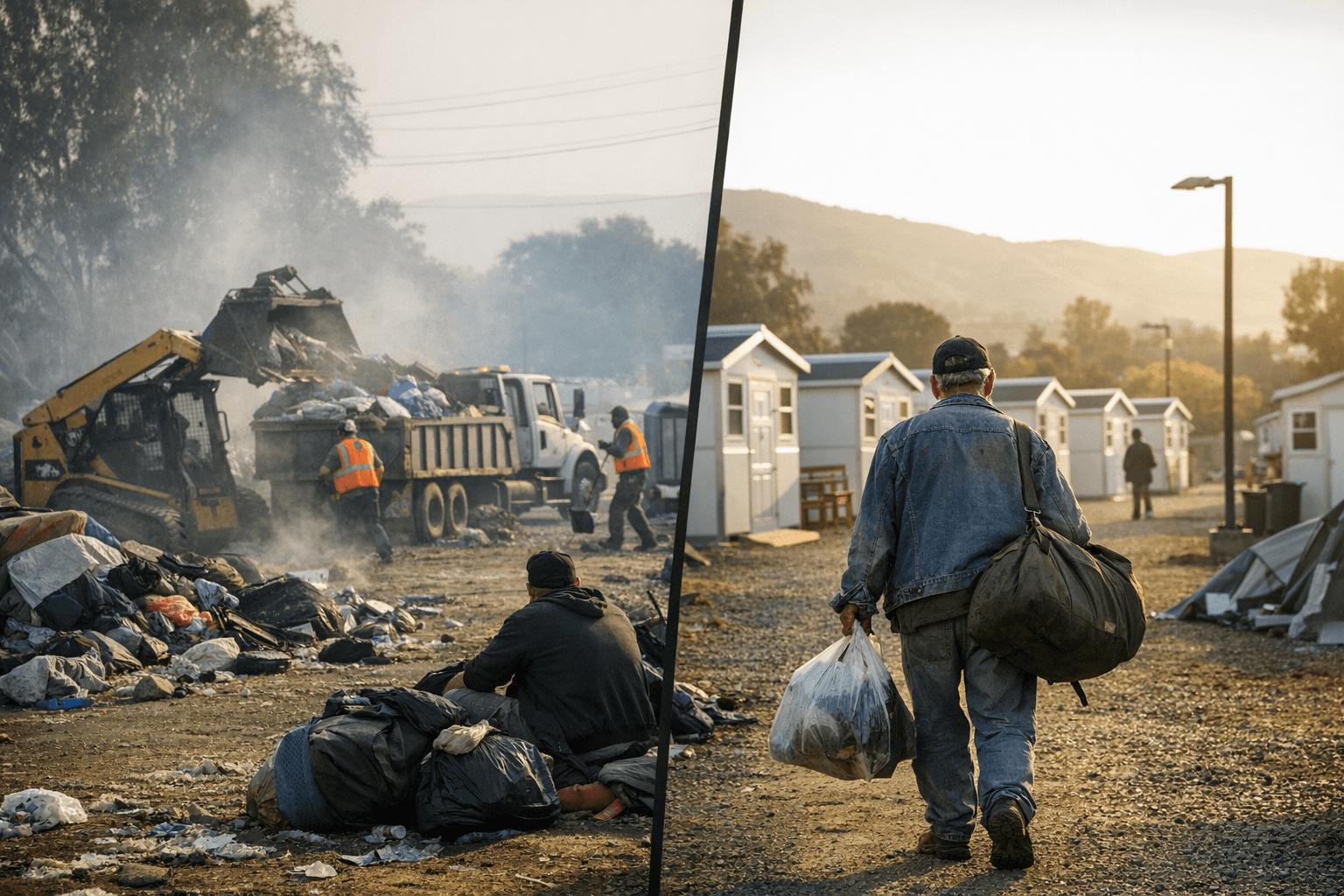
San José has cleared Columbus Park, its largest homeless encampment, and is steering people into motel rooms and tiny-home sites as it tries to trade a sprawling camp for tighter, rule-bound interim housing. The city began the sweep on August 18, 2025, after more than two months of outreach, saying the park had become home to about 370 people, including 11 children, more than 50 seniors, and roughly 120 lived-in vehicles.
Officials said the cleanup would take about three months and that the city first had around 42 motel rooms ready for immediate move-in, with nearly 400 more shelter spaces expected later. Columbus Park had long been the city’s biggest single encampment since The Jungle was dismantled along Coyote Creek in 2015, and San José pointed to unsafe conditions there, including a homicide in 2024, a pedestrian death the month before the sweep, and a suicide the week before the clearing began.
The city’s encampment-management approach tries to balance public-space safety with help for people living outside, including outreach, trash pickup when possible, and education about Good Neighbor guidelines. But the transition has revived a familiar San José argument: whether clearing a visible camp and relocating residents into managed housing is a meaningful turning point, or an expensive reset that looks cleaner on paper than it feels on the ground.
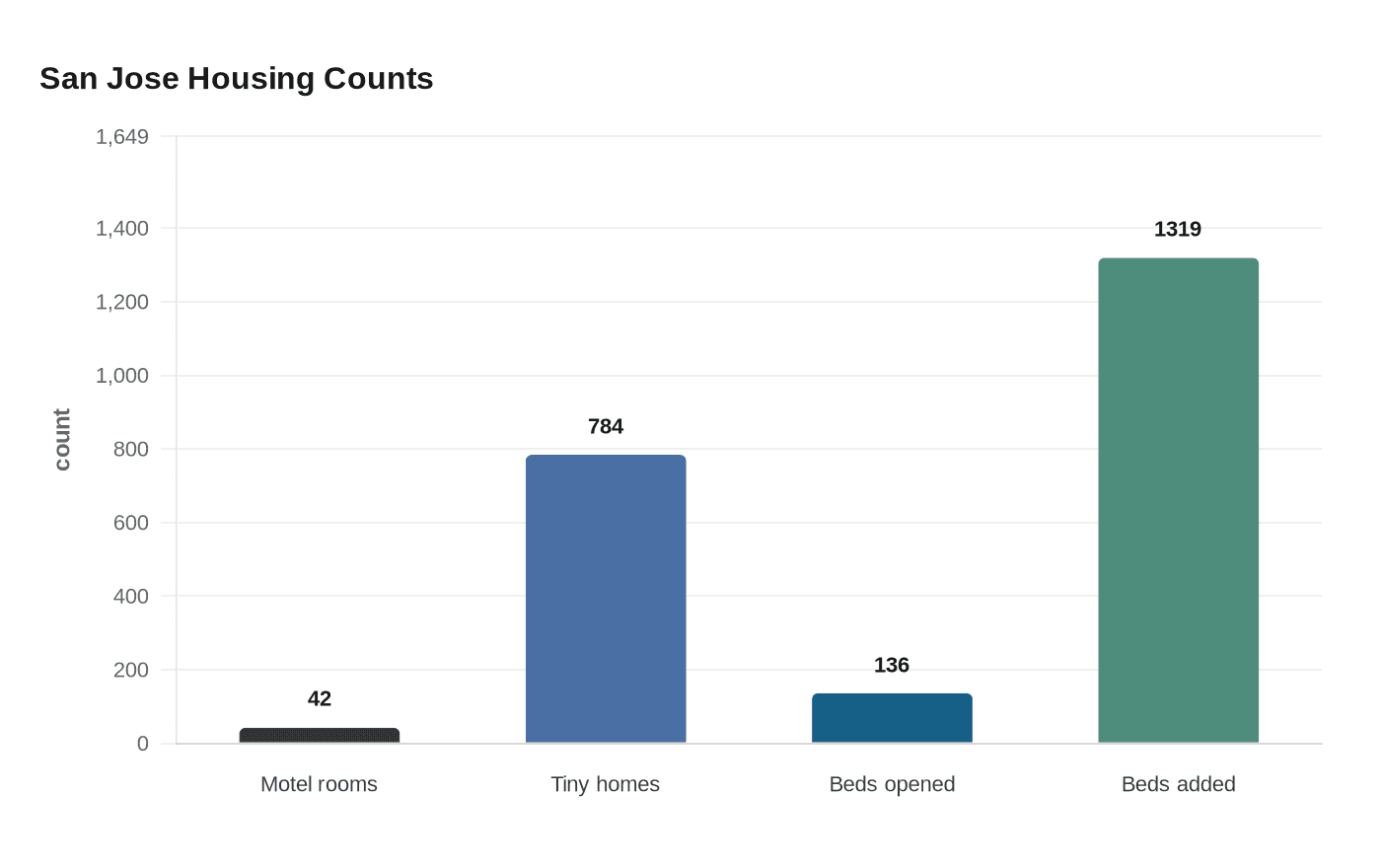
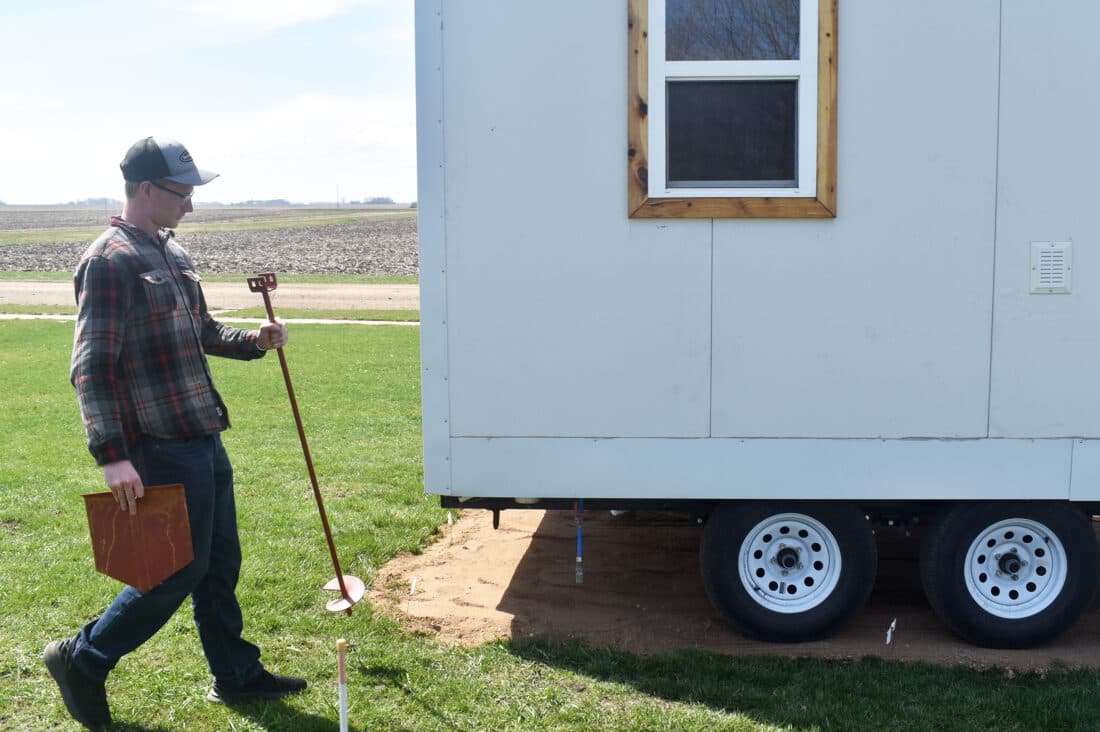
Tiny homes are central to that bet. San José City Council approved a zoning change on April 14, 2020, that allowed tiny homes on wheels as detached accessory dwelling units, with the rule taking effect May 29, 2020. By October 2024, the city said it planned to add 784 tiny homes over the next 18 months, and in November 2025 the Cherry Avenue Interim Housing Community opened with 136 beds near the Guadalupe River, next to a recently cleared encampment under Highway 85. Councilmember Pam Foley said that project drew no negative community pushback.
The city’s broader shelter buildout has become part of Mayor Matt Mahan’s political brand as he runs for California governor. In the year leading up to February 2026, San José opened 11 temporary housing sites and added 1,319 beds, including Cerone in North San José, a 162-room interim housing community expected to serve up to 200 people near the Valley Transportation Authority yard. Supporters such as Jennifer Loving of Destination: Home say that pace matters, but they also note shelter is only part of the answer because people cannot live there forever. Critics counter that the city’s tiny-home and interim-housing model, especially with per-unit costs that have drawn backlash, may solve the optics faster than it solves homelessness.
Know something we missed? Have a correction or additional information?
Submit a Tip