75-Year-Old Tiny Home Faces 88% Tax Spike, Senior Relief Questions
A 75-year-old tiny-home owner saw taxes jump more than 88% on a 1956 house, turning senior relief promises into a fairness fight.

A 75-year-old owner of a 1956-built tiny home watched her property taxes jump more than 88%, a shock that cut straight through Indiana’s promises of senior relief and landed as a blunt question of fairness in a neglected Indianapolis neighborhood. For a small-footprint home that should have been easier to hold onto, the increase turned into a pocketbook warning: even tiny homes are not insulated from the tax pressure reshaping older neighborhoods.
The case has become especially pointed because Indiana lawmakers spent much of 2025 fighting over property-tax reform. Gov. Mike Braun said on April 9, 2025, that he had reached a deal with lawmakers, and the final measure, Senate Bill 1, became Senate Enrolled Act 1 when Braun signed it on April 15, 2025. The Indiana General Assembly lists the bill as local government finance legislation authored by Sens. Travis Holdman, Chris Garten and Scott Baldwin.
State officials say the law expands deductions and limits future growth in property-tax bills, but the numbers around the debate show how intense the pressure had already become. WTHR reported that the original SB 1 proposal would have cut more than $1 billion in property taxes in 2026. Republicans later estimated the revised House version would save Hoosiers about $1.1 billion over three years, and the governor’s office said the signed law would deliver about $1.3 billion in long-term tax reform. At the same time, Indiana already has property-tax caps of 1% for homestead property, 2% for residential property and 3% for nonresidential property.
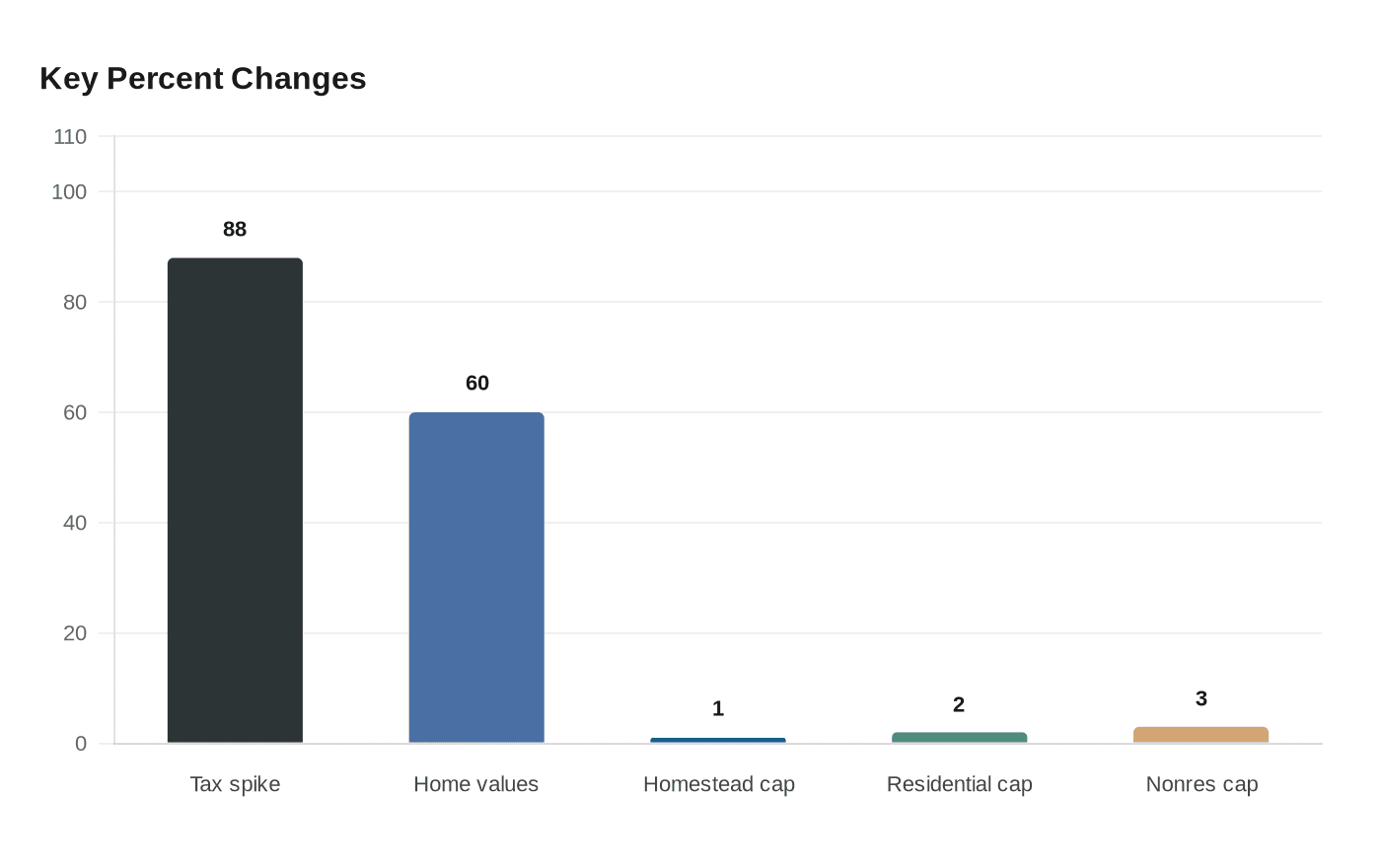
That is why the 88% spike is hitting a nerve. Indiana’s Over 65 property-tax benefit is supposed to help older homeowners, but eligibility is not automatic. The state requires that an applicant have qualified for the homestead standard deduction the previous year and be at least 65 by Dec. 31 of the year before taxes become due. For a senior living in a modest tiny home, the gap between the promise of relief and the reality of the bill has become hard to ignore.
The broader backdrop is rising values and rising anger. WTHR reported Indianapolis home values grew 60% over five years, and about 200 Hoosiers rallied at the Statehouse in 2024 for immediate property-tax relief. City leaders have also warned that deeper cuts could strain public safety and school funding, while Indianapolis has already opened an anti-displacement pilot in Riverside to protect qualifying homeowners from sudden property-tax spikes. For small properties in older neighborhoods, this is no longer a theoretical policy fight. It is the difference between staying put and getting priced out.
This article was produced by Prism’s automated news system from verified source data, official records, and press releases, then run through automated quality and moderation checks before publishing. The system is built and supervised by the people who set the standards it runs under. Read our full AI policy.
Did this article answer your question?