Sarah tiny house in Bretagne proves craftsmanship can stay affordable
Sarah shows how a tiny house can stay attainable without feeling stripped down: a spring 2023 build in Bretagne, delivered for full-time living at about 60,000 euros.
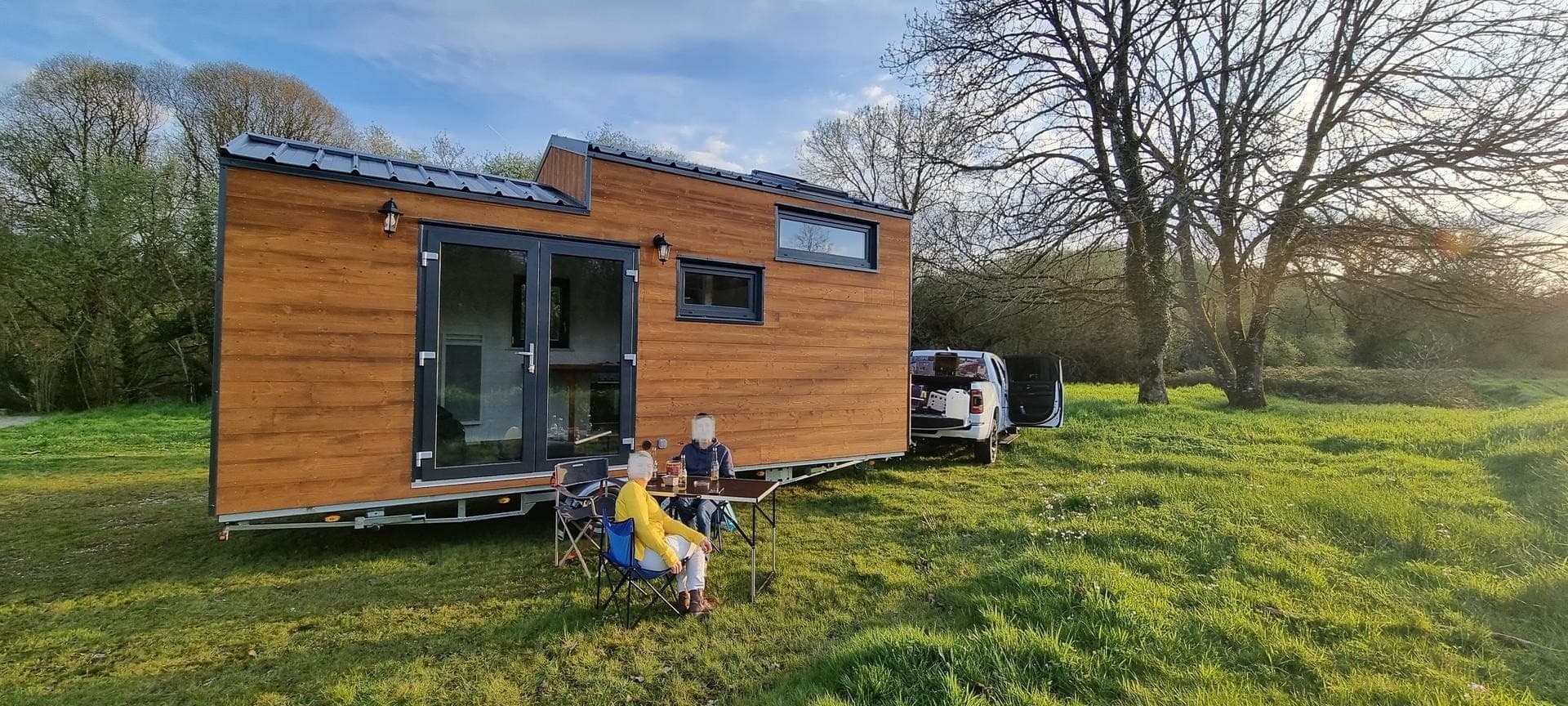
Sarah works because it does not try to look like a fantasy object. Completed in spring 2023 and delivered to its owner in Bretagne for full-time living, the tiny house landed at about 60,000 euros, a number that reads less like a bargain-bin shortcut than a test of what careful building can still buy. The home’s strength is restraint: wooden structure, timber interiors, and a compact layout that feels intended for everyday use rather than photo shoots.
A tiny house built like a small house, not a prop
Tibi House is the Vosges builder behind that approach, and its tiny-house division dates to 2017, after years of traditional timber-house work. The company describes its homes as custom mobile small houses built in traditional timber-frame construction with insulation, mounted on wheels. That matters because the frame is doing real work here: Sarah is not just a box on a trailer, it is presented as a residential unit meant to live long term in a French climate that rewards good envelopes and honest materials.
The visual language is familiar to anyone who follows French tiny houses closely. Wood, custom joinery, and cabin-like warmth do a lot of the heavy lifting, and Sarah leans into that vocabulary without turning into a rustic costume. The result is a small home that feels coherent, which is often where cheaper-looking builds fall apart.
What the money actually covers
At roughly 60,000 euros, Sarah sits in the part of the market where craftsmanship has to justify itself without leaning on oversized finishes. Tibi House’s turnkey line helps explain the value proposition: units are fully finished, furnished, and ready to live in, so the buyer is not left chasing a pile of trades after delivery. The company also says delivery can take about eight months, which keeps the build inside a reasonable planning window for someone who wants housing, not a project.
For buyers who want more control over the finish, Tibi House also offers options from kits to turnkey builds. That range tells you where the company is positioned: not as a luxury-only atelier, but as a builder trying to make the tiny-house format usable at different budget levels. What you give up is obvious: less room, fewer decorative extras, and none of the oversized spectacle that pushes many flashy tiny homes into a different price class.
The autonomy menu, without the gimmicks
- wood heating
- solar kits
- rainwater collection
- gas
- gray-water filtration
The practical add-ons are straightforward rather than flashy. Tibi House says its turnkey houses can be specified with:
Those options matter because tiny living only works when the house matches the site. A small footprint can still feel generous if the energy, water, and waste systems are thought through from the start, and Sarah’s broader appeal is that it treats self-sufficiency as an engineering choice, not a decorative theme.
The real bottleneck is land
In France, the legal side is part of the price of entry. Tibi House says tiny houses on wheels are generally treated like caravans and do not require a building permit, though a prior declaration may be required depending on the commune. Service-Public’s declaration préalable procedure also covers certain new constructions, work on existing buildings, and changes of use, which is why siting still needs local checking even when the house itself is mobile.
That is where tiny-house budgets often get distorted. The purchase price may look manageable, but land access, local rules, and the right paperwork can decide whether the house becomes housing or just a parked asset.
Why Sarah lands the argument
Tibi House says it can install tiny houses across France, and it also offers plots in the Vosges for a moderate rent. That detail is easy to miss, but it is the part that turns the story from design into housing: a beautiful build still needs a place to sit, and not every buyer already has one. Sarah makes the case that the smarter tiny houses are not the flashiest ones; they are the ones that keep the structure, the materials, and the logistics in the same conversation.
That is why Sarah feels more convincing than a lot of bigger, shinier tiny homes. At about 60,000 euros, delivered for full-time life in Bretagne, it shows how a restrained build can still feel complete when the craftsmanship is real and the spec is disciplined. The luxury here is not extra square footage; it is a small home that knows exactly what it is.
This article was produced by Prism’s automated news system from verified source data, official records, and press releases, then run through automated quality and moderation checks before publishing. The system is built and supervised by the people who set the standards it runs under. Read our full AI policy.
Did this article answer your question?