Seattle Tiny Homes' Fremont offers cabin-style comfort in 380 square feet
Fremont pushes park-model tiny homes closer to full-time living, with 380 square feet, a two-bedroom layout, and a porch that feels like a real entry.
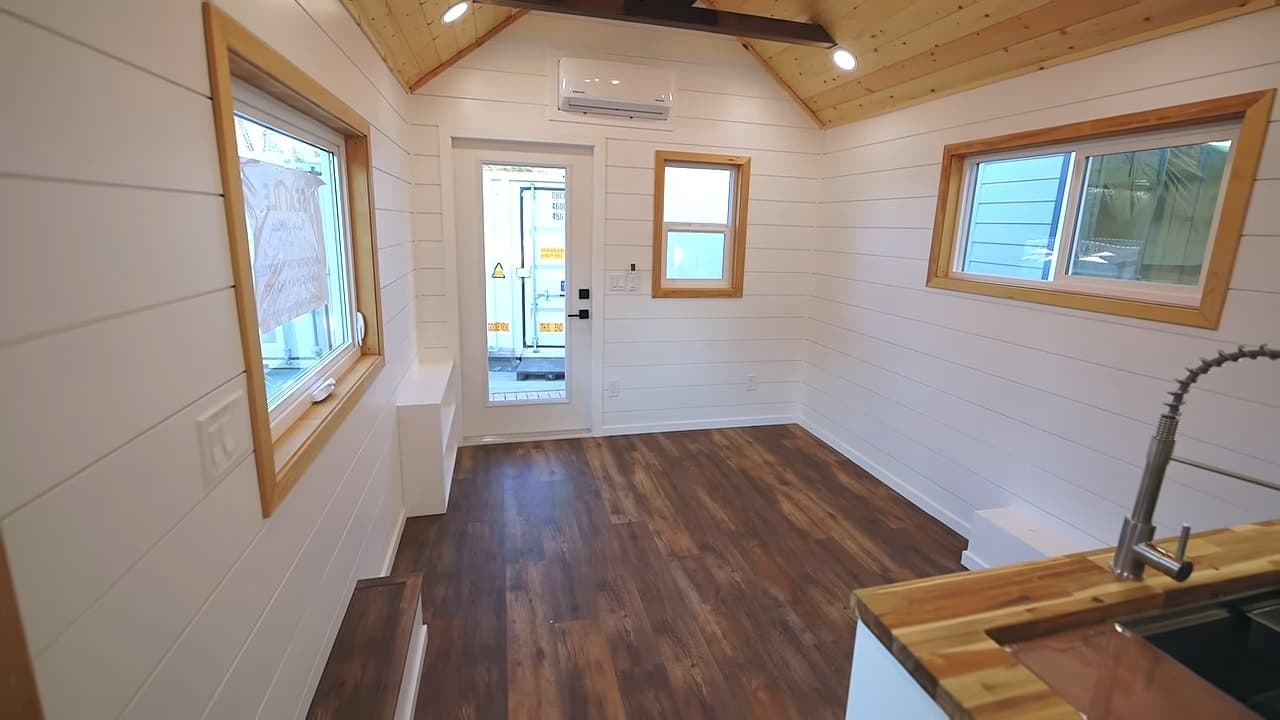
Fremont packs two bedrooms, a downstairs bedroom, a full bath, and a daily-use kitchen into 380 square feet on a 38-foot by 10-foot footprint. Seattle Tiny Homes built the park model to make full-time living feel normal. The cabin-style shell helps.
Why Fremont reads more like a residence than a camping rig
The first thing that separates Fremont from the narrow towable tiny homes that dominate social media is the park-model format. Seattle Tiny Homes’ park models are about 10 feet wide or more, and the company positions them as lifetime homes that can be used temporarily or permanently depending on jurisdiction. That wider stance matters because it gives the interior room to breathe, with furniture proportions and circulation that feel closer to a small apartment than an RV shell.
The trailer setup reinforces that identity. Fremont sits on a heavy-duty quad-axle trailer with a bumper-pull hitch, which keeps it in the park-model category instead of the slimmer tiny-home-on-wheels lane. RVIA’s park model definition lines up with that approach: a single living unit on a single chassis, mounted on wheels, with a gross trailer area not exceeding 400 square feet in setup mode. Fremont’s 380 square feet sits right under that ceiling, which is exactly why it can claim more livable space without drifting into a conventional house build.
The layout does the heavy lifting
The floor plan is the point here. A downstairs bedroom is not a luxury in a 380-square-foot home, it is the feature that turns the unit from a novelty into something you can actually use every day without climbing stairs or converting the sofa each night. Pair that with a full bathroom and a second bedroom, and Fremont starts to make sense for couples, solo buyers who need a dedicated guest room or office, or anyone planning to live small without giving up privacy.
The kitchen is framed the same way. It is a real everyday kitchen, which is the right filter for this model, because park models live or die on whether the cooking zone can handle ordinary life. If you are shopping for a tiny home and you cook more than reheating, a cramped galley with decorative appliances will age badly fast. Fremont’s larger footprint gives the kitchen the space it needs to function like part of a home, not a campsite add-on.
The porch and exterior are not just cosmetic
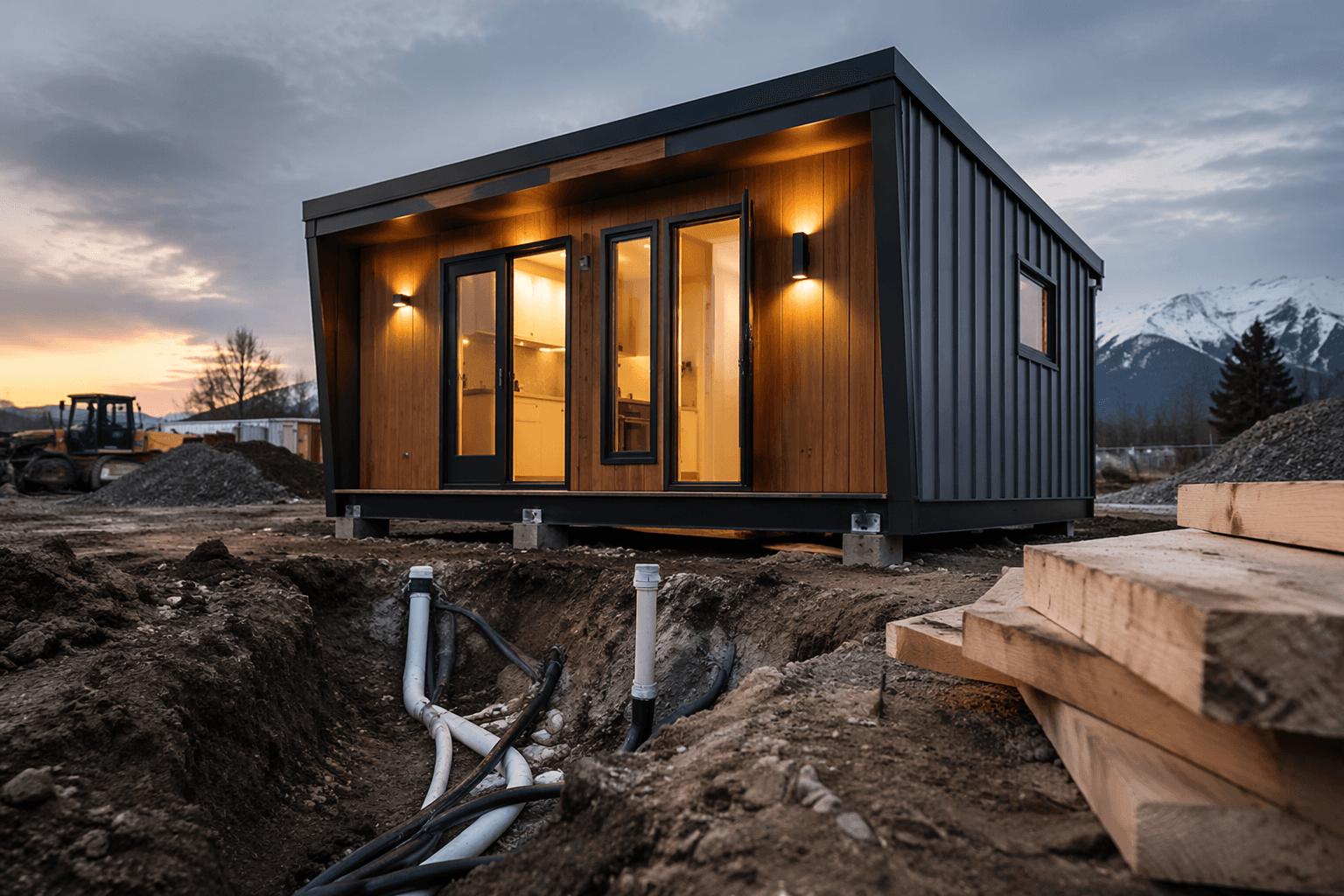
The cabin look is doing more than chasing a rustic mood board. Fremont uses cedar board-and-batten siding, dark green trim, and a green standing-seam roof, which gives it the lodge feel that fits woods, lakes, and mountain settings without looking theme-park fake. The porch matters just as much. In a small home, a front porch can feel like dead space or a gimmick, but here it reads as a real threshold, the kind of entry that softens the transition from outside to inside and makes the place feel anchored.
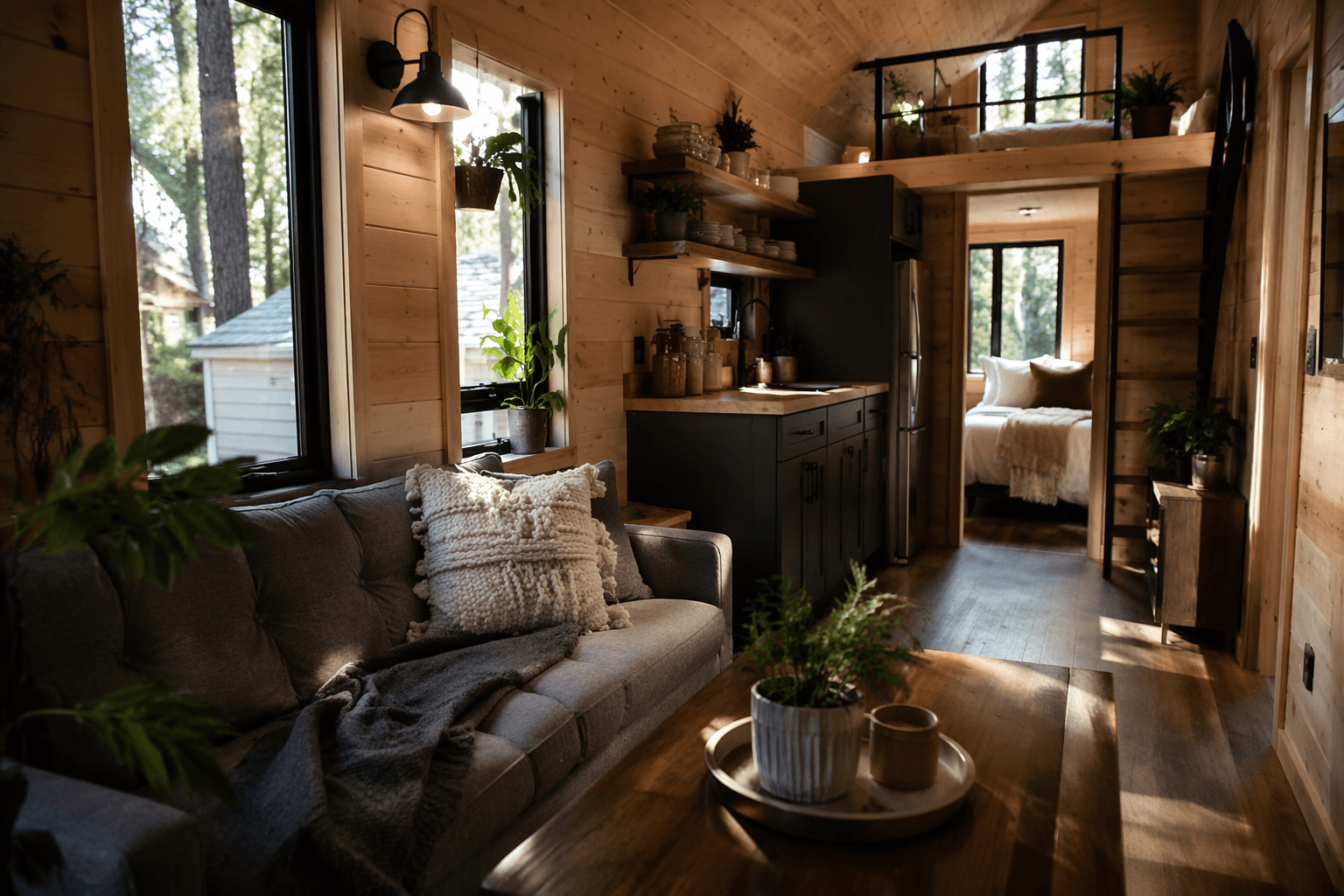
That aesthetic also hints at the likely use case. Fremont looks built for a site where the owner wants a compact residence that blends into a cabin or resort setting, not a constantly moving road unit. Park models trade some portability for more usable interior volume, and this one leans hard into that bargain.
The legal path is part of the product
Completed structures are licensed as RV travel trailers and built to meet or exceed ANSI 119.2 or 119.5 where applicable. RVIA certifies park model RVs to ANSI A119.5, which is why this category sits in a different lane from a conventional stick-built house, even when the end result looks surprisingly residential.
SB 5383, titled “Concerning tiny houses,” entered the 2019 legislative session, and later Washington legislative materials tied to HB 2001 called the framework one that encouraged tiny houses and tiny house communities while trying to remove barriers to development.
Todd McKellips’ role shows how much of this market is about policy, not just design
Fremont also carries the imprint of Todd McKellips, who Seattle Tiny Homes identifies as the director of the Washington Tiny House Association and someone advising HUD and the Department of Veterans Affairs. Park models depend on code compliance, local ordinances, and placement rules as much as layouts and finishes.
Todd and Morgan McKellips have helped pass four statewide tiny-home laws since 2018, and they operate the Roots Collective Farm Tiny Home Hotel, which includes nine tiny house rentals and custom builds.
This article was produced by Prism’s automated news system from verified source data, official records, and press releases, then run through automated quality and moderation checks before publishing. The system is built and supervised by the people who set the standards it runs under. Read our full AI policy.
Did this article answer your question?