Single-Level Esther Tiny House Meets Australia’s Growing Accessible Living Demand
Esther skips the loft entirely, pairing single-level comfort with off-grid capability and a starting price of AUD 135,000. It is built for buyers who want tiny living without ladder compromises.
A tiny house built for ground-floor living
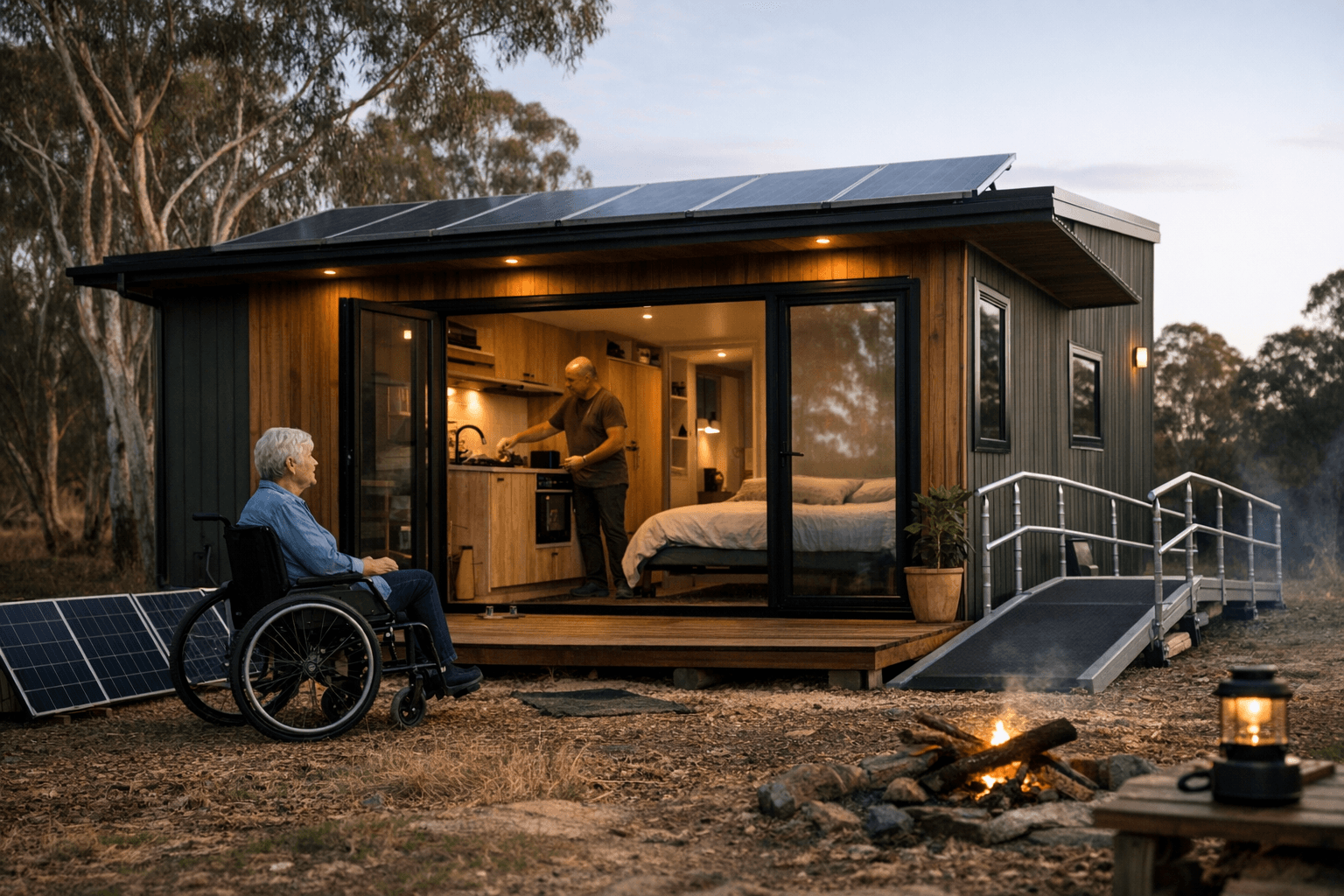
The Esther tiny house lands in a sweet spot that many loft-heavy tiny homes miss: it keeps everything on one level. Built by New South Wales-based CozyCo Tiny Homes, the 29.5-foot-long, 9-foot-wide home rides on a triple-axle trailer and deliberately avoids ladders and overhead sleeping spaces. That makes it a strong fit for older buyers, accessibility-minded households, and anyone who wants tiny living to feel easy rather than vertical.
That choice matters because Esther is not selling a fantasy of minimalism for its own sake. It is selling day-to-day comfort, with the kind of practical layout that turns a compact footprint into something you can actually live with for longer stretches of time. In a market where many tiny houses lean hard on loft access and steep climbs, Esther makes its case by staying grounded.
Why the single-level layout resonates
Single-floor living has become one of the clearest niche demands in the tiny house world because it removes a major compromise. Instead of asking residents to climb every night, carry belongings up and down, or adapt to tight headroom, Esther keeps circulation simple. That is especially important for aging-in-place goals, guests who are not used to tiny-house lofts, and households that want a home to feel intuitive from the first step inside.
Australian liveable-housing guidance backs up that appeal. Homes designed for step-free access, wider circulation, and adaptable layouts are easier and safer for people of all ages and abilities. Research on accessible design also points to direct access to the bedroom and bathroom as a meaningful support for aging in place, while reducing the chance of expensive modifications later. Esther’s no-loft plan is therefore more than a style choice. It is a functional accessibility strategy.
Materials that aim for durability and warmth
CozyCo Tiny Homes does not treat Esther like a stripped-down shell. The builder uses locally sourced A-grade materials, Colorbond iron cladding on the exterior, and VJ paneling inside, giving the home a polished feel that sits somewhere between practical and inviting. That combination is a big part of the model’s appeal, because it suggests a tiny house that can handle real use without losing warmth.
The exterior and interior materials help frame Esther as a premium compact home rather than a bare-bones cabin. The look is clean, but not cold. That balance matters in a small footprint, where finishes do a lot of work in shaping how spacious or cramped a home feels.
Inside the layout: every square foot has a job
Esther’s interior centers on a living room, kitchen, bedroom, and bathroom, with glazed doors and windows bringing in light and fresh air. The bedroom fits two people and opens outward, which helps the space feel less boxed in. The bathroom squeezes in a toilet, vanity sink, and glass shower without losing usability, a notable achievement in a home of this size.
The lounge sits between the bedroom and bathroom and uses a sofa facing the view to extend the sense of space. That visual connection to the outdoors is one of the most effective tricks in tiny-house design, and Esther uses it well. Instead of stacking functions awkwardly, the layout spreads them in a way that keeps the home feeling calm and straightforward.
The kitchen is one of the model’s strongest features. Its dual-sided design includes full-size appliances, ample storage, upper cabinets, and a breakfast bar that can double as a home office or dining spot. For many tiny-house buyers, that is the difference between a weekend retreat and a place that can support extended stays or even full-time use.
Off-grid capability without the gimmicks
Esther also leans into genuine off-grid readiness. Homecrux notes R2.5 insulation and a solar power system sized to run all onboard appliances, which means the home is built for more than token sustainability. It can function as a mobile retreat, but it also has the infrastructure to support regular use away from traditional hookups.
That off-grid flexibility lines up with how CozyCo positions the model on its own Esther page. The builder describes it as “your perfect tiny home getaway designed for two” and says it can work as a mobile escape or an additional income source on a property. That dual use case is important in the tiny-house market, where buyers often want one structure to serve both lifestyle and investment goals.
What the price says about its target buyer
With an approximate starting price of AUD 135,000, Esther sits in a competitive but not budget tier. CozyCo’s pricing page lists the model from AUD 135,000 and describes it as a premium home with luxury finishes and a spacious design. That pricing tells you exactly who it is aimed at: buyers who want more than a shell on wheels and are willing to pay for comfort, finish quality, and a smarter floor plan.
In other words, Esther is not competing as the cheapest path into tiny living. It is competing as a more usable and more refined one. For buyers comparing loft-based models with ground-floor convenience, the value proposition is easy to see.
Why this matters in Australia right now
Esther arrives in a broader housing climate that keeps pushing compact, flexible options into the conversation. The National Housing Supply and Affordability Council said housing affordability continued to deteriorate in 2024, with prices and rents at record highs and supply still lagging demand. Parliament’s research service also notes the government’s view that Australia has a housing shortage and that not enough homes are being built in the right places.
That backdrop helps explain why tiny houses continue to attract attention well beyond novelty status. They are part lifestyle product, part pressure valve. For people with land, or buyers looking for a secondary dwelling, a tiny home like Esther offers a quicker, smaller-scale response to the same affordability strain.
How Esther fits the road-legal tiny-house conversation
For towable tiny homes in Australia, road-legal guidance commonly points to limits around 2.5 metres wide, 4.3 metres high, 12.5 metres long, and 4.5 tonnes aggregate trailer mass. Esther’s 9-foot width and triple-axle trailer place it firmly in the category of a carefully engineered tiny home on wheels, not a casual conversion. That detail matters because road-friendly dimensions shape everything from transport to placement to long-term usability.
The model also sits inside a movement with deeper roots. Homecrux traces the tiny-house movement back to Jay Shafer’s pioneering work in 1997, and that history helps explain why the category keeps evolving rather than fading. What started as a small design rebellion now includes homes like Esther, where accessibility, off-grid function, and everyday comfort are front and center.
A niche that keeps getting more practical
The lasting appeal of Esther is that it does not try to win tiny-house buyers with a stunt. It wins by solving one of the category’s oldest problems: how to make compact living feel safe, simple, and genuinely livable. By skipping the loft, refining the layout, and adding off-grid capability, CozyCo has built a model that speaks directly to the growing audience for single-level tiny homes.
This article was produced by Prism’s automated news system from verified source data, official records, and press releases, then run through automated quality and moderation checks before publishing. The system is built and supervised by the people who set the standards it runs under. Read our full AI policy.
Did this article answer your question?