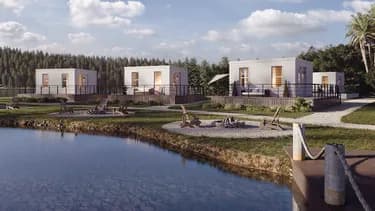
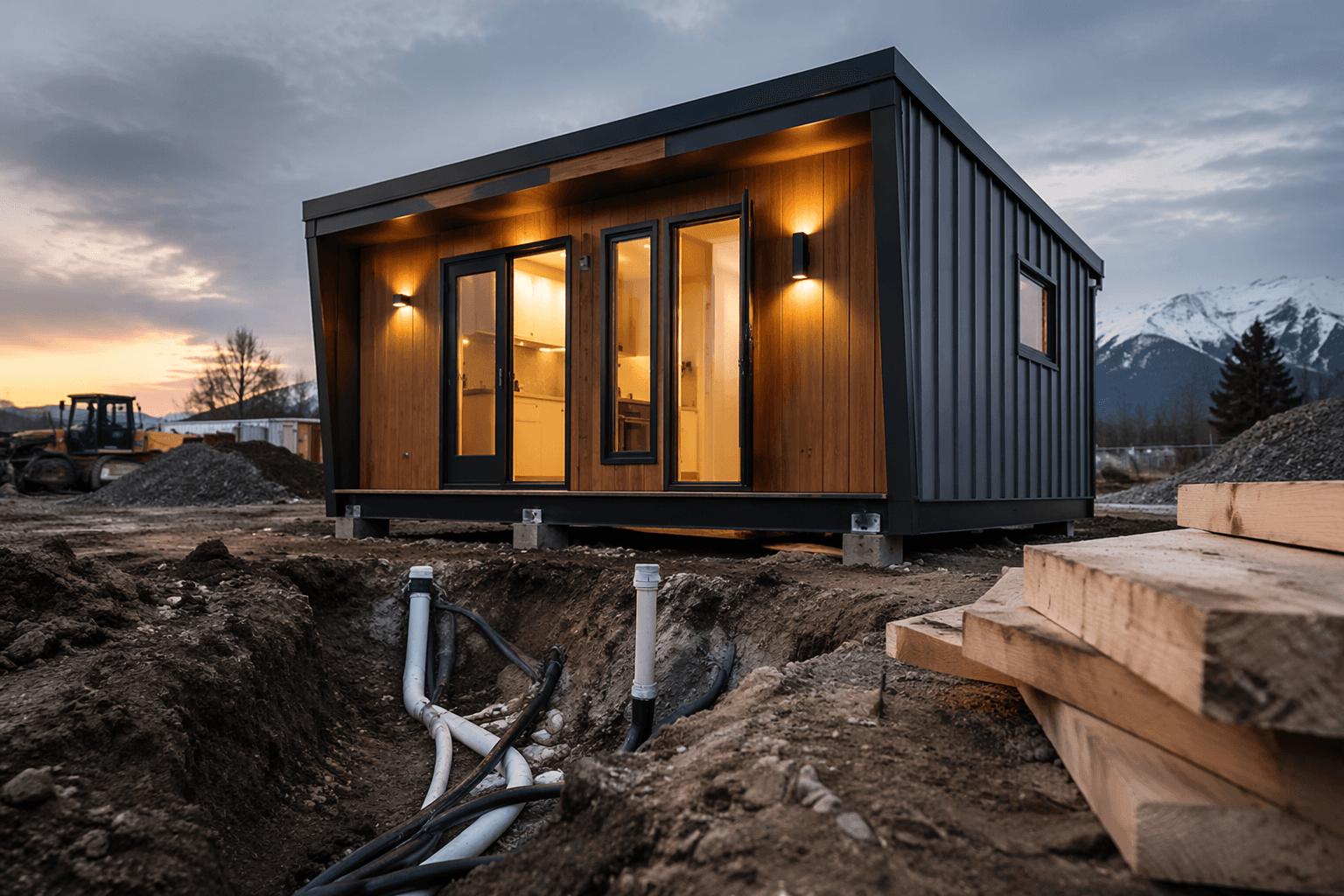
Spain’s First Off-Grid Tiny House Showcases Europe’s Tiny-Living Evolution
Spain’s first off-grid tiny house was never just a novelty. It helped turn solar, water autonomy, and compact living into a European playbook.
A prototype that feels ahead of its time
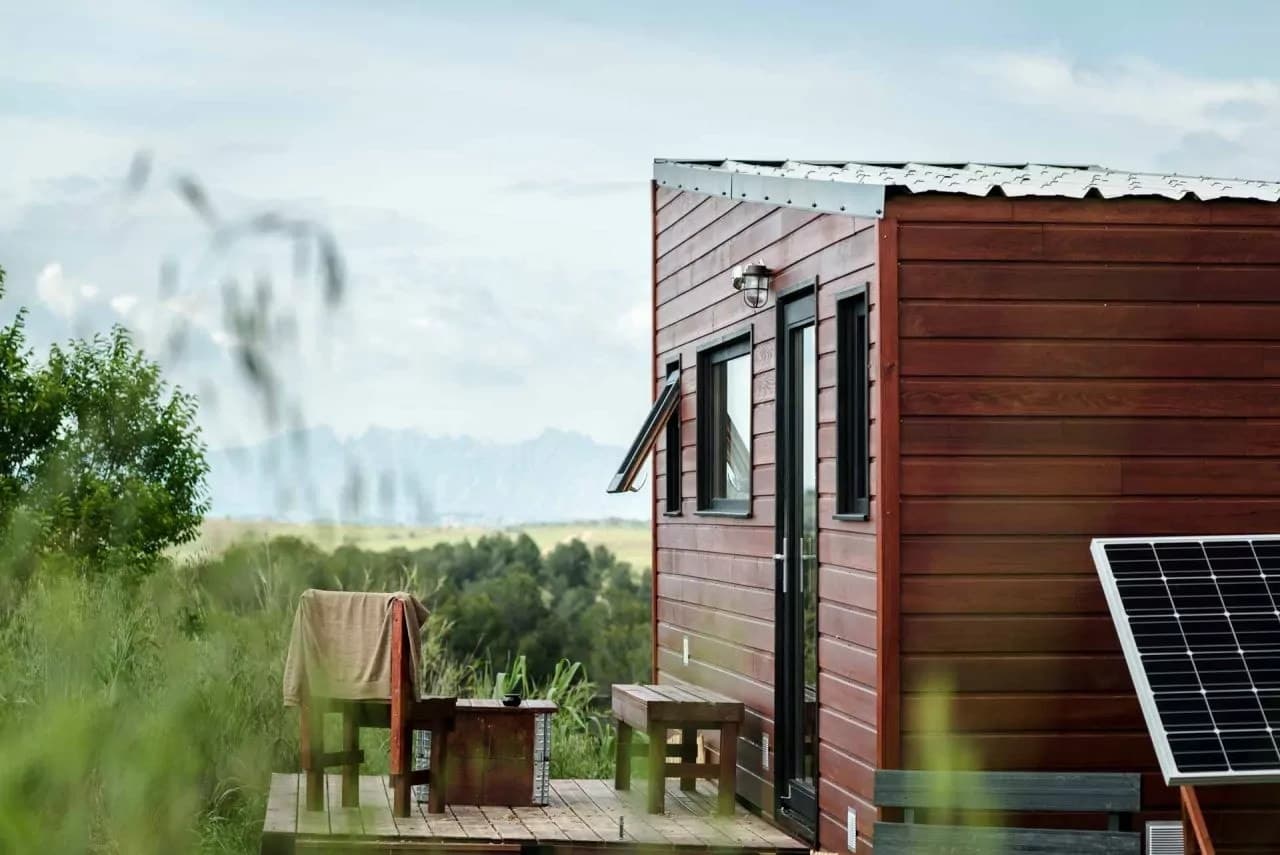
What looked like a 13 m² experiment in 2016 now reads like a preview of Europe’s off-grid tiny-house boom. Back then, Les Abers was a DIY wooden build with a serious autonomy streak; now, the ideas behind it feel familiar across the tiny-living scene: solar power, water independence, dry toilets, and small-space design built for real daily use.
The sharpest contrast is simple. In the early version, autonomy was something the builders had to invent as they went. In today’s off-grid market, it is often the selling point itself. Les Abers and its Spain follow-up, Stendhal, show how quickly a niche prototype can become a template.
How Les Abers set the benchmark
Les Abers was the first autonomous tiny house in France, built in 2016 by Antoine, Maxence, and Sofian through the Vagabonde.House project. Serena.House later described it as the first off-the-grid tiny house prototype in its own story, and Ouest-France called it a mobile, connected home that drew its energy independence from the world of sailing.
That maritime influence matters. The name Les Abers comes from L’Aber Wrac’h in Brittany, a coastal estuary-fjord where the trio spent about three months shaping the concept. The result was not a decorative cabin with a tiny footprint. It was a working 13 m² autonomous and connected house, designed to prove that small-scale living could be practical, mobile, and environmentally serious at the same time.
The project also carried an unusually accessible origin story. These were young builders, not professional sustainability specialists, and that is part of why the story still lands with tiny-house readers. The message was not “wait for experts.” It was “build, test, improve.”
Why Maxence’s months inside the prototype mattered
The most revealing detail in the whole story is that Maxence lived in the prototype for several months while finishing merchant navy officer training. That turned Les Abers from a showcase into a test bed. Instead of sitting untouched as a finished object, the house kept evolving in real conditions, with the builders tweaking it to improve autonomy as they learned what actually worked.
That approach feels very current now, when tiny-house owners and off-grid builders obsess over usability, maintenance, and systems performance. But in 2016, it was still a more experimental mindset. The house was not being presented as a polished lifestyle prop. It was being lived in, adjusted, and pushed.
For today’s market, that is one of the project’s lasting lessons: the best off-grid builds are rarely the ones that look perfect on day one. They are the ones that survive ordinary life.
From first French prototype to first Spanish off-grid tiny house
The same team did not stop at one milestone. Two years later, they built Stendhal, described by Serena.House as the first autonomous tiny house in Spain. That cross-border sequence gives the project unusual weight in the European tiny-living story. It was not just a one-country success. It was a proof of concept that traveled.
Stendhal also shows how far the concept had advanced by then. Its off-grid package included solar power, a 1,000-liter drinking-water tank, dry toilets, and phytofiltration. In practical terms, that is what autonomy looks like in tiny-house living: power generation, water storage, sanitation, and wastewater treatment all handled inside a compact footprint.
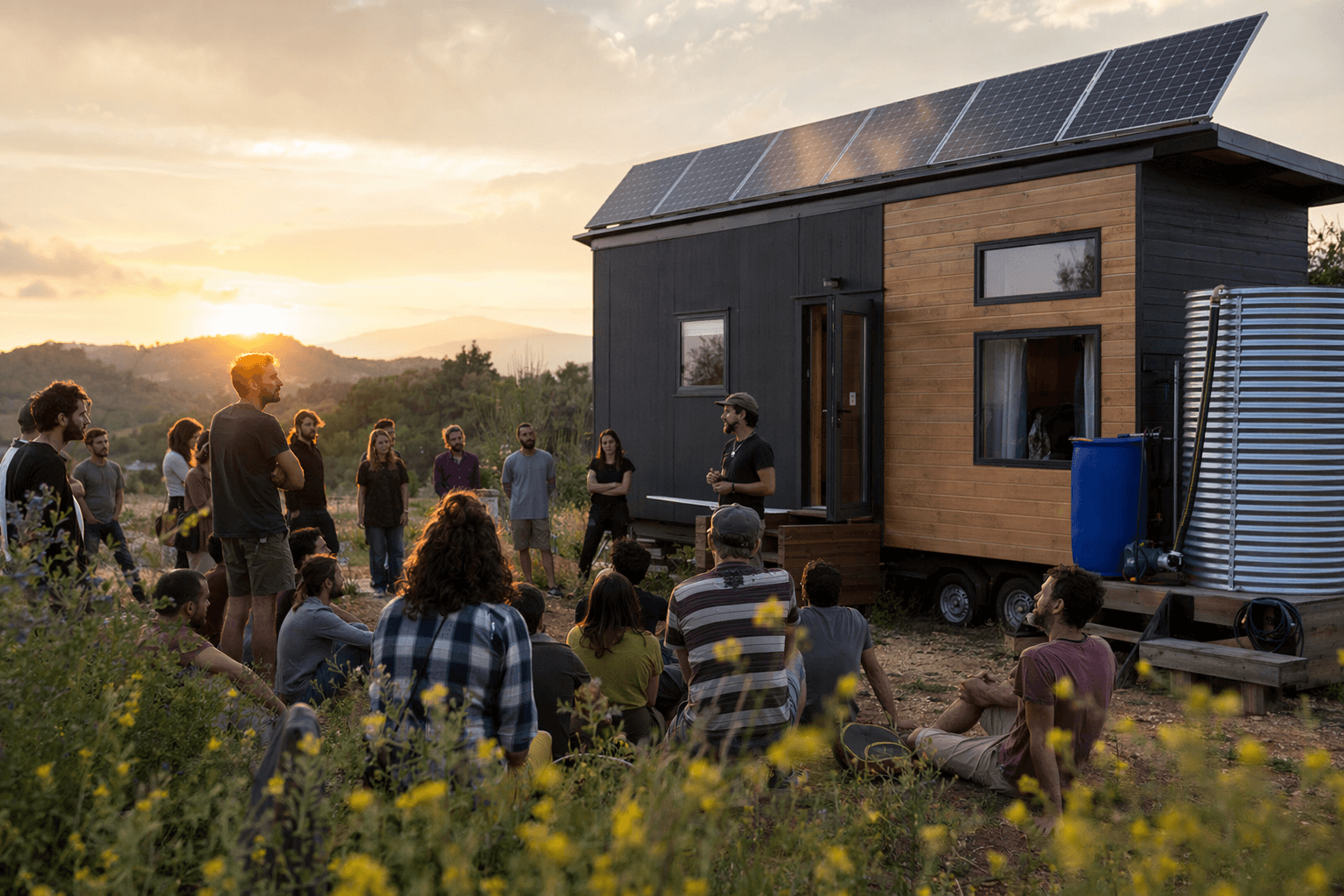
That mix is now far more recognizable across Europe. Solar systems are standard in many off-grid builds, water tanks are a common sight, and dry toilets have become a familiar solution in eco-minded cabins and tiny homes. Phytofiltration, while still more specialized, reflects the same shift toward closed-loop thinking that now drives much of the sustainable housing conversation.
What has become mainstream, and what still feels early
Some of the ideas in these homes have moved from fringe to familiar. The strongest examples are:
- Solar power as a core energy source
- Water autonomy through storage tanks
- Dry toilets as a practical sanitation choice
- Small-footprint design that supports mobility and lower resource use
- Tiny homes positioned as part of sustainable tourism, not just private housing
Those choices now make sense to a wide European audience. In 2016 and 2018, they still carried a stronger experimental edge, especially when bundled into a home that was mobile, connected, and meant to be lived in.
What now feels more dated is the rough, prototype-first framing. The charm of a 13 m² DIY build, with its visible experimentation and constant tweaking, belongs to an earlier phase of the movement. Today’s off-grid tiny houses are more likely to arrive with cleaner finishes, more standardized systems, and a more polished guest-ready presentation. The spirit of Les Abers remains influential, but the market around it has matured.
Recognition beyond the tiny-house world
The project did not stay inside niche builder circles. Les Abers won the Loire-Atlantique sustainable tourism trophy in 2017 in the environmental preservation category, which helped validate the tiny-house model as something more than a clever aesthetic.
That recognition mattered because it linked small living to a broader public goal: environmental stewardship. It also helped place the Vagabonde.House project within the growing sustainable tourism conversation, where accommodation is judged not only by comfort or style but by how lightly it sits on land and infrastructure.
By 2020, Serena.House said more than 500 people had spent a night in its tiny houses. That is the other major milestone in the story. What began as a DIY prototype had clearly become a hospitality and design business with real traction, turning a one-off build into a repeatable experience.
Why Spain’s first off-grid tiny house still matters now
Stendhal and Les Abers mark an important line in Europe’s tiny-house evolution. They helped normalize a simple but powerful idea: a tiny home can be practical, independent, and environmentally serious all at once.
That is why these builds still draw attention. They are not just early examples of the style. They are part of the reason off-grid tiny living now feels plausible across Europe, from eco-stays to experimental housing to small-scale sustainable tourism. The prototype did more than predict the movement. It helped define the terms it still uses today.
This article was produced by Prism’s automated news system from verified source data, official records, and press releases, then run through automated quality and moderation checks before publishing. The system is built and supervised by the people who set the standards it runs under. Read our full AI policy.
Did this article answer your question?