Swainsboro tiny house blends cottagecore style with practical storage
A 399-square-foot Swainsboro cottage shows how cottagecore sells better when the porch, storage, and kitchen all earn their keep. The charm works because the layout does not waste an inch.
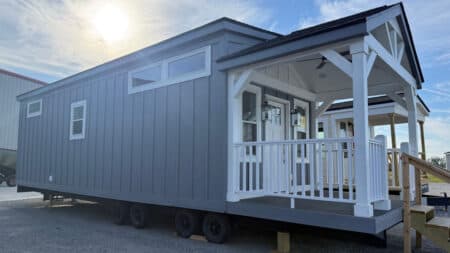
The Swainsboro cottage makes its case fast: a 399-square-foot tiny house can still feel like a real home when the porch, bedroom, and storage all pull their weight. The enclosed porch and textured woodwork give it the cottagecore look buyers click on, but the smarter part is how the layout protects floor space instead of spending it on decoration.
A cottagecore shell that still behaves like a house
The exterior leans hard into farmhouse-meets-cottage styling. It sits on a four-axle trailer and uses board-and-batten siding, a gable roof over the porch, a decorative king post truss, white trim, and a fence-like porch enclosure. That combination gives the home a strong visual identity without making it look precious or fragile, which matters in a mobile tiny house that still has to function in the real world.
The enclosed porch is doing more than selling the mood. It creates a buffer zone between outdoors and indoors, which makes the footprint feel less abrupt and more residential. In a tiny house, that kind of transition space is not fluff. It is one of the few ways to make a compact home feel like it has layers.
Why the layout works in 399 square feet
The home’s interior follows the same logic as the exterior: keep the charm, protect the usable space. There is one bedroom, and that alone changes the feel of the house. A true sleeping room makes the plan read more like a small cottage than a dressed-up studio, and in a 399-square-foot build, that distinction matters.
The dining table folds down and converts into a console, which is exactly the kind of move tiny-home buyers should look for. It lets the room switch roles instead of locking in a permanent dining footprint. That one detail tells you the house was designed by people who understand how fast a tiny room can feel crowded when every piece of furniture insists on staying open all the time.
Large vertical windows help as well. They pull in more light and create a stronger indoor-outdoor feeling, which keeps the small footprint from turning cave-like. The vinyl flooring patterned to resemble hardwood adds warmth without the upkeep real wood would demand, so the house gets the visual payoff without the maintenance bill.
A kitchen that earns its square footage
The kitchen is where this home stops being cute and starts being useful. It includes a thick butcher-block counter, a flush sink, a pull-down spring faucet, an electric stove and oven, handleless cabinetry, and plenty of outlets. That is a serious list for a tiny kitchen, and it matters because the difference between a charming galley and a frustrating one usually comes down to prep surface, storage access, and where you can actually plug things in.
Handleless cabinetry keeps the look clean and avoids the visual clutter that can make a tiny kitchen feel busier than it is. The butcher-block counter adds texture and warmth, but it also reads as a practical work surface rather than a decorative afterthought. If you cook in a small space, this is the sort of setup that tells you the house was built for daily use, not just photos.
Customization makes it more than a fixed design
One of the more useful parts of the listing is the option to customize the exterior and interior for an additional cost. Buyers can choose colors, roof style, or cladding details, which turns the house into a flexible platform instead of a locked-in design. That matters in tiny housing because personal fit is everything. A layout that looks perfect in a listing can feel wrong once it is tied to your storage habits, appliances, or long-term use case.
This is also where the cottagecore angle becomes more than branding. The style sells the emotional hook, but the customization path is what gives it staying power. Buyers can lean deeper into rustic charm or back it off in favor of a cleaner, more modern feel, while keeping the same compact structure and practical bones.
Who is building it, and what that says about the market
The listing is tied to Pine Trail Cottages, which says it designs and builds fully constructed custom cottage homes from 190 Pine Tree Trail in Swainsboro, Georgia 30401. It also markets move-in-ready construction for full-time homes, guest cottages, weekend getaways, and similar uses. That lineup is important because it shows how tiny and cottage-style builds are being pitched now: not as novelty objects, but as flexible housing products with multiple roles.
That broader market logic helps explain why the cottagecore look still has traction. Tiny homes are often sold as an affordability play, with completed builds commonly landing somewhere in the roughly $30,000 to $70,000 range. Against that backdrop, a house that looks handcrafted but still offers storage, a real kitchen, and a defined bedroom has a better pitch than one that simply photographs well.
The Swainsboro numbers give the story context
The local housing picture matters too. Realtor.com shows 59 homes for sale in Swainsboro’s 30401 ZIP code and a median listing price of about $169,450. In that context, a compact cottage-style home is not just a quirky alternative, it is part of a real housing conversation about cost, size, and what buyers can actually afford or justify.
Georgia adds another layer. Tiny-home zoning and placement in the state are governed largely by local rules and code enforcement rather than a single statewide rule, which means where a home like this can sit depends heavily on the county or city. For a mobile tiny house, that is not a footnote. It is the difference between a dreamy placement plan and a dead end.
The federal data backdrop is still moving too. The U.S. Census Bureau’s Manufactured Housing Survey tables run through June 2026 and track annual data on average sales price and square footage for new manufactured homes. That does not make this Swainsboro build a manufactured home in the technical sense, but it does underline something bigger: small-format housing is still being measured, priced, and watched as a live segment, not a passing fad.
What this cottage gets right is simple. It gives buyers the porch, woodwork, and cottagecore feel that make a tiny house memorable, then backs that up with the kitchen, storage tricks, and room division that make it livable. In a 399-square-foot footprint, that is the whole game: enough charm to win the first look, and enough practicality that the porch is a feature, not a distraction.
This article was produced by Prism’s automated news system from verified source data, official records, and press releases, then run through automated quality and moderation checks before publishing. The system is built and supervised by the people who set the standards it runs under. Read our full AI policy.
Did this article answer your question?