Teacup Tiny Homes’ Ruby packs family-ready features into 380 square feet
Two loft bedrooms, a bathtub, and a road-legal 30-foot frame make the Ruby one of the more family-minded towable tiny homes on the market.

Teacup’s Ruby is trying to solve the tiny-house problem that matters most for families: how to fit real sleeping space, real privacy, and real roadworthiness into one towable package. At 380 square feet including the lofts, the model sits on the larger end of the towable tiny-house range, but the real story is not the size alone. It is the way Teacup Tiny Homes uses that footprint to squeeze in two separate loft bedrooms, a main floor that still feels like a living space, and a layout that reads less like a weekend cabin and more like a downsized home you could actually live in.
A family-first layout, not a novelty layout
The Ruby’s strongest card is that it does not ask you to give up sleeping capacity just to keep the floor plan civilized. New Atlas notes that the house can sleep four in the two loft bedrooms, and that an optional sofa bed can push capacity up to six. That matters because a lot of tiny homes claim family-friendliness but still rely on a single loft and a pullout couch as a backup plan. Here, the two lofts are the point, not the afterthought.
Each bedroom is reached by its own staircase, which is a bigger deal than it sounds. Ladder-access lofts are fine for occasional use, but stairs change the whole rhythm of daily living. They make the sleeping spaces feel more like proper rooms and less like emergency perches, especially if adults are carrying laundry, bedding, or a child at night. If you are trying to make a towable home feel workable for regular use, that design choice does a lot of heavy lifting.
The main floor keeps the house from feeling like a sleeping capsule
On the ground level, the Ruby is arranged around an open living room and a galley kitchen. That is the right move if the goal is to keep circulation simple and preserve usable space where people actually spend time awake. The optional sofa bed also lands here, which gives the living area a second job without forcing the entire plan into one congested multipurpose box.
The kitchen is fully fitted in the way people expect from a full-time home, not a stripped-down trailer. Teacup equips it with an oven, a propane four-burner cooktop, a sink, a fridge/freezer, and a microwave. That mix tells you exactly who this is for: someone who wants to cook real meals, not just reheat takeout and boil water. For a tiny home aimed at families, that is a serious advantage.
The bathroom is more practical than the usual tiny-house compromise
The bathroom is another place where the Ruby goes further than the usual compact-home template. Instead of the shower-only setup that shows up so often in small footprints, Teacup includes a bathtub, a flushing toilet, and a vanity sink. That makes the house easier to imagine for families with children, guests, or anyone who wants the comfort of a proper soak instead of treating the bathroom like a campsite wash room.
This is one of those details that can make or break daily livability. In a tiny house, every fixture has to justify the space it takes. A bathtub is not the easiest thing to fit, but in this case it reinforces the Ruby’s larger point: the house is trying to preserve the feel of a full-time home even while staying towable.
Built for weather, not just photos
Teacup says the Ruby was built with harsh Canadian winters in mind, and that is where the model starts to separate itself from the more decorative end of the tiny-house market. The company points to heavy insulation, heated flooring, plumbing designed for extreme temperatures, and air circulation systems intended to stabilize the interior climate. Those are the kinds of choices that matter when a tiny home is supposed to function through real winter, not just appear in a sunny reveal video.
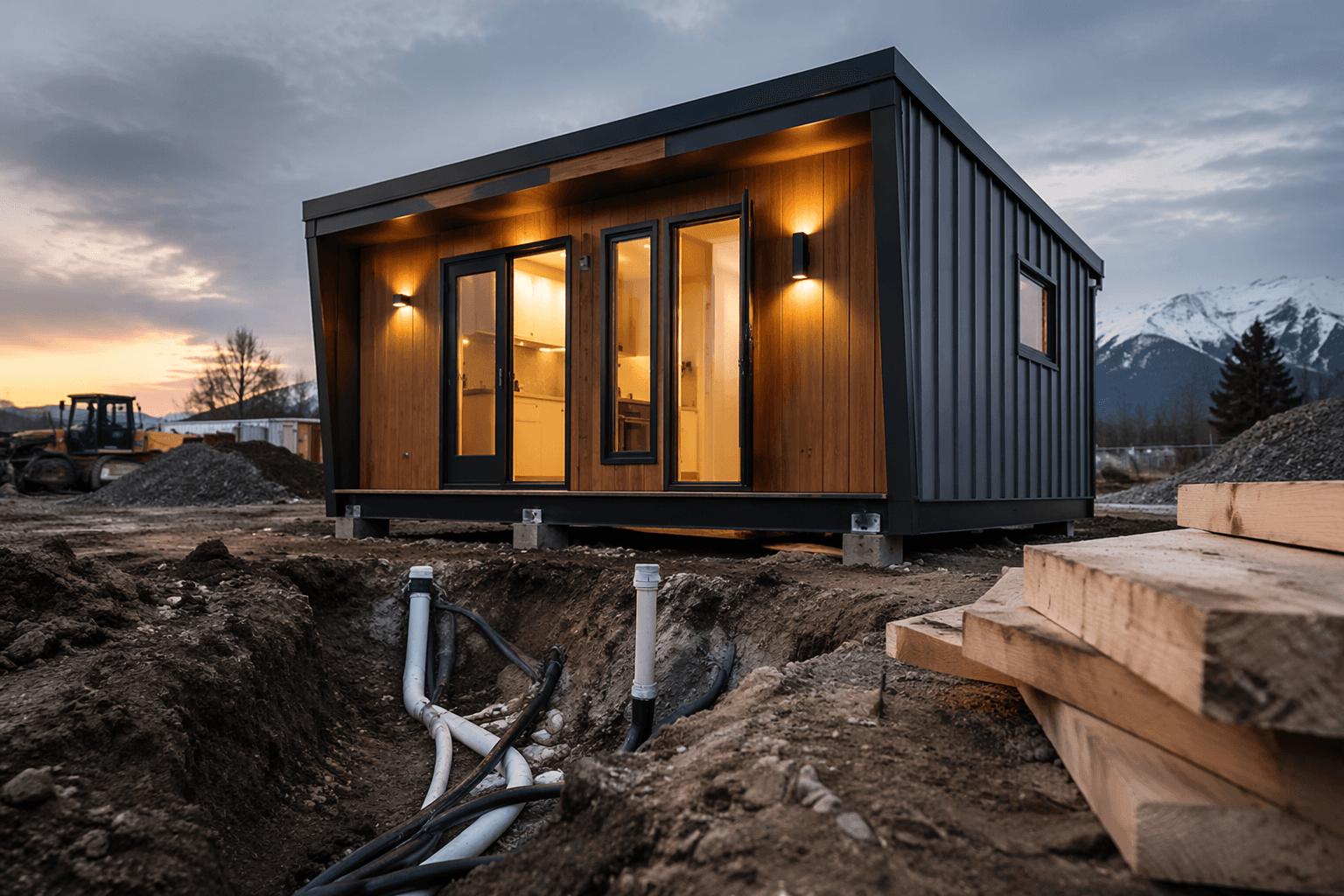
The exterior follows the same practical logic. Black standing-seam metal siding gives the Ruby a clean, durable look, while a raised clerestory section in the roof brings in more daylight. That clerestory detail is useful in a compact home because natural light can keep a small interior from feeling boxed in, especially when lofts and stairs are already taking up visual space. It is a small architectural move with a noticeable payoff.
Towability still sets the rules
For all the family-ready features, the Ruby still has to work as a road-oriented build. Teacup describes the current version as a 30-foot by 8.5-foot certified RV tiny home, and says its tiny home RVs are road legal and built for year-round comfort in extreme temperatures. It also says certification can be to CSA Z240 RV standards or NFPA 1192, depending on the market and use case.
That certification piece matters because it shows the Ruby is being positioned as more than a one-off custom toy. Teacup is clearly working within the code and certification frameworks that let buyers think about seasonal retreats, full-time living spaces, or ADUs. In other words, the Ruby is not just trying to look like a tiny house. It is trying to function as one in the categories people actually use.
A builder with a longer track record than the average tiny-house startup
Teacup says it has been building tiny homes and ADUs since 2016, is based in Alberta, and describes itself as 100% female-owned and led. The founder has been designing, building, and creating homes since 2003, with a background in general contracting, interior design, and residential construction. That history matters because the Ruby does not read like a design exercise from a company chasing a trend. It reads like a product shaped by hands-on building experience.
The Ruby line also has deeper roots than the current version suggests. Teacup says the original Ruby custom build was designed for cottage life and a family of five, then later tweaked into the Ruby designs now on the table. That origin story explains a lot about the layout priorities: stairs instead of ladders, a proper kitchen, a real bathtub, and enough sleeping capacity to make the home feel usable rather than merely clever.
A model that has already been adapted for more than one buyer
Teacup’s Ruby page shows that the platform is not locked into a single configuration. The company points to multiple Ruby-related builds, including an original Ruby, a custom Aki Ruby, Whispering Birch based on the Ruby, and other variants. It also says Ruby-based homes have been delivered to Vancouver, Ontario, and Vancouver Island, which suggests the design has already been flexible enough to travel across different client needs and settings.
That broader product strategy lines up with Teacup’s wider catalog. Alongside tiny home RVs, the company also offers park models and modular dwellings, which tells you it is not betting everything on one code path or one buyer profile. The Ruby sits right in that mix as the kind of build that can bridge family use, winter performance, and towing practicality without sacrificing too much of any one category.
The result is a tiny home that makes a pretty strong case for itself. In a market crowded with homes that are charming on paper but awkward in real life, the Ruby’s appeal is simple: two true bedrooms, a usable kitchen, a bathtub, and a towable frame that still keeps the whole package road legal. That combination is exactly why it stands out.
This article was produced by Prism’s automated news system from verified source data, official records, and press releases, then run through automated quality and moderation checks before publishing. The system is built and supervised by the people who set the standards it runs under. Read our full AI policy.
Did this article answer your question?