This 20‑ft 'Espresso' Tiny House Packs Practical Full‑Time Features into a Small Footprint
At just 20 ft, Modern Tiny Living's Espresso fits a 160-sq-ft main floor, queen loft, full kitchen, and walk-in shower into a THOW starting on the Mohican platform from $99K.
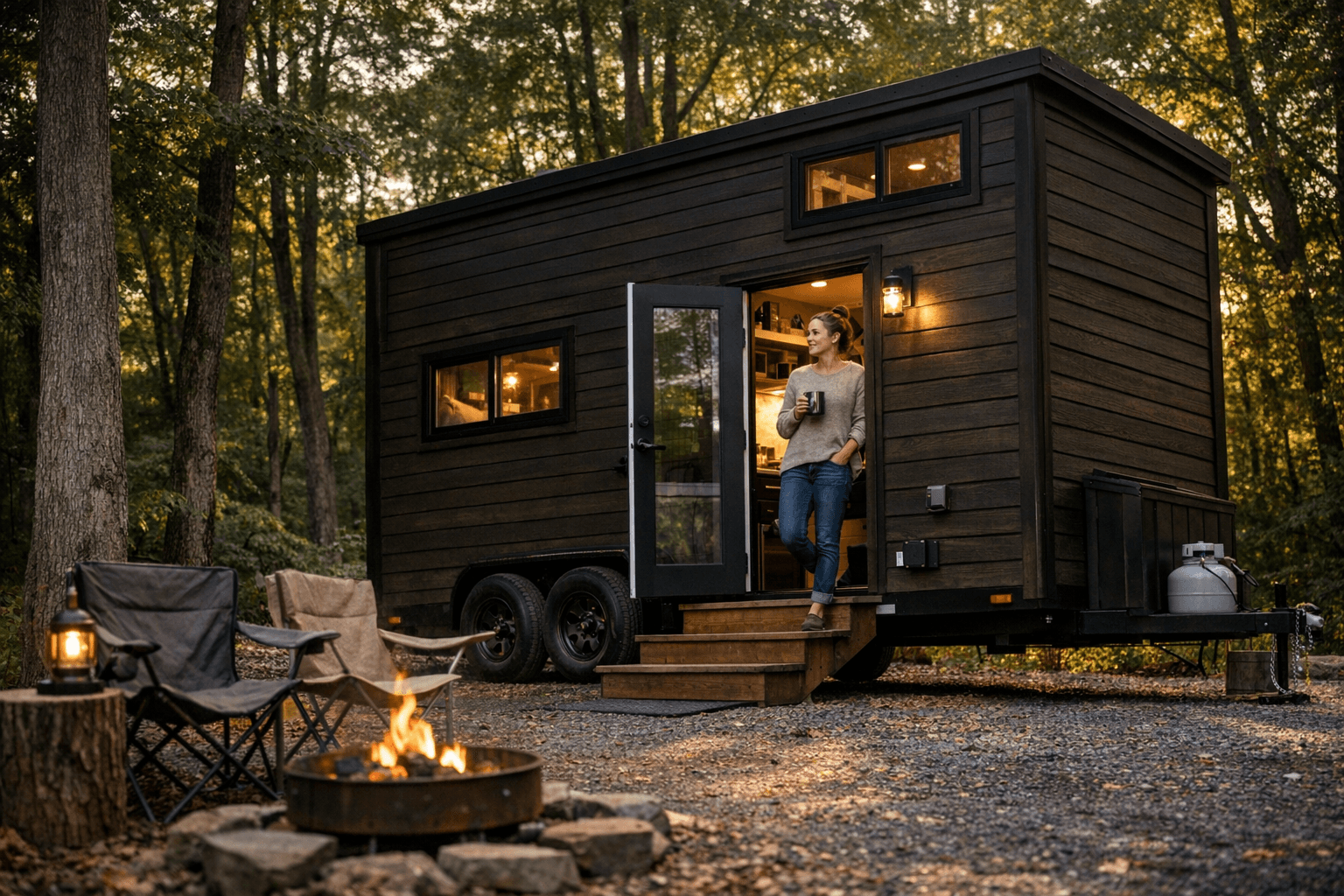
At 20 feet long and weighing roughly 9,000 lbs on a double-axle trailer, the Espresso from Ohio-based Modern Tiny Living is compact even by North American THOW standards, sitting closer in scale to smaller European builds than the longer, wider rigs that populate most builder catalogs. What makes it worth a closer look is how aggressively Modern Tiny Living has packed genuine full-time amenities into that tight footprint; rather than stripping features to hit a size target, the design treats every inch as a decision.
What You're Working With: The Numbers
The Espresso is built on Modern Tiny Living's established Mohican platform, an architecture the Columbus-based company has refined through multiple production models. The main floor measures 160 square feet, with a 70-square-foot queen bedroom loft overhead, giving occupants roughly 230 livable square feet in total. That breakdown matters for anyone seriously evaluating full-time use: the main floor has to carry living, dining, kitchen, and bathroom functions simultaneously, while the loft handles sleep. Modern Tiny Living's solution is a build that sleeps two comfortably as a standard configuration, with the living area's pull-out bench adding a workable option for the occasional guest.
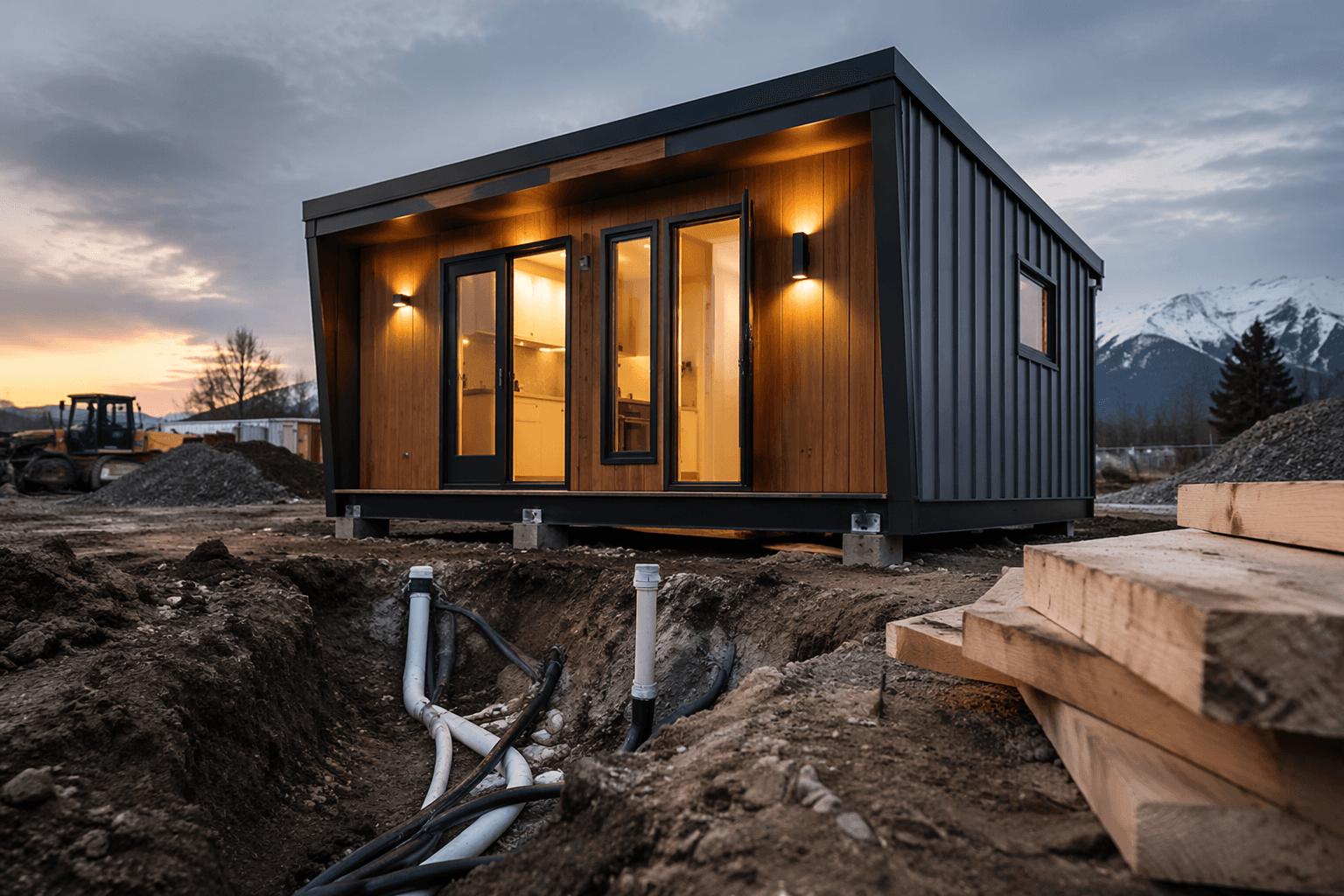
The exterior pairs engineered wood siding with a steel roof and includes an exterior storage box as standard, a small but meaningful detail for full-timers who need a place for hoses, tools, or gear that doesn't belong inside. The bold aesthetic runs throughout: black finishes, matte hardware, and warm wood accents combine to give the Espresso a design identity that reads as deliberate rather than generic.
The Living Area and Its Multipurpose Logic
Step inside and the main floor's black cabinets and built-in shelving set the visual tone immediately. The living area centers on a built-in bench that converts to a sleeping surface, flanked by a dropdown dining table that doubles as a work desk. In a 160-square-foot main floor, that kind of convertibility isn't a styling choice; it's structural, the difference between a space that functions and one that doesn't. The built-in shelving means personal items have a home without eating into floor space, and the result is an interior that feels organized rather than crammed.
Kitchen: Functional Without Cutting Corners
The Espresso's kitchen punches above its size class. The spec sheet includes an undermount black granite sink paired with a pull-down matte black faucet, solid wood countertops, a two-burner propane cooktop, a microwave, and a 9.9 cu.ft. refrigerator. None of those items are luxury choices, but taken together they represent a kitchen that can support real cooking rather than just reheating. Two-burner propane is the standard trade-off at this footprint, but the counter space and refrigerator capacity are sized to support actual grocery runs, not just weekend trips.
Bathroom: Compact and Complete
A barn-style sliding door off the kitchen opens into the bathroom, a spatial trick that keeps the transition fluid without dedicating a hallway to it. Inside: a flushing toilet, shelving, and a walk-in shower. The barn door itself is a small efficiency win common in tiny house builds, saving the clearance arc that a hinged door would demand. The bathroom is straightforwardly compact, without the tub-and-shower combination that some wider THOW designs manage to squeeze in, but it delivers the full hygiene baseline a permanent resident needs.
The Loft and Storage Staircase
The queen bedroom loft is reached via the Espresso's storage-integrated staircase, a feature so standard in well-built tiny houses that its absence would be conspicuous. Each step provides usable storage, and the combined effect across the staircase is meaningful when you're living in 230 square feet. The loft itself has a low ceiling, as expected at this footprint, with room for a queen bed, custom built-ins, and shelving. The Espresso also includes a real closet, something that gets left off plenty of comparably sized builds and tends to register sharply with buyers who've toured a few models.
Pricing and Platform Context
Modern Tiny Living hasn't published a specific price for the Espresso as shown. The Mohican platform it's built on starts at US$99,000, and final pricing for any build in this line varies based on appliances, finishes, and customizations. For buyers comparing options, that starting figure puts the Espresso in the mid-tier of production THOWs, above entry-level shell builds but below the bespoke custom work that some builders offer. The company encourages direct consultation to scope a quote based on specific requirements.
Why the 2026 Market Is Paying Attention
The Espresso reflects where production tiny house design has been heading: away from novelty and toward practicality. Three trends converge in this build. First, better-planned interiors that minimize the psychological weight of a small footprint, using convertible furniture, built-in storage, and an uncluttered layout rather than square footage to create breathing room. Second, a comfort-amenity floor that attracts buyers who might otherwise dismiss tiny living, specifically retirees downsizing out of larger homes, remote workers who need a functional workspace as much as a bedroom, and cost-sensitive households for whom a sub-$100K home is a serious financial proposition rather than a lifestyle experiment. Third, a professionalized production approach, with consistent specs, established platform models, and warranty coverage, that is a meaningful step up from the early DIY era of the movement.
The caveat that applies to every well-designed THOW applies here too: the Espresso needs somewhere to go. Land access, utility hookups, and local code approvals are still the variables that determine whether a build like this functions as a permanent home or stays parked as a vacation rental. For buyers who have those pieces in place, the Espresso's combination of thoughtful layout, production-level finish, and a platform with a track record makes a strong case that 20 feet is enough.
This article was produced by Prism’s automated news system from verified source data, official records, and press releases, then run through automated quality and moderation checks before publishing. The system is built and supervised by the people who set the standards it runs under. Read our full AI policy.
Did this article answer your question?