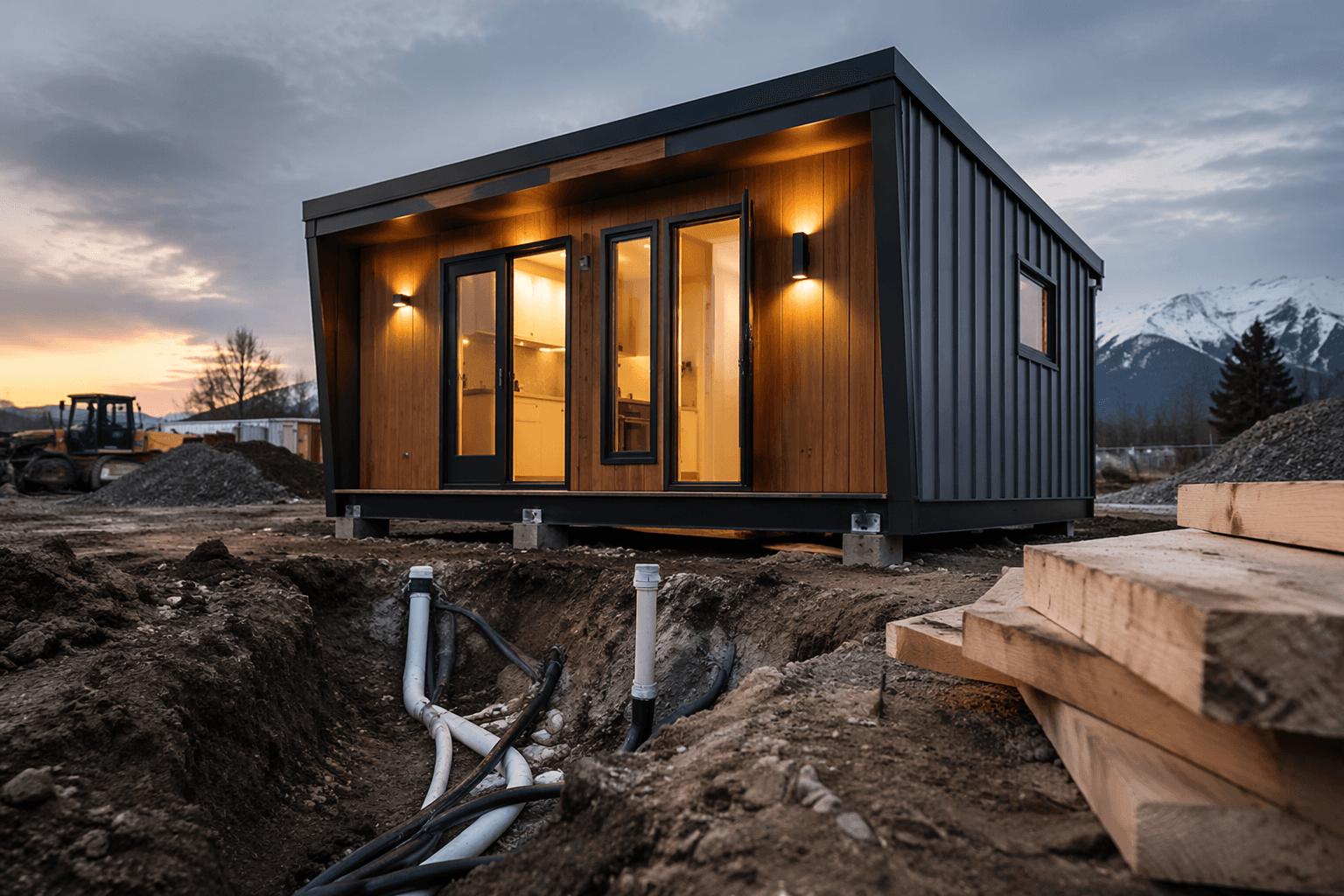
Katrin Tiny House Offers Towable, Off-Grid Living for Up to Four
A 23.7-foot Craft House design sleeps up to four, tows on a double-axle trailer, and adds optional solar for off-grid livability at $53,400.
A 23-Foot Package That Punches Well Above Its Size
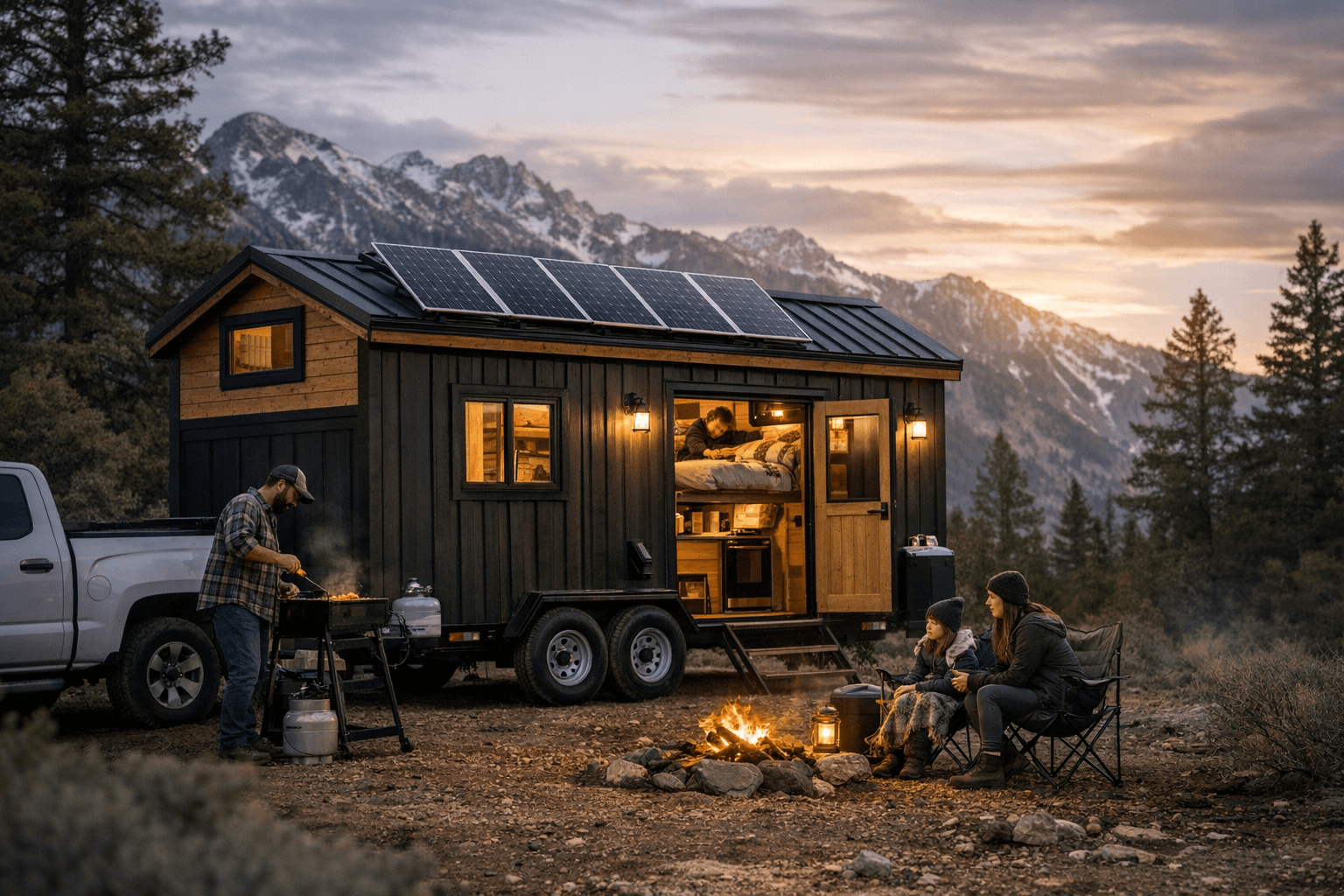
At just 7.2 meters (23.7 feet), the Katrin from European builder Craft House sits on the compact end of the tiny house spectrum, even by European standards. But compactness is doing real work here: its sub-24-foot length makes it a genuine towing candidate, not just a portable-in-theory model. Mounted on a double-axle trailer and clad in thermo pine combined with standing-seam sheet metal and black-framed aluminum windows, it arrives as something closer to a mountain cabin than a box on wheels. That visual identity is deliberate. Craft House, which builds across Poland, Austria, and Ireland, designs the Katrin to blur the line between the warmth of a log cabin and the practicality of a contemporary small home.
Two Lofts, One Flexible Floor Plan
The Katrin's headline capability is sleeping up to four adults, which it achieves through two separate loft bedrooms. The main loft is reached via a storage-integrated staircase, a smart solution that doubles as a furniture piece and eliminates one of the most common space complaints in loft-access designs. The secondary loft uses a folding staircase that collapses flat against the wall when not in use, freeing the living room floor for daily life. Both lofts feature the characteristically low ceilings that come with the territory in THOWs, but the separation between the two sleeping zones makes the Katrin meaningfully more livable than single-loft models for couples, families, or hosts who want real privacy between sleeping spaces. Add the optional sofa bed and capacity stretches to six.
The interior throughout is finished in Scandinavian spruce, which gives the space its almost log-cabin quality despite the modern chassis underneath. The living room anchors the social zone with a wood-burning stove and enough seating to actually gather around it. Underfloor heating runs throughout, meaning the space performs in colder climates without relying entirely on the wood stove or supplemental electric heat.
Kitchen and Bathroom Built for Full-Time Use
The Katrin does not hedge on the rooms that separate weekend cabins from full-time homes. The kitchen is equipped for everyday cooking, with the layout and storage to support regular use rather than occasional camp-style meals. The bathroom is particularly well-specified for a home this length: a glass-enclosed shower, a flushing toilet, and a floating vanity sink give it an apartment-quality fit-out rather than the composting-toilet-and-curtain-shower compromise common in entry-level THOWs.
These details matter because they address the attrition point where many tiny house buyers retreat to conventional housing after the novelty fades. A flushing toilet and a real shower are not luxury add-ons here; they are infrastructure choices that affect whether someone stays in a tiny home for two years or ten.
Off-Grid Optionality, Not Off-Grid Theater
The Katrin's off-grid capability is offered as a genuine upgrade, not a checkbox. Craft House builds the home to individual specifications, and buyers can add a solar panel and battery system that allows the Katrin to operate without a grid hookup. That matters more than it might seem: the combination of towability and off-grid optionality is what allows the Katrin to access remote land that would be otherwise unusable for habitation.
For buyers targeting rural or vacation parcels where grid connections are expensive or simply unavailable, that pairing is the core value proposition:
- Double-axle trailer chassis for legitimate road-ready towing
- Optional solar panels and battery storage for full energy independence
- Underfloor heating that works with or without grid power
- Flushing toilet and glass-enclosed shower for full-time comfort in remote settings
- Optional terrace area for outdoor living when sited
The base price of PLN 199,000, approximately $53,400 USD, positions the Katrin mid-market for fully featured European tiny houses. Custom specifications will move that number, but it gives buyers a clear anchor for what full-time-capable, towable, optionally off-grid living costs from an established builder.
Who the Katrin Is Actually Built For
Craft House is not pitching the Katrin as a minimalist experiment. The target market here is buyers who have already decided tiny house living suits their situation and want a unit that will not force compromises over time. That includes full-time owner-occupants relocating to land outside municipal utility networks, short-term rental operators who want a durable, photogenic guest unit that can be sited on properties without hookups, and vacation homeowners who need something they can move when their plans change.
The mobility factor is easy to underestimate. A 23.7-foot home on a double-axle trailer is a different kind of asset than a fixed structure: it can relocate if land-use rules change, if the owner moves, or if a better site becomes available. That flexibility is increasingly valuable in a regulatory environment where tiny home permitting still varies widely by jurisdiction.
What Models Like the Katrin Signal for the Industry
The Katrin represents a broader trend in the 2026 tiny house market: homes engineered for systems-level robustness rather than lifestyle signaling. Underfloor heating, real bathroom fixtures, durable chassis engineering, and off-grid power optionality are no longer premium outliers; they are increasingly the baseline expectation for buyers serious about long-term occupancy.
That technical maturity is shifting the policy conversation, too. When tiny homes were novelties, the debate centered on lifestyle choice. When they arrive with durable electrical systems, quality structural frames, and full bathroom fit-outs, the conversation moves toward permitting categories, ADU eligibility, infrastructure planning for off-grid or grid-tied tiny communities, and financing frameworks for durable builds. The Katrin and its peers are making the case, through engineering rather than advocacy, that well-built tiny homes belong in serious housing supply discussions. At $53,400 for a four-person-capable, towable, optionally off-grid unit, the policy question is no longer whether these homes are serious housing; it's whether the code environment around them is ready to catch up.
This article was produced by Prism’s automated news system from verified source data, official records, and press releases, then run through automated quality and moderation checks before publishing. The system is built and supervised by the people who set the standards it runs under. Read our full AI policy.
Did this article answer your question?