Oakland Closes Tiny-Home Village, Residents Refuse Relocation Over Safety Concerns
Oakland shut Peralta Cabins on March 31 after a 41% housing budget cut, and over a dozen residents refused relocation to a site they called unsafe.
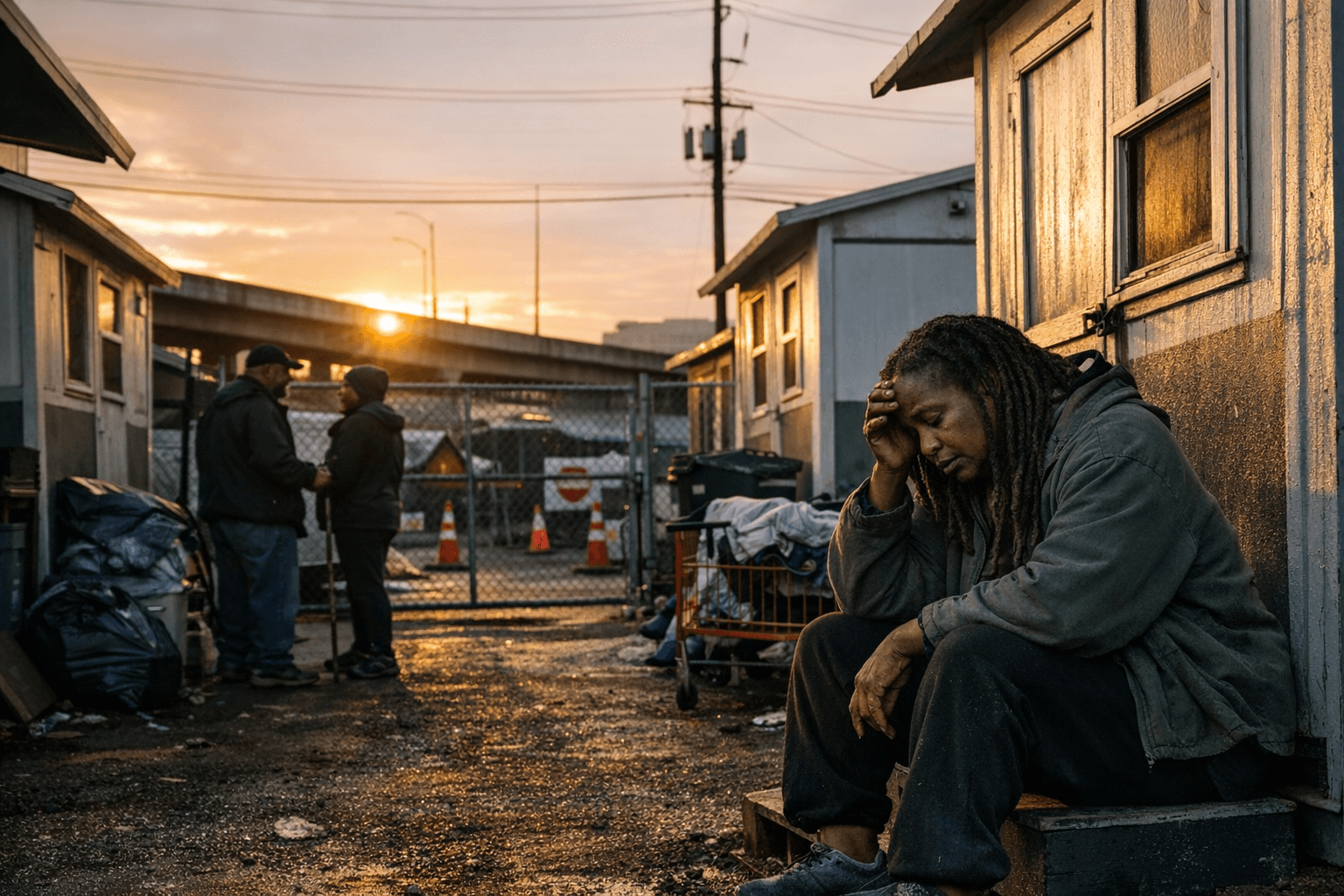
Frankie Ernst moved from a street encampment into the Peralta Cabins tiny-home village in 2024. He had less than two years there before Oakland shut it down. When city staff offered him a spot at another tiny-home site on Mandela Parkway, his answer was unambiguous: "After today or tomorrow, if I get kicked out, I'm right back out on the street again. It sucks. I feel really, really left out in the dark."
Ernst was one of more than a dozen residents who refused to leave the 40-bed site at 3rd and Peralta Streets in West Oakland after the official March 31 closure. Sandra Martin remained on-site the morning of April 1 alongside her boyfriend Drew Dyer and others, including Ashley Dace and Ceasar Rhodes. All of them said the Mandela Parkway village, the city's offered alternative, raised serious safety concerns they weren't willing to dismiss.
The closures were driven by budget arithmetic. Oakland's Community Housing Services Division absorbed a 41% funding cut this fiscal year. Peralta Cabins was part of a broader round of consolidations that also took out a 30-person RV safe-parking lot on 71st Avenue near the Coliseum. City staff maintained that outreach and placement offers remained ongoing, and pointed to the city's aggregate annual shelter placement numbers as evidence of a functioning system.
Those numbers, advocates argued, were beside the point. City data from the 2024-2025 program year showed that almost half of the people who exited the 3rd & Peralta site returned to homelessness or ended up in circumstances the city couldn't track. The City Council had already registered its concern: in October 2024, it approved only six-month contracts for community cabin programs with an explicit condition that underperformers could be shut down if metrics didn't improve.
The closure came without any verified guarantee that the receiving site was ready. Peralta residents weren't refusing shelter on principle; they were refusing a site they believed was more dangerous than the one they'd spent months building a life inside. The gap between a city's placement tallies and the reality facing a specific person on a specific morning is exactly what aggregate figures are designed not to show.
Whether Oakland's outreach teams manage to place the remaining Peralta residents into genuinely stable alternatives will shape how the episode gets read. Other cities running tiny-home programs face the same pressure every time a budget cycle forces consolidation: the numbers can look acceptable right up until a dozen people are standing outside a closed village with nowhere to go that feels safe enough to say yes to.
This article was produced by Prism’s automated news system from verified source data, official records, and press releases, then run through automated quality and moderation checks before publishing. The system is built and supervised by the people who set the standards it runs under. Read our full AI policy.
Did this article answer your question?