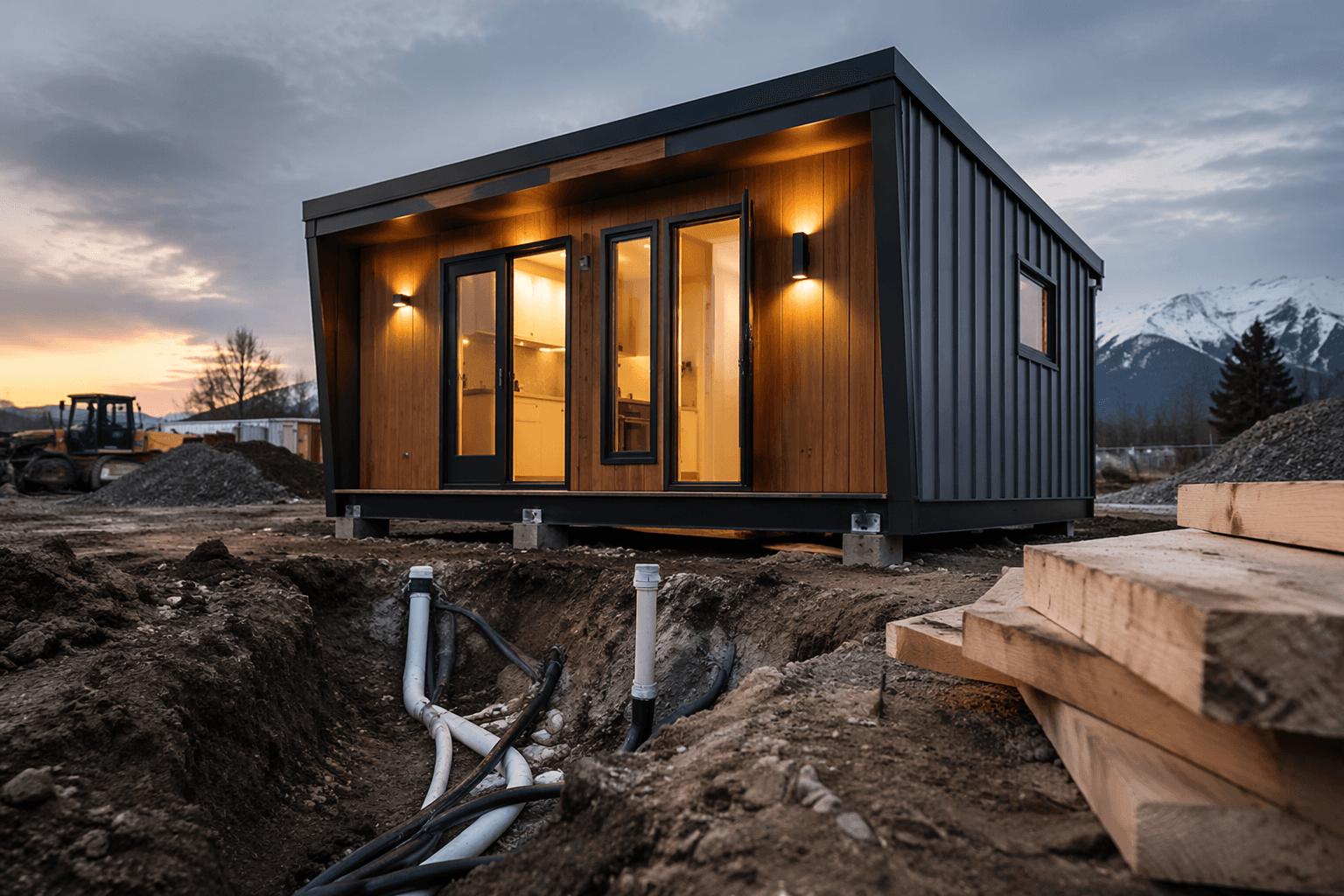
Thunder Bay's first tiny homes for shelter village arrive in July
Thunder Bay’s first sleeping units are set to land in early July, with 17 ready now and 25 expected by June 30.

The first tiny homes for Thunder Bay’s shelter village are lined up for early July, and that first delivery is the milestone that will tell the real story on the ground. ModBox Modular says it already has 17 units ready and expects 25 of the 80 sleeping units to be finished by the end of June, with the first set arriving in the first week of July and installation following by the second week.
That timeline matters because this project has already slipped past the city’s earlier expectations. Thunder Bay had talked about a spring soft launch and a finish in late spring or early summer, but the current build schedule points to a mid-July opening instead. For a project built around speed, that is the clearest sign of where things stand: progress is real, but the village is not arriving on the city’s original calendar.
The Temporary Shelter Village is going up at 879 Alloy Place, the Hillyard site, after a long site-selection fight that saw Miles Street East considered earlier and then dropped after council reversals and rescinded decisions. The village is part of Thunder Bay’s Enhanced Encampment Response Plan, a 10-part, human-rights-based action plan meant to cut the harm caused by unmanaged encampments and move people toward housing. The city says the site is temporary for five years.
When it opens, the village will have 80 private, climate-controlled units, each with a bed and a locking door. It will also include food, hygiene and laundry facilities, along with 24/7 staff support. That mix makes it more than a row of cabins: it is meant to function as a short-term shelter option while the District of Thunder Bay Social Services Administration Board and community partners expand permanent housing, supportive housing, transitional housing and shelter spaces.

The construction method is pretty classic modular: the 9-by-12-foot units are built mostly off-site to Ontario building code, then craned into place once ready. That is what makes the early July delivery so important. Once the first sleeping units arrive, the city moves from site preparation to actual occupancy readiness, and the pace from there depends on how quickly the remaining units can be set.
The shelter village also lands in the middle of a bigger provincial response. In April 2026, Ontario announced $10.7 million for Thunder Bay to address homelessness, including support for 66 transitional housing units and 120 emergency shelter spaces. The tiny-home village is meant to slot into that wider response, reducing encampments while giving people a better path out of crisis. The real test now is simple: whether those first units hit the site in early July and whether Thunder Bay can turn that delivery into a working village by mid-month.
This article was produced by Prism’s automated news system from verified source data, official records, and press releases, then run through automated quality and moderation checks before publishing. The system is built and supervised by the people who set the standards it runs under. Read our full AI policy.
Did this article answer your question?